THE ADVENTURE COLLECTIVE® · Independent discovery and booking for outdoor travel

A classic exposed scramble on Table Mountain’s northern face, Indian Venster mixes steep slabs, cables and staples with sweeping views of Cape Town. This route suits fit hikers comfortable with heights who want a direct, scenic line to the Upper Cable Station.
A classic exposed scramble on Table Mountain’s northern face, Indian Venster mixes steep slabs, cables and staples with sweeping views of Cape Town. This route suits fit hikers comfortable with heights who want a direct, scenic line to the Upper Cable Station.
You crest a rocky ledge and the city of Cape Town spills below like a map: the harbor, the long sweep of Signal Hill, the Atlantic glinting toward Robben Island. Indian Venster’s line climbs exposed slabs and iron staples, a route that asks you to use hands, feet and a steady head for heights.
Verified experiences and guided adventures in the surrounding area.
Operated by Walk Hike Climb · Cape Town, Western Cape
You crest a rocky ledge and the city of Cape Town spills below like a map: the harbor, the long sweep of Signal Hill, the Atlantic glinting toward Robben Island. Indian Venster’s line climbs exposed slabs and iron staples, a route that asks you to use hands, feet and a steady head for heights.
Geology here is blunt and honest—old sandstone beds tilted and weathered into steps and ribs. Table Mountain formed over hundreds of millions of years; on Indian Venster you feel that slow work under your palms as you negotiate slick bands of quartz and drifted grit. The route traces a historic informal path across the northern escarpment to the Upper Cable Station, used by locals and early climbers long before the Cableway made descents routine.
Expect intermittent vegetation: hard-leaved fynbos that clings to fractures and birds that watch from crevices. Local guides respect both the fragile ecology and the park rules—this is Table Mountain National Park, and paths can be narrow with loose rock.
Practical guidance: arrive early to avoid wind and afternoon clouds; wear stiff-soled boots and gloves for the cables; carry at least 1–2 liters of water and a headlamp if you might descend late. The scramble finishes near the Upper Cable Station; most groups descend by Cable Car (ticket included in some packages) so confirm return plans.
Pace yourself on exposed sections, check weather, and treat the rock with caution—Indian Venster rewards careful movement with striking panoramas and an efficient, memorable ascent of one of the world’s most recognizable mesas.
challenging.
5 hours.
Requires high aerobic fitness, good balance and comfort on exposed, steep terrain
Indian Venster is exposed and steep in places; it’s challenging rather than technical—fit hikers comfortable with heights can do it, but it’s not suitable for beginners.
Experienced hikers can follow the route, but a guide adds safety, local knowledge and ensures correct descent timing for the Cable Car.
Yes—the standard option is to ascend on foot and descend by Cable Car from the Upper Cable Station; check ticket inclusion and schedules ahead of time.
The scramble itself is about ability, not age; however, Cable Car operators have weight/size policies—confirm with the operator if you have concerns.
Indian Venster has long been an access line used by local climbers and hikers; its staples and cables are modern additions to a naturally direct route to the plateau.
Table Mountain National Park manages foot traffic to protect fragile fynbos and reduce erosion—stay on fixed routes and avoid trampling vegetation.
Walk Hike Climb operates guided outdoor trips and adventures with an emphasis on safety, stewardship, and memorable experiences.
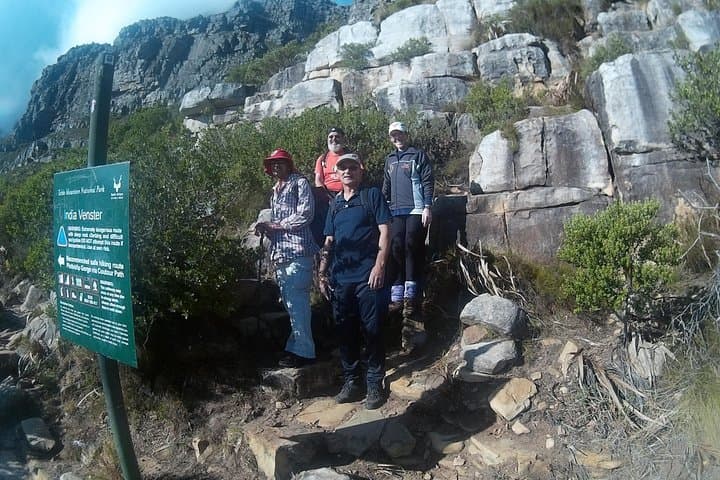
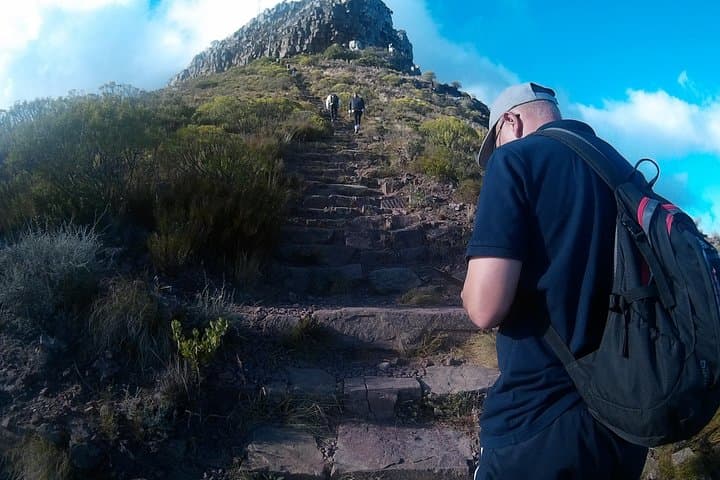
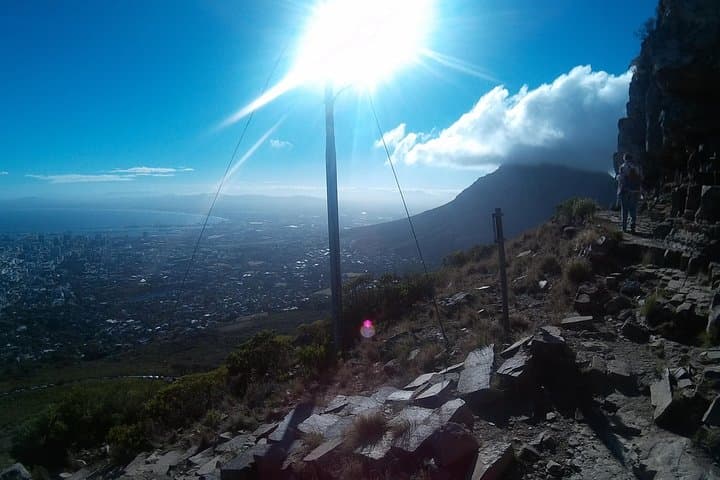
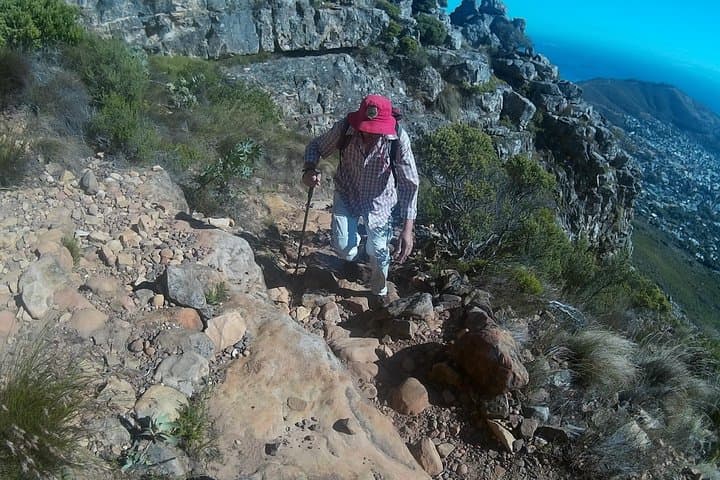
You crest a rocky ledge and the city of Cape Town spills below like a map: the harbor, the long sweep of Signal Hill, the Atlantic glinting toward Robben Island. Indian Venster’s line climbs exposed slabs and iron staples, a route that asks you to use hands, feet and a steady head for heights.
You crest a rocky ledge and the city of Cape Town spills below like a map: the harbor, the long sweep of Signal Hill, the Atlantic glinting toward Robben Island. Indian Venster’s line climbs exposed slabs and iron staples, a route that asks you to use hands, feet and a steady head for heights.
Geology here is blunt and honest—old sandstone beds tilted and weathered into steps and ribs. Table Mountain formed over hundreds of millions of years; on Indian Venster you feel that slow work under your palms as you negotiate slick bands of quartz and drifted grit. The route traces a historic informal path across the northern escarpment to the Upper Cable Station, used by locals and early climbers long before the Cableway made descents routine.
Expect intermittent vegetation: hard-leaved fynbos that clings to fractures and birds that watch from crevices. Local guides respect both the fragile ecology and the park rules—this is Table Mountain National Park, and paths can be narrow with loose rock.
Practical guidance: arrive early to avoid wind and afternoon clouds; wear stiff-soled boots and gloves for the cables; carry at least 1–2 liters of water and a headlamp if you might descend late. The scramble finishes near the Upper Cable Station; most groups descend by Cable Car (ticket included in some packages) so confirm return plans.
Pace yourself on exposed sections, check weather, and treat the rock with caution—Indian Venster rewards careful movement with striking panoramas and an efficient, memorable ascent of one of the world’s most recognizable mesas.