THE ADVENTURE COLLECTIVE® · Independent discovery and booking for outdoor travel

A four-day Inca Jungle adventure mixing high-altitude biking, jungle trekking, whitewater rafting and a guided visit to Machu Picchu. Expect steep climbs, long descents and diverse ecosystems across the Andes–jungle transition.
A four-day Inca Jungle adventure mixing high-altitude biking, jungle trekking, whitewater rafting and a guided visit to Machu Picchu. Expect steep climbs, long descents and diverse ecosystems across the Andes–jungle transition.
Dawn on the Andean pass feels like a decision point: thin air at 4,480 m, wind pushing at your jacket, and a ribbon of switchbacks that dares you to point your tires downhill. The Inca Jungle route drops from high puna into humid foothills, trading stone terraces and llamas for ceibo and towering ceiba as the trail curls toward Ocobamba and the Urubamba canyon.
Verified experiences and guided adventures in the surrounding area.
Operated by Biking Peru Trek · Cusco, Cusco
Dawn on the Andean pass feels like a decision point: thin air at 4,480 m, wind pushing at your jacket, and a ribbon of switchbacks that dares you to point your tires downhill. The Inca Jungle route drops from high puna into humid foothills, trading stone terraces and llamas for ceibo and towering ceiba as the trail curls toward Ocobamba and the Urubamba canyon.
This route threads recent history and deep geology—Inca roads worn into volcanic and sedimentary slopes, later shaped by glacial retreat and tropical erosion—while local Quechua communities maintain farming and weaving traditions visible in field patterns and roadside markets. Wildlife shifts with altitude: highland camelids give way to toucans and spectacled bears lower down, and the humid air carries the honest smell of river and fern.
Over four days, travelers cycle steep descents and single-track, hike long jungle passes (one day climbing to 3,150 m before descending to 1,852 m), raft Class II–III rapids on the Urubamba, and finish with a guided visit to Machu Picchu. Accommodation ranges from glamping tents in remote camps to a hostel in Aguas Calientes; trains and private transport move the group between stages.
Practically: expect long days, mixed terrain, and high-altitude exposure. Bring layered clothing, waterproof protection, and sturdy footwear; hydrate and plan for at least moderate-to-high fitness. Guides handle navigation, rafting safety, and permits, but cyclists should be comfortable on technical descents and trekkers prepared for sustained, steep climbs. This is a hands-on, varied Andean adventure that rewards preparation as much as boldness.
challenging.
4 days.
Participants should have good cardiovascular fitness and be comfortable with long days of uphill trekking and several hours of technical mountain biking.
Yes—participants should be comfortable on steep descents and single-track; guides can adjust routes but basic technical skills are expected.
Yes, entrance to Machu Picchu is included along with a guided tour; train from Aguas Calientes back to the Sacred Valley is also provided.
The second day includes about 10 hours of trekking with a 1,650 m climb to 3,150 m then a descent—this requires sustained stamina and a steady pace.
Meals listed in the itinerary (breakfasts, lunches, dinners) and accommodations range from glamping tents to a hostel in Aguas Calientes and are included per the tour details.
The route uses secondary Inca roads that linked highland communities to jungle settlements and were later used for mule and foot traffic; local Quechua culture remains evident in agriculture and weaving.
Groups should stick to existing trails, pack out waste, and use locally guided services that support community-based tourism to limit environmental impact.
Biking Peru Trek operates guided outdoor trips and adventures with an emphasis on safety, stewardship, and memorable experiences.
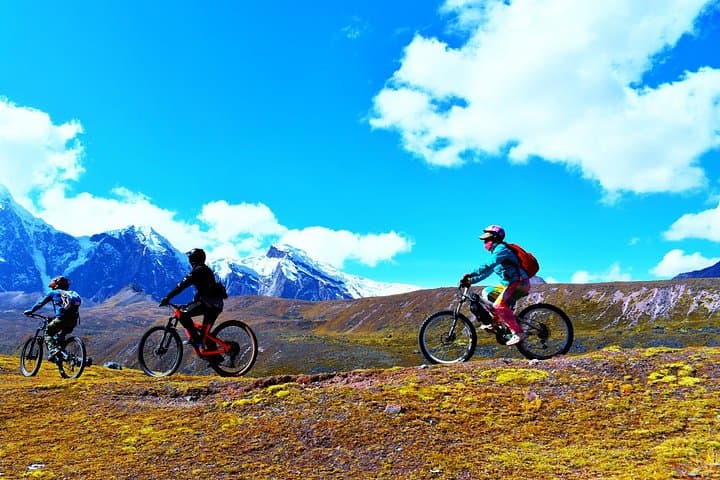
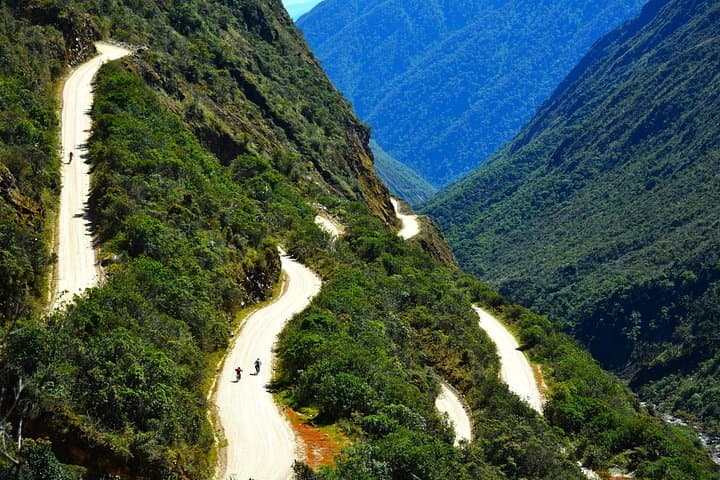
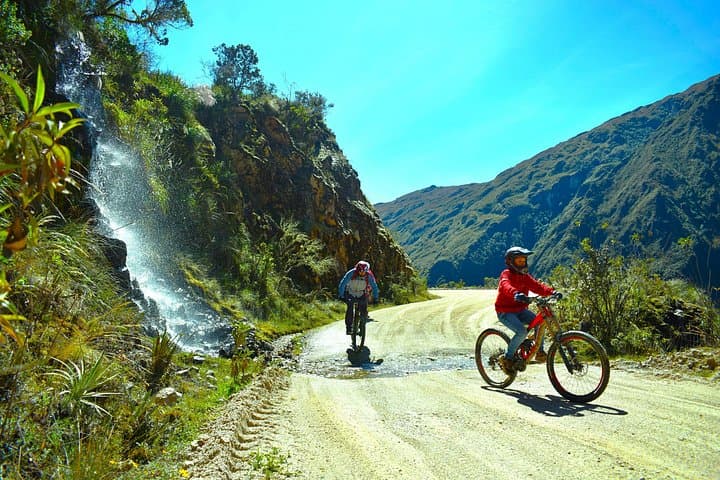
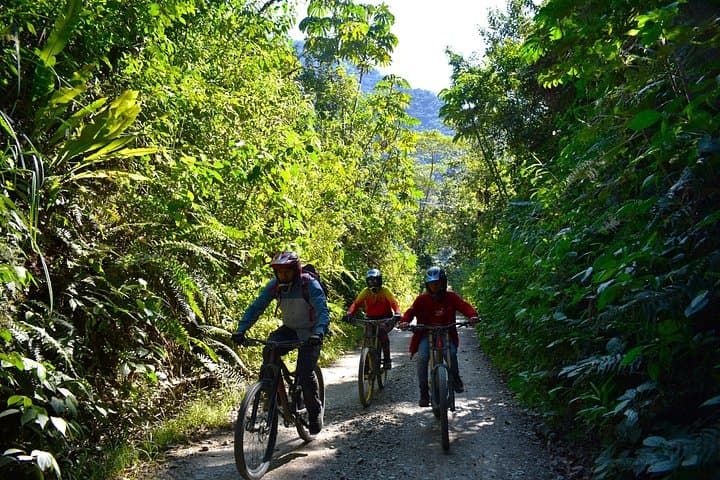
Dawn on the Andean pass feels like a decision point: thin air at 4,480 m, wind pushing at your jacket, and a ribbon of switchbacks that dares you to point your tires downhill. The Inca Jungle route drops from high puna into humid foothills, trading stone terraces and llamas for ceibo and towering ceiba as the trail curls toward Ocobamba and the Urubamba canyon.
Dawn on the Andean pass feels like a decision point: thin air at 4,480 m, wind pushing at your jacket, and a ribbon of switchbacks that dares you to point your tires downhill. The Inca Jungle route drops from high puna into humid foothills, trading stone terraces and llamas for ceibo and towering ceiba as the trail curls toward Ocobamba and the Urubamba canyon.
This route threads recent history and deep geology—Inca roads worn into volcanic and sedimentary slopes, later shaped by glacial retreat and tropical erosion—while local Quechua communities maintain farming and weaving traditions visible in field patterns and roadside markets. Wildlife shifts with altitude: highland camelids give way to toucans and spectacled bears lower down, and the humid air carries the honest smell of river and fern.
Over four days, travelers cycle steep descents and single-track, hike long jungle passes (one day climbing to 3,150 m before descending to 1,852 m), raft Class II–III rapids on the Urubamba, and finish with a guided visit to Machu Picchu. Accommodation ranges from glamping tents in remote camps to a hostel in Aguas Calientes; trains and private transport move the group between stages.
Practically: expect long days, mixed terrain, and high-altitude exposure. Bring layered clothing, waterproof protection, and sturdy footwear; hydrate and plan for at least moderate-to-high fitness. Guides handle navigation, rafting safety, and permits, but cyclists should be comfortable on technical descents and trekkers prepared for sustained, steep climbs. This is a hands-on, varied Andean adventure that rewards preparation as much as boldness.