THE ADVENTURE COLLECTIVE® · Independent discovery and booking for outdoor travel

A four-day route from the high Andes down into cloud forest, the Inca Jungle tour blends downhill mountain biking, river hikes, hot springs, and a final ascent to Machu Picchu. Expect long days, thin air, and vivid mountain-to-jungle scenery.
A four-day route from the high Andes down into cloud forest, the Inca Jungle tour blends downhill mountain biking, river hikes, hot springs, and a final ascent to Machu Picchu. Expect long days, thin air, and vivid mountain-to-jungle scenery.
Morning light slices across the high Andean pass at Abra Málaga, and the air tastes thin and sharp as the group straps on helmets and clips into downhill bikes. The road falls away beneath you—rock, cloud forest, and sudden green—until the Andes hand you over to a jungle that seems to push back with humid breath and rushing rivers daring you onward.
Verified experiences and guided adventures in the surrounding area.
Operated by Haku Travel E.I.R.L · Cusco, Cusco Region
Morning light slices across the high Andean pass at Abra Málaga, and the air tastes thin and sharp as the group straps on helmets and clips into downhill bikes. The road falls away beneath you—rock, cloud forest, and sudden green—until the Andes hand you over to a jungle that seems to push back with humid breath and rushing rivers daring you onward.
This four-day Inca Jungle route threads modern adventure through ancient infrastructure. You follow stretches of the historic Inca trail, cross coffee and coca farms, and ride trails carved by local communities. Geologically, the trip travels the steep escarpment between high puna and cloud forest, where glacially sculpted valleys plunge into river-cut canyons that feed the Vilcanota (Urubamba) watershed. Culturally the route is a corridor of Quechua-speaking villages and hydroelectric railways built during the 20th century to serve remote settlements.
The experience balances adrenaline—downhill mountain biking, optional zipline and rafting—with steady, deliberate hiking: expect roughly 15 km and 6.5–7 hours on day two and a 1.5-hour pre-dawn walk from Aguas Calientes to Machu Picchu. Altitude reaches about 4,350 m at Abra Málaga, so acclimatization matters.
Practical guidance: bring layered clothing for temperature swings, a rain shell for sudden cloud-forest downpours, and a daypack with water and snacks. Allow at least one full day in Cusco to acclimatize, plan for early starts, and carry small local currency for markets and optional activities. The route is part cultural walk, part adrenaline corridor—readiness and respect for fragile mountain and jungle environments will make the trip both safer and more rewarding.
challenging.
4 days.
Good cardiovascular fitness and experience with full-day hikes or moderate downhill biking; comfortable walking 6–7 hours at altitude.
No expert skills required, but basic downhill control and confidence on dirt tracks are important; guides supply bikes and safety gear and adjust pace to the group.
Yes—altitude at Abra Málaga reaches ~4,350 m. Allow time in Cusco to acclimatize and follow guides' advice; carry medication if recommended by your doctor.
The tour includes 3 breakfasts, 3 lunches, 3 dinners, and Machu Picchu entry (usually Circuit 2; substitutes provided if unavailable).
Options include train from Aguas Calientes to Ollantaytambo (then bus to Cusco) or a longer walk to Hidroeléctrica and bus return; choose when booking.
Sections of trail overlap pre-Columbian Inca routes used for trade and communication; modern hydroelectric lines and railway added 20th-century layers to this corridor.
Machu Picchu and surrounding trails face heavy visitor pressure—practice leave-no-trace, avoid single-use plastics, and follow guide instructions to limit erosion and wildlife disturbance.
Haku Travel E.I.R.L operates guided outdoor trips and adventures with an emphasis on safety, stewardship, and memorable experiences.
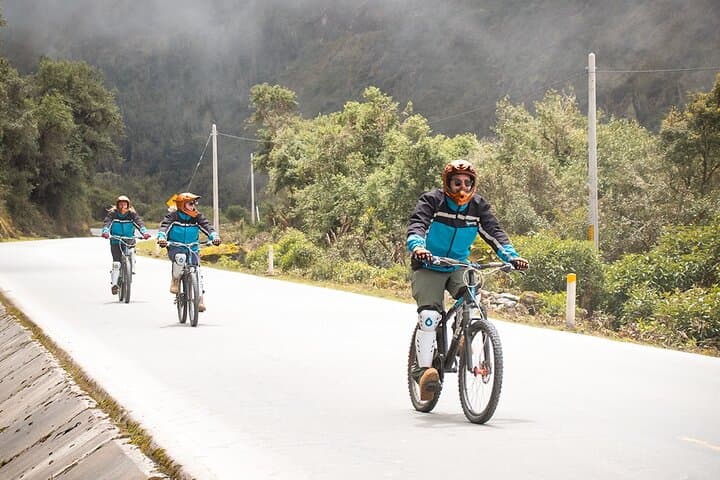
Morning light slices across the high Andean pass at Abra Málaga, and the air tastes thin and sharp as the group straps on helmets and clips into downhill bikes. The road falls away beneath you—rock, cloud forest, and sudden green—until the Andes hand you over to a jungle that seems to push back with humid breath and rushing rivers daring you onward.
Morning light slices across the high Andean pass at Abra Málaga, and the air tastes thin and sharp as the group straps on helmets and clips into downhill bikes. The road falls away beneath you—rock, cloud forest, and sudden green—until the Andes hand you over to a jungle that seems to push back with humid breath and rushing rivers daring you onward.
This four-day Inca Jungle route threads modern adventure through ancient infrastructure. You follow stretches of the historic Inca trail, cross coffee and coca farms, and ride trails carved by local communities. Geologically, the trip travels the steep escarpment between high puna and cloud forest, where glacially sculpted valleys plunge into river-cut canyons that feed the Vilcanota (Urubamba) watershed. Culturally the route is a corridor of Quechua-speaking villages and hydroelectric railways built during the 20th century to serve remote settlements.
The experience balances adrenaline—downhill mountain biking, optional zipline and rafting—with steady, deliberate hiking: expect roughly 15 km and 6.5–7 hours on day two and a 1.5-hour pre-dawn walk from Aguas Calientes to Machu Picchu. Altitude reaches about 4,350 m at Abra Málaga, so acclimatization matters.
Practical guidance: bring layered clothing for temperature swings, a rain shell for sudden cloud-forest downpours, and a daypack with water and snacks. Allow at least one full day in Cusco to acclimatize, plan for early starts, and carry small local currency for markets and optional activities. The route is part cultural walk, part adrenaline corridor—readiness and respect for fragile mountain and jungle environments will make the trip both safer and more rewarding.