
Inca Jungle Adventure: 7-Day Mountain Biking, Rafting, Zipline & Trek to Machu Picchu
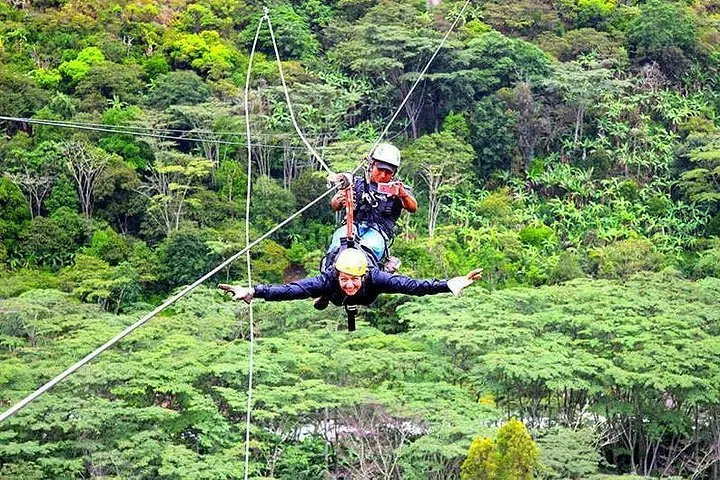
A seven-day blend of high-altitude riding, jungle trekking, white-water rafting and ziplining that finishes at Machu Picchu. Expect long descents, hot springs, Inca sites like Moray and Maras, and a fitness-demanding but logistics-smooth route.
An Adventure In Cusco.
A seven-day blend of high-altitude riding, jungle trekking, white-water rafting and ziplining that finishes at Machu Picchu. Expect long descents, hot springs, Inca sites like Moray and Maras, and a fitness-demanding but logistics-smooth route.
Read the full experience
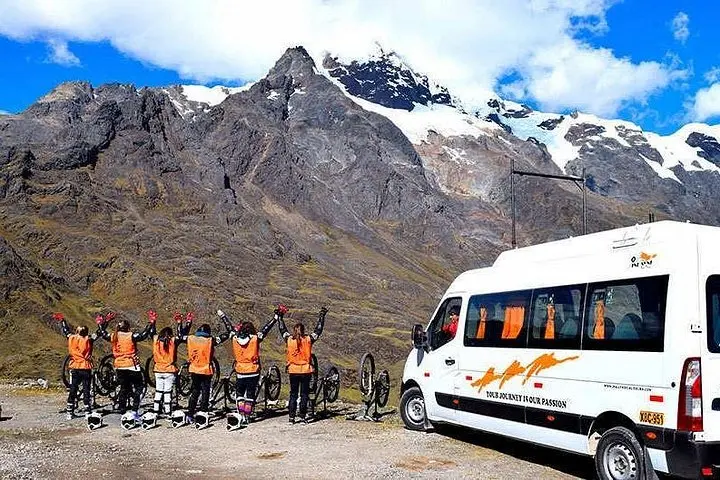
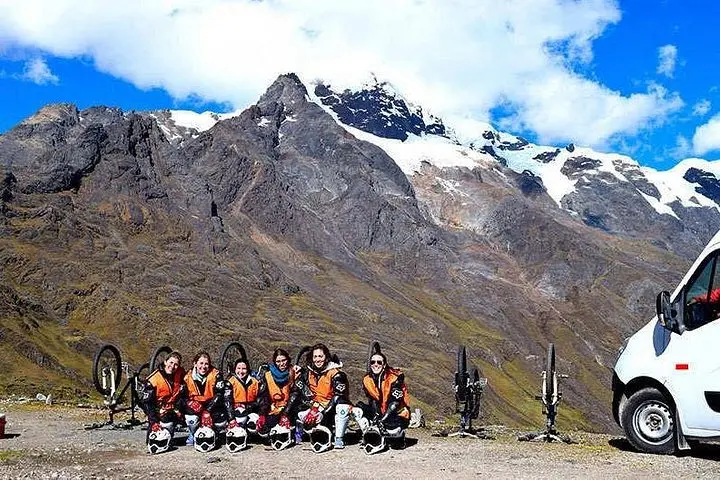
Dawn breaks over Cusco and the air tastes like minerality and cold; the city’s red-tiled roofs give way to jagged Andean ridgelines as your van climbs to Malaga Pass (4,350 m). From that high saddle the route pours downhill—three hours of full-suspension mountain biking through switchbacks, orchards, and rivers that seem to hurry you onward. By midday you trade pedals for paddles, negotiating Class II–III rapids that flirt with the jungle’s edge.
Dawn breaks over Cusco and the air tastes like minerality and cold; the city’s red-tiled roofs give way to jagged Andean ridgelines as your van climbs to Malaga Pass (4,350 m). From that high saddle the route pours downhill—three hours of full-suspension mountain biking through switchbacks, orchards, and rivers that seem to hurry you onward. By midday you trade pedals for paddles, negotiating Class II–III rapids that flirt with the jungle’s edge.
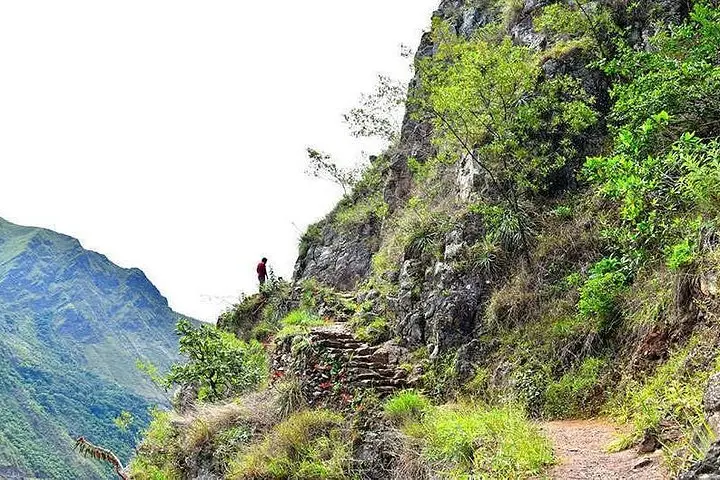
This itinerary stitches together colonial towns, Inca engineering, and subtropical cloud forest. Riders descend nearly 2,500 vertical meters (to ~1,800 m) on the first day; later trekking sections cover about 23 km on day four and roughly 16 km on day five, often along historic Inca paths and beside the Urubamba watershed. Cultural stops include Moray’s concentric terraces and the Maras salt pools—millennia-old systems that reveal Inca agricultural ingenuity.
The landscape shifts rapidly: high puna and windswept passes give way to humid montane forest filled with orchids, hummingbirds, and the distant calls of spectacled bears rarely seen. Local communities—Chinchero, Santa María, Santa Teresa, Aguas Calientes—offer a direct window into Andean weaving, river-based livelihoods, and the service economy that supports trekker flows to Machu Picchu.
Practical notes: expect 6–8 hours of active movement on multiple days, basic hostel accommodations, and one night in Aguas Calientes before the guided Machu Picchu visit. Altitude acclimatization in Cusco and sturdy, well-maintained gear are essential; guides provide bikes, helmets, rafting equipment, and train/bus transfers back to Cusco. Plan for variable weather—layers, waterproof shells, and hydration are non-negotiable for a safe, high-reward week.
Frequently asked questions
Yes — participants should be comfortable on a mountain bike, including descending gravel and rock; guides supply full-suspension bikes and helmets.
You’ll start in Cusco (~3,400 m) and reach Malaga Pass (~4,350 m) before descending to jungle levels around 1,200–1,800 m; acclimatization day in Cusco is included to help adaptation.
Entrance to Machu Picchu is included; additional permits for Huayna Picchu or Machu Picchu Mountain must be booked in advance if desired.
Mix of 3-star hotels in Cusco/Aguas Calientes and basic hostels in rural towns (Santa María, Santa Teresa); one night in Aguas Calientes is included.
About This Experience
Inkayni Peru Tours operates guided outdoor trips and adventures with an emphasis on safety, stewardship, and memorable experiences.
Adventure tips
Recommended gear
- Lightweight waterproof shell: Protects against sudden rain and keeps layers dry in cloud-forest conditions.
- Sturdy trekking shoes: Provide ankle support and traction on wet trail and riverbank approaches.
- Hydration reservoir (2–3 L): Keeps water accessible during long bike descents and multi-hour hikes at varying elevations.
- Compact dry bag: Keeps electronics and spare clothing dry during rafting and wet jungle sections.
Photos of the experience
Related adventures & guides
Read the full experience
Dawn breaks over Cusco and the air tastes like minerality and cold; the city’s red-tiled roofs give way to jagged Andean ridgelines as your van climbs to Malaga Pass (4,350 m). From that high saddle the route pours downhill—three hours of full-suspension mountain biking through switchbacks, orchards, and rivers that seem to hurry you onward. By midday you trade pedals for paddles, negotiating Class II–III rapids that flirt with the jungle’s edge.
Dawn breaks over Cusco and the air tastes like minerality and cold; the city’s red-tiled roofs give way to jagged Andean ridgelines as your van climbs to Malaga Pass (4,350 m). From that high saddle the route pours downhill—three hours of full-suspension mountain biking through switchbacks, orchards, and rivers that seem to hurry you onward. By midday you trade pedals for paddles, negotiating Class II–III rapids that flirt with the jungle’s edge.
This itinerary stitches together colonial towns, Inca engineering, and subtropical cloud forest. Riders descend nearly 2,500 vertical meters (to ~1,800 m) on the first day; later trekking sections cover about 23 km on day four and roughly 16 km on day five, often along historic Inca paths and beside the Urubamba watershed. Cultural stops include Moray’s concentric terraces and the Maras salt pools—millennia-old systems that reveal Inca agricultural ingenuity.
The landscape shifts rapidly: high puna and windswept passes give way to humid montane forest filled with orchids, hummingbirds, and the distant calls of spectacled bears rarely seen. Local communities—Chinchero, Santa María, Santa Teresa, Aguas Calientes—offer a direct window into Andean weaving, river-based livelihoods, and the service economy that supports trekker flows to Machu Picchu.
Practical notes: expect 6–8 hours of active movement on multiple days, basic hostel accommodations, and one night in Aguas Calientes before the guided Machu Picchu visit. Altitude acclimatization in Cusco and sturdy, well-maintained gear are essential; guides provide bikes, helmets, rafting equipment, and train/bus transfers back to Cusco. Plan for variable weather—layers, waterproof shells, and hydration are non-negotiable for a safe, high-reward week.
Make a day of it nearby.
Verified experiences and guided adventures in the surrounding area.