THE ADVENTURE COLLECTIVE® · Independent discovery and booking for outdoor travel

Walk the gentle hills around Vinci through olive groves and vineyards, visit a centuries-old wine cellar, then explore Leonardo’s Birthplace and local museums. This 3–5 hour cultural hike pairs light terrain with rich historical context.
Walk the gentle hills around Vinci through olive groves and vineyards, visit a centuries-old wine cellar, then explore Leonardo’s Birthplace and local museums. This 3–5 hour cultural hike pairs light terrain with rich historical context.
The path begins at the stone gate of Vinci, where sun-warmed olive groves slope toward the Arno and the Chianti hills, and the air smells faintly of crushed herbs and fermenting grapes.
Verified experiences and guided adventures in the surrounding area.
Operated by Tuscany Hiking · Vinci, Tuscany
The path begins at the stone gate of Vinci, where sun-warmed olive groves slope toward the Arno and the Chianti hills, and the air smells faintly of crushed herbs and fermenting grapes.
You walk the same ridge lines that shaped a curious mind: low, agricultural hills of Pliocene clays and marine sediments lifted and folded into the gentle relief of Tuscany. Vineyards cut terraces into the slopes; an ancient leccio (holm oak) at Faltognano stands like a local landmark, its branches throwing scattered shade over the valley that seems to dare you to look further.
Leonardo’s birthplace and the Leonardian museums in Vinci host hands-on exhibits and reproductions that trace local crafts, engineering sketches and rural life in the 15th century. Wine cellars built into the hill tell their own history—stone, oak barrels, and a slow, patient chemistry of vintners passing techniques down generations.
Expect a rhythmic, accessible hike: roughly 8–10 km over rolling dirt and cobbled village lanes, with ~200–300 m of cumulative ascent, completed in 3–5 hours depending on stops. Bring trekking shoes for uneven tracks, a light jacket for breezy viewpoints, and cash for museum entry or a winery tasting (tickets for Leonardo’s Birthplace are often separate).
Plan morning starts to avoid the hottest hours; combine the walk with a late-afternoon visit to the village to catch long, soft light on the museum facades. The trail is cultural, tactile and quiet—perfect for anyone wanting a short, interpretive trek through the landscape that shaped one of history’s most inquisitive minds.
moderate.
3–5 hours.
Suitable for people who can comfortably walk 8–10 km on rolling terrain and manage short climbs; not technical but requires steady footing.
The itinerary runs 3–5 hours, covering roughly 8–10 km with gentle to moderate ascents on dirt and cobblestone—suitable for moderately fit walkers.
Museum admission to Leonardo’s Birthplace is not included in the tour price; plan to purchase tickets separately or ask the guide about arrangements.
Winery and cellar visits depend on availability; confirm when booking and expect alternatives if the farm is closed or fully reserved.
The route is family-friendly but includes uneven surfaces; assess mobility and bring suitable footwear—travelers with significant spinal issues or who are pregnant should avoid strenuous sections.
Vinci grew as a rural village in medieval Tuscany; the surrounding agricultural landscape and artisan traditions shaped Leonardo’s early observations of mechanics, flight and natural forms.
Stretch-limited foot traffic and responsible tasting practices help protect fragile vineyard terraces and century-old trees—stick to paths and avoid trampling vines.
Tuscany Hiking operates guided outdoor trips and adventures with an emphasis on safety, stewardship, and memorable experiences.
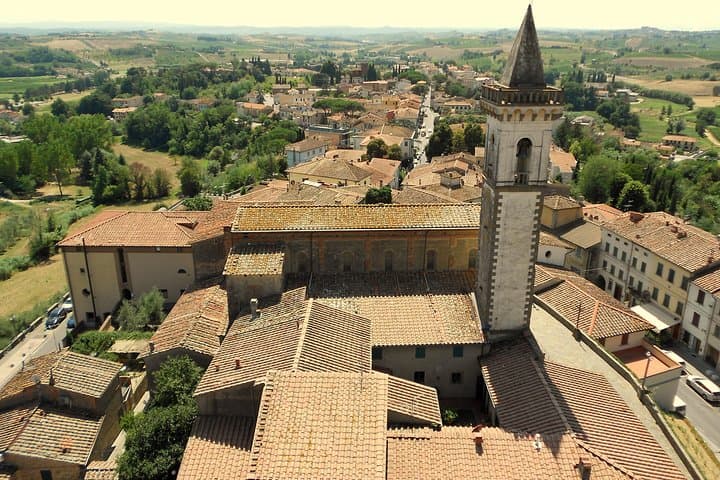


The path begins at the stone gate of Vinci, where sun-warmed olive groves slope toward the Arno and the Chianti hills, and the air smells faintly of crushed herbs and fermenting grapes.
The path begins at the stone gate of Vinci, where sun-warmed olive groves slope toward the Arno and the Chianti hills, and the air smells faintly of crushed herbs and fermenting grapes.
You walk the same ridge lines that shaped a curious mind: low, agricultural hills of Pliocene clays and marine sediments lifted and folded into the gentle relief of Tuscany. Vineyards cut terraces into the slopes; an ancient leccio (holm oak) at Faltognano stands like a local landmark, its branches throwing scattered shade over the valley that seems to dare you to look further.
Leonardo’s birthplace and the Leonardian museums in Vinci host hands-on exhibits and reproductions that trace local crafts, engineering sketches and rural life in the 15th century. Wine cellars built into the hill tell their own history—stone, oak barrels, and a slow, patient chemistry of vintners passing techniques down generations.
Expect a rhythmic, accessible hike: roughly 8–10 km over rolling dirt and cobbled village lanes, with ~200–300 m of cumulative ascent, completed in 3–5 hours depending on stops. Bring trekking shoes for uneven tracks, a light jacket for breezy viewpoints, and cash for museum entry or a winery tasting (tickets for Leonardo’s Birthplace are often separate).
Plan morning starts to avoid the hottest hours; combine the walk with a late-afternoon visit to the village to catch long, soft light on the museum facades. The trail is cultural, tactile and quiet—perfect for anyone wanting a short, interpretive trek through the landscape that shaped one of history’s most inquisitive minds.