THE ADVENTURE COLLECTIVE® · Independent discovery and booking for outdoor travel

Spend two hours at a working doburoku brewery on Dejima, Nagasaki’s historic trading island. Taste multiple traditional brews, learn rice-to-sake techniques, and enjoy homemade pairings while taking home a sake cup and bottle.
Spend two hours at a working doburoku brewery on Dejima, Nagasaki’s historic trading island. Taste multiple traditional brews, learn rice-to-sake techniques, and enjoy homemade pairings while taking home a sake cup and bottle.
The door opens onto a narrow street of brick and plaster, the harbor a short walk away and the air carrying faint salt and rice. Inside Dejima Hosendo, light falls across wooden barrels and a low counter where brewers work with their hands; the room feels both laboratory and living room. The experience centers on doburoku, an early, rustic form of sake that still speaks plainly of rice, water and skilled timing.
Verified experiences and guided adventures in the surrounding area.
Operated by でじま芳扇堂 酒バー体験 · Nagasaki, Nagasaki Prefecture
The door opens onto a narrow street of brick and plaster, the harbor a short walk away and the air carrying faint salt and rice. Inside Dejima Hosendo, light falls across wooden barrels and a low counter where brewers work with their hands; the room feels both laboratory and living room. The experience centers on doburoku, an early, rustic form of sake that still speaks plainly of rice, water and skilled timing.
Dejima itself was Japan’s designated window to the world during the Edo period — a man-made island carved for trade — and the brewery occupies that same borderland of exchange. Geologically the area is anchored to Nagasaki’s sheltered harbor; culturally it sits at the intersection of agricultural rice production and coastal commerce. Expect stories of rice cultivation, koji mold, and fermentation techniques explained in plain terms, then demonstrated through tasting and touch.
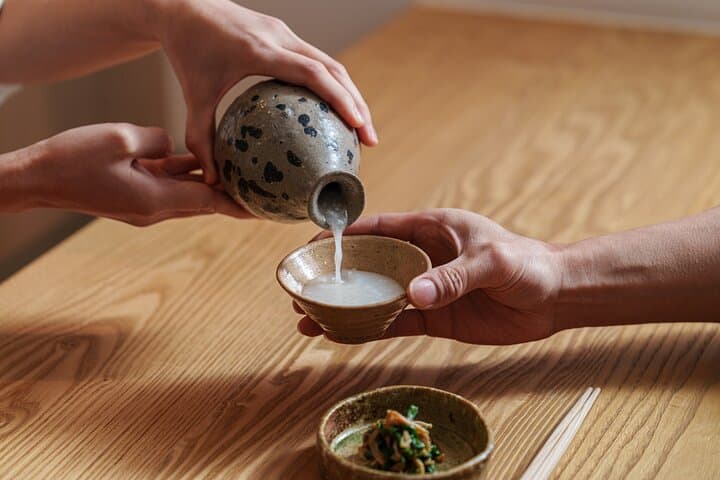
The tasting is practical and sensory: compare doburoku styles, feel the grainy texture, close your eyes to hear the pour, and pair each sip with the proprietress’s homemade dishes. Non-alcoholic amazake is offered for those who abstain. Souvenirs include a small bottle of doburoku and a special sake cup to take home.
Plan ahead: bookings can be limited by brewing schedules and require at least two guests. Arrive on public transit, leave room for translation Q&A, and pace tastings to avoid overwhelm. This is an intimate, low‑impact cultural immersion that rewards curiosity and respectful tasting etiquette.
easy.
2 hours.
Suitable for all fitness levels; activity is seated and sensory rather than physical
Yes—non-alcoholic amazake is provided and you can still participate in the sensory and educational portions.
Accessibility varies by historic building layout; contact the host ahead to confirm accommodations.
Small souvenirs are included; additional bottles or cups may be available depending on production and stock.
Reception and hospitality are provided in English, but confirm at booking if you need extended translation.
Dejima was an artificial island created in the 17th century to confine foreign traders; it became Nagasaki’s focal point of cultural exchange during Japan’s isolation period.
Small-batch breweries often prioritize local rice and minimize waste; visitors should respect limited production runs and avoid over-purchasing to support sustainable practices.
でじま芳扇堂 酒バー体験 operates guided outdoor trips and adventures with an emphasis on safety, stewardship, and memorable experiences.


The door opens onto a narrow street of brick and plaster, the harbor a short walk away and the air carrying faint salt and rice. Inside Dejima Hosendo, light falls across wooden barrels and a low counter where brewers work with their hands; the room feels both laboratory and living room. The experience centers on doburoku, an early, rustic form of sake that still speaks plainly of rice, water and skilled timing.
The door opens onto a narrow street of brick and plaster, the harbor a short walk away and the air carrying faint salt and rice. Inside Dejima Hosendo, light falls across wooden barrels and a low counter where brewers work with their hands; the room feels both laboratory and living room. The experience centers on doburoku, an early, rustic form of sake that still speaks plainly of rice, water and skilled timing.
Dejima itself was Japan’s designated window to the world during the Edo period — a man-made island carved for trade — and the brewery occupies that same borderland of exchange. Geologically the area is anchored to Nagasaki’s sheltered harbor; culturally it sits at the intersection of agricultural rice production and coastal commerce. Expect stories of rice cultivation, koji mold, and fermentation techniques explained in plain terms, then demonstrated through tasting and touch.
The tasting is practical and sensory: compare doburoku styles, feel the grainy texture, close your eyes to hear the pour, and pair each sip with the proprietress’s homemade dishes. Non-alcoholic amazake is offered for those who abstain. Souvenirs include a small bottle of doburoku and a special sake cup to take home.
Plan ahead: bookings can be limited by brewing schedules and require at least two guests. Arrive on public transit, leave room for translation Q&A, and pace tastings to avoid overwhelm. This is an intimate, low‑impact cultural immersion that rewards curiosity and respectful tasting etiquette.