THE ADVENTURE COLLECTIVE® · Independent discovery and booking for outdoor travel

Escape Marrakech for a day in the High Atlas: a short guided hike through Imlil Valley, a camel ride, and a home-cooked Berber lunch at the foot of Mount Toubkal. Perfect for travelers who want mountain scenery, culture, and an easy outdoor outing.
Escape Marrakech for a day in the High Atlas: a short guided hike through Imlil Valley, a camel ride, and a home-cooked Berber lunch at the foot of Mount Toubkal. Perfect for travelers who want mountain scenery, culture, and an easy outdoor outing.
A cool mountain breeze meets the dust of Marrakech as the road climbs toward the High Atlas; within an hour the city’s heat gives way to terraced fields, citrus groves and villages keyed into the rhythm of mountain life. In Imlil Valley, paths thread between stone houses and walnut trees, and the valley itself seems to push visitors gently toward the distant silhouette of Mount Toubkal, Morocco’s 4,167‑meter high point.
Verified experiences and guided adventures in the surrounding area.
Operated by Snoubi Travelling · Imlil, Marrakech-Safi
A cool mountain breeze meets the dust of Marrakech as the road climbs toward the High Atlas; within an hour the city’s heat gives way to terraced fields, citrus groves and villages keyed into the rhythm of mountain life. In Imlil Valley, paths thread between stone houses and walnut trees, and the valley itself seems to push visitors gently toward the distant silhouette of Mount Toubkal, Morocco’s 4,167‑meter high point.
The valley is lived-in landscape: Berber families have farmed these slopes for centuries, carving terraces and building mule tracks that became the modern hiking routes. Geologically, the High Atlas is young and rugged—folded sedimentary rock uplifted by the African and Eurasian plates—so expect sharp ridgelines framing broader, cultivated basins. Culturally, the area is predominantly Amazigh (Berber): local guides narrate village life, traditional architecture and seasonal markets in Asni or Tahnaout when they occur.
Practically, this shared tour pairs a short guided hike—around 1.5 hours on stony, sometimes stepped trails—with a camel ride and a home-cooked lunch in a Berber house. The terrain is dirt tracks and mountain paths with short, steady climbs; basic walking shoes suffice. Bring water, sun protection and a light layer; mornings are best for cooler air and clearer views. Transfers are usually 5 hours total, including pick-up/drop-off in Marrakech and an environmental walk in the valley.
Travelers leave with a clearer sense of mountain agriculture, a taste of local hospitality, and practical experience walking High Atlas trails—enough to plan a longer trek or simply savor a day where the mountains quietly insist you slow down.
easy.
5 hours.
Suitable for travelers in regular, everyday fitness—able to walk 1–2 hours on uneven terrain with short climbs.
The guided walking portion is roughly 1.5 hours of hiking on village and mountain paths, set within a full‑day outing of about five hours including transfers.
Yes—this is marketed as suitable for all fitness levels; paths are non‑technical but uneven, so supervision and sturdy footwear are recommended for children and anyone with mobility concerns.
Yes—the valley sits at the foot of Mount Toubkal and offers clear views of the massif on fair-weather days; summit visibility depends on clouds and seasonal haze.
If the trip coincides with market days (Asni on Saturday, Tahnaout on Tuesday), the itinerary includes market visits; check booking notes or confirm with the operator before departure.
The Imlil Valley is part of long‑standing Amazigh (Berber) lands where terraced agriculture and transhumance routes shaped village locations and mountain paths over centuries.
Trekking and tourism support local economies but increase waste and water demand; use local guides, avoid single‑use plastics and follow leave‑no‑trace practices.
Snoubi Travelling operates guided outdoor trips and adventures with an emphasis on safety, stewardship, and memorable experiences.
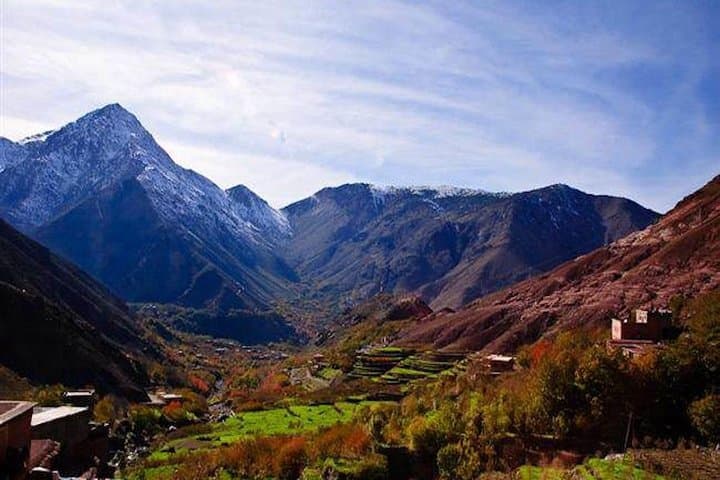
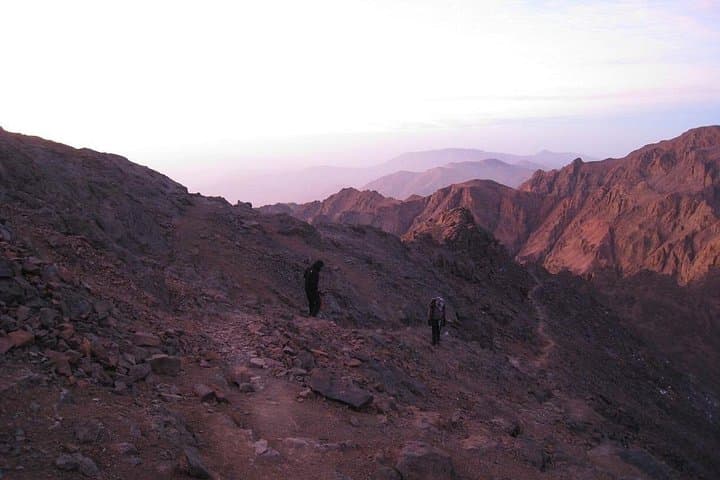
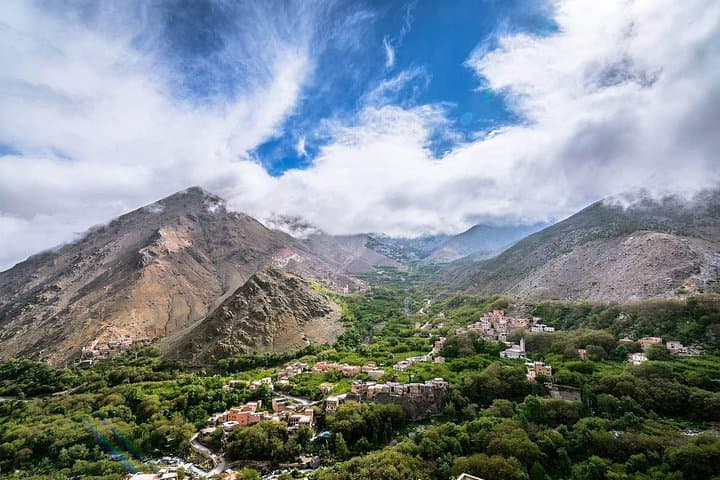
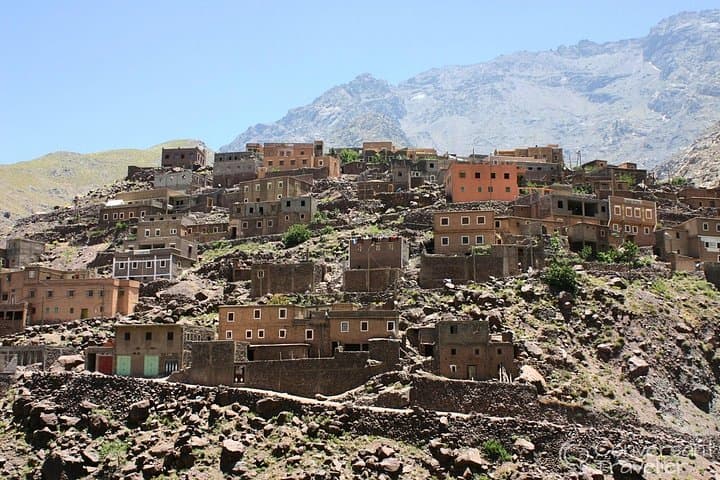
A cool mountain breeze meets the dust of Marrakech as the road climbs toward the High Atlas; within an hour the city’s heat gives way to terraced fields, citrus groves and villages keyed into the rhythm of mountain life. In Imlil Valley, paths thread between stone houses and walnut trees, and the valley itself seems to push visitors gently toward the distant silhouette of Mount Toubkal, Morocco’s 4,167‑meter high point.
A cool mountain breeze meets the dust of Marrakech as the road climbs toward the High Atlas; within an hour the city’s heat gives way to terraced fields, citrus groves and villages keyed into the rhythm of mountain life. In Imlil Valley, paths thread between stone houses and walnut trees, and the valley itself seems to push visitors gently toward the distant silhouette of Mount Toubkal, Morocco’s 4,167‑meter high point.
The valley is lived-in landscape: Berber families have farmed these slopes for centuries, carving terraces and building mule tracks that became the modern hiking routes. Geologically, the High Atlas is young and rugged—folded sedimentary rock uplifted by the African and Eurasian plates—so expect sharp ridgelines framing broader, cultivated basins. Culturally, the area is predominantly Amazigh (Berber): local guides narrate village life, traditional architecture and seasonal markets in Asni or Tahnaout when they occur.
Practically, this shared tour pairs a short guided hike—around 1.5 hours on stony, sometimes stepped trails—with a camel ride and a home-cooked lunch in a Berber house. The terrain is dirt tracks and mountain paths with short, steady climbs; basic walking shoes suffice. Bring water, sun protection and a light layer; mornings are best for cooler air and clearer views. Transfers are usually 5 hours total, including pick-up/drop-off in Marrakech and an environmental walk in the valley.
Travelers leave with a clearer sense of mountain agriculture, a taste of local hospitality, and practical experience walking High Atlas trails—enough to plan a longer trek or simply savor a day where the mountains quietly insist you slow down.