THE ADVENTURE COLLECTIVE® · Independent discovery and booking for outdoor travel

Spend a full day escaping Marrakech for a guided hike in Imlil Valley, meeting Berber villagers, sampling a home-cooked lunch and walking amid the high Atlas peaks. This accessible day trip blends cultural encounters with scenic, non-technical trails.
Spend a full day escaping Marrakech for a guided hike in Imlil Valley, meeting Berber villagers, sampling a home-cooked lunch and walking amid the high Atlas peaks. This accessible day trip blends cultural encounters with scenic, non-technical trails.
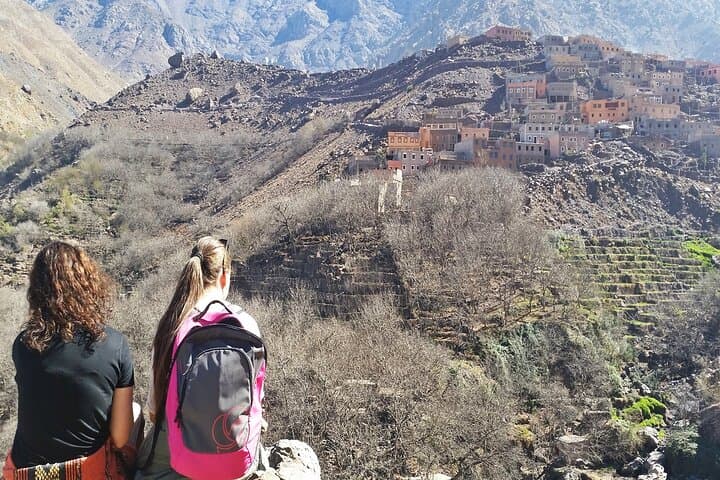
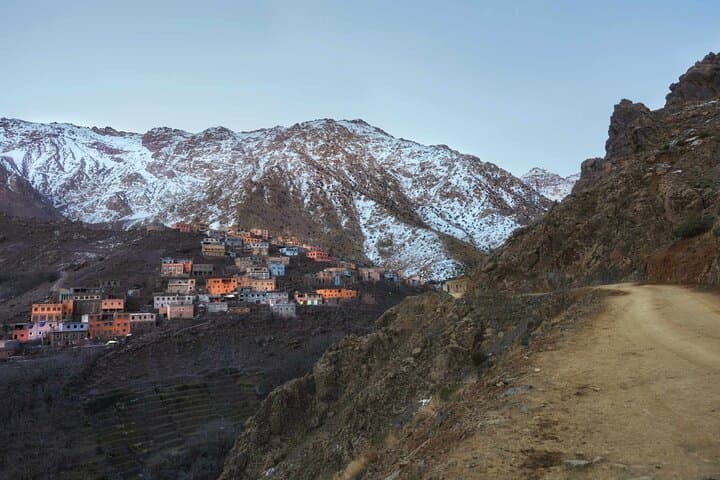
A morning drive out of Marrakech delivers you into a shifting palette of terraced fields and rocky ridgelines—by midmorning the air thins and the Atlas Mountains rise like a folded map. Imlil Valley opens between peaks, a working landscape of mule tracks, apple orchards and flat-roofed stone houses where smoke from wood stoves threads through narrow lanes.
Verified experiences and guided adventures in the surrounding area.
Operated by Tours Excursions Journeys · Imlil, Marrakesh-Safi
A morning drive out of Marrakech delivers you into a shifting palette of terraced fields and rocky ridgelines—by midmorning the air thins and the Atlas Mountains rise like a folded map. Imlil Valley opens between peaks, a working landscape of mule tracks, apple orchards and flat-roofed stone houses where smoke from wood stoves threads through narrow lanes.
The Atlas range is the product of long tectonic uplift and erosion; valleys like Imlil are carved by winter snowmelt and centuries of shepherding. The Amazigh (Berber) communities here maintain traditional crafts—carpet weaving, goat herding and argan or olive presses—skills often shared at village cooperatives where visitors can watch and buy directly from makers.
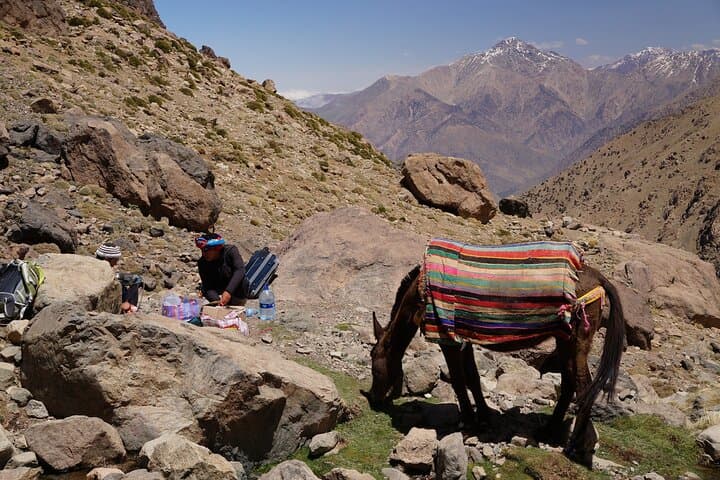
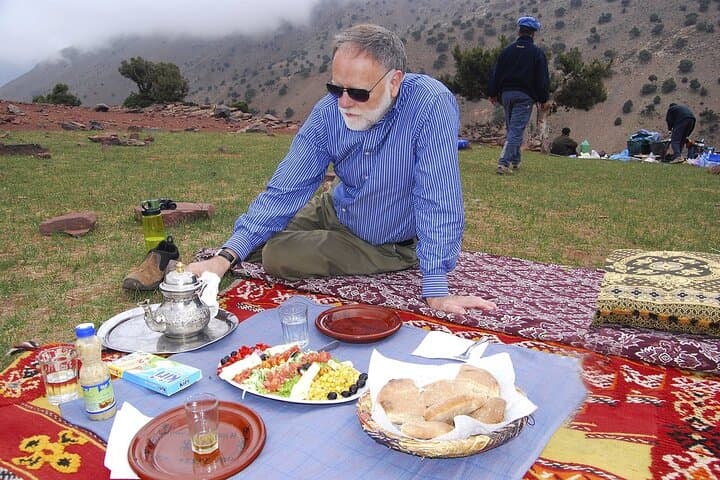
On the trail expect 6–10 km of walking on packed dirt, cobbles and occasional rocky switchbacks, with roughly 200–500 m of cumulative ascent depending on your route. Hikers move through orchards and cedar-scarred slopes, passing terraced farms that change color with the seasons; the soundscape is wind, distant calls and the clip-clop of pack animals. A sit-down lunch in a family home offers tagine, flatbread and mint tea prepared fresh.
Practical notes: start early to avoid valley heat, bring layered clothing for cool mountain breezes, and carry at least 1.5–2 liters of water. Trails are non-technical but uneven—sturdy footwear and a steady pace make the day comfortable. Pick-up and drop-off from Marrakech are typically included, making this a full but accessible introduction to Atlas life and landscape.
moderate.
7–9 hours.
Suitable for travelers with basic fitness—comfortable walking 6–10 km with some sustained uphill sections and uneven terrain.
The drive to Imlil typically takes about 60–90 minutes depending on traffic and the chosen route into the Atlas foothills.
Yes—routes are non-technical and operators note the activity as easy to moderate; bring extra rest breaks for children or those who prefer a gentler pace.
Yes—most itineraries include a visit to a village cooperative where you can see carpet weaving or argan/olive oil production and buy directly from artisans.
Imlil sits around 1,700–1,800 m elevation; most travelers do fine, but go slowly, hydrate and let your guide know if you feel unwell.
The Imlil valley has long been a transit and pastoral area for Amazigh (Berber) communities; many villages preserve seasonal farming techniques and communal craft traditions.
Tourism supports local co-ops, but stick to trails, pack out waste and avoid buying items made from endangered woods or unsustainably harvested products.
Tours Excursions Journeys operates guided outdoor trips and adventures with an emphasis on safety, stewardship, and memorable experiences.
A morning drive out of Marrakech delivers you into a shifting palette of terraced fields and rocky ridgelines—by midmorning the air thins and the Atlas Mountains rise like a folded map. Imlil Valley opens between peaks, a working landscape of mule tracks, apple orchards and flat-roofed stone houses where smoke from wood stoves threads through narrow lanes.
A morning drive out of Marrakech delivers you into a shifting palette of terraced fields and rocky ridgelines—by midmorning the air thins and the Atlas Mountains rise like a folded map. Imlil Valley opens between peaks, a working landscape of mule tracks, apple orchards and flat-roofed stone houses where smoke from wood stoves threads through narrow lanes.
The Atlas range is the product of long tectonic uplift and erosion; valleys like Imlil are carved by winter snowmelt and centuries of shepherding. The Amazigh (Berber) communities here maintain traditional crafts—carpet weaving, goat herding and argan or olive presses—skills often shared at village cooperatives where visitors can watch and buy directly from makers.
On the trail expect 6–10 km of walking on packed dirt, cobbles and occasional rocky switchbacks, with roughly 200–500 m of cumulative ascent depending on your route. Hikers move through orchards and cedar-scarred slopes, passing terraced farms that change color with the seasons; the soundscape is wind, distant calls and the clip-clop of pack animals. A sit-down lunch in a family home offers tagine, flatbread and mint tea prepared fresh.
Practical notes: start early to avoid valley heat, bring layered clothing for cool mountain breezes, and carry at least 1.5–2 liters of water. Trails are non-technical but uneven—sturdy footwear and a steady pace make the day comfortable. Pick-up and drop-off from Marrakech are typically included, making this a full but accessible introduction to Atlas life and landscape.