THE ADVENTURE COLLECTIVE® · Independent discovery and booking for outdoor travel

Leave Marrakech for a private 4x4 day trip into the High Atlas to Imlil, where mountain air, waterfalls and a home-cooked Berber lunch await. This flexible tour mixes gentle walks or mule rides with cultural time in village homes — ideal for travelers seeking an authentic mountain escape.
Leave Marrakech for a private 4x4 day trip into the High Atlas to Imlil, where mountain air, waterfalls and a home-cooked Berber lunch await. This flexible tour mixes gentle walks or mule rides with cultural time in village homes — ideal for travelers seeking an authentic mountain escape.
The road out of Marrakech unfurls into high plains and then tightens into a ribbon of switchbacks as the High Atlas climbs up toward Imlil. In a comfortable, air-conditioned 4x4 the city’s dust gives way to crisp mountain air; stone villages appear like cairns on sunlit slopes and the distant ridgelines cut a clean edge against the sky.
Verified experiences and guided adventures in the surrounding area.
Operated by Desert Sans Frontieres · Imlil, Marrakesh-Safi
The road out of Marrakech unfurls into high plains and then tightens into a ribbon of switchbacks as the High Atlas climbs up toward Imlil. In a comfortable, air-conditioned 4x4 the city’s dust gives way to crisp mountain air; stone villages appear like cairns on sunlit slopes and the distant ridgelines cut a clean edge against the sky.
This valley has long been a crossroads for Amazigh (Berber) shepherds and traders moving between plains and mountain pastures. The geology is mostly folded limestone and schist, carved by seasonal streams; the village sits at roughly 1,740 m elevation and acts as a gateway to Toubkal’s lower approaches. Cultural rhythms are simple — mint tea offered as a mark of welcome, terraced fields, and houses built of local stone and earth.
On this private day trip travelers can choose a guided walk, a short mule ride, or time to visit a family home for a cooked lunch overlooking the valley. Expect easy to moderate walking on uneven village tracks, a chance to reach small waterfalls in spring, and meaningful local interaction rather than staged performances.
Practical notes: start early to avoid mid-day traffic back to Marrakech, bring cash for small purchases and tips, and wear broken-in shoes for stone paths. Hydration and layered clothing matter—mountain weather shifts quickly. Camera, respectful curiosity, and an openness to quiet village life will yield the best experience.
easy.
8–9 hours.
Suitable for most travelers; requires the ability to do light walking on uneven terrain for up to 2 hours.
The drive typically takes about 1–1.5 hours each way depending on traffic and stops for photos in the Tahanaout and Asni valleys.
No—the standard options are easy to moderate walks on village tracks; more strenuous treks up toward Toubkal require multi-day plans and different gear.
Yes; short mule rides are commonly offered in Imlil for those who prefer not to walk, but discuss duration and animal welfare with your guide beforehand.
Yes—this tour includes a traditional Berber lunch and tea with a local family as part of the private itinerary.
Imlil has long been a seasonal base for Amazigh shepherding and a staging point for early European mountaineers accessing Mount Toubkal.
The High Atlas is sensitive to erosion and water scarcity; visitors should stick to paths, avoid single-use plastics, and support local guides and family-run meals to benefit communities.
Desert Sans Frontieres operates guided outdoor trips and adventures with an emphasis on safety, stewardship, and memorable experiences.
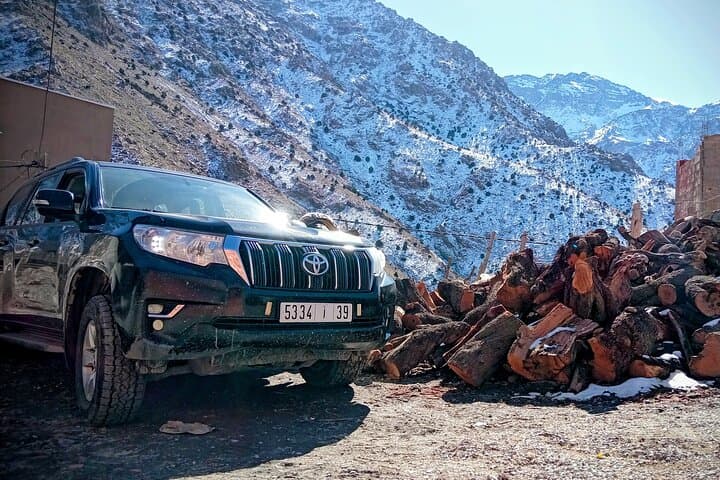


The road out of Marrakech unfurls into high plains and then tightens into a ribbon of switchbacks as the High Atlas climbs up toward Imlil. In a comfortable, air-conditioned 4x4 the city’s dust gives way to crisp mountain air; stone villages appear like cairns on sunlit slopes and the distant ridgelines cut a clean edge against the sky.
The road out of Marrakech unfurls into high plains and then tightens into a ribbon of switchbacks as the High Atlas climbs up toward Imlil. In a comfortable, air-conditioned 4x4 the city’s dust gives way to crisp mountain air; stone villages appear like cairns on sunlit slopes and the distant ridgelines cut a clean edge against the sky.
This valley has long been a crossroads for Amazigh (Berber) shepherds and traders moving between plains and mountain pastures. The geology is mostly folded limestone and schist, carved by seasonal streams; the village sits at roughly 1,740 m elevation and acts as a gateway to Toubkal’s lower approaches. Cultural rhythms are simple — mint tea offered as a mark of welcome, terraced fields, and houses built of local stone and earth.
On this private day trip travelers can choose a guided walk, a short mule ride, or time to visit a family home for a cooked lunch overlooking the valley. Expect easy to moderate walking on uneven village tracks, a chance to reach small waterfalls in spring, and meaningful local interaction rather than staged performances.
Practical notes: start early to avoid mid-day traffic back to Marrakech, bring cash for small purchases and tips, and wear broken-in shoes for stone paths. Hydration and layered clothing matter—mountain weather shifts quickly. Camera, respectful curiosity, and an openness to quiet village life will yield the best experience.