THE ADVENTURE COLLECTIVE® · Independent discovery and booking for outdoor travel

A full-day mountain-bike loop through the High Atlas from Marrakech, the Imlil Circle & Imenan Valley route combines sustained climbs, technical descents, and visits to traditional Berber villages. Expect 5–6 hours of riding across dirt roads, rocky singletrack, and panoramic valley views.
A full-day mountain-bike loop through the High Atlas from Marrakech, the Imlil Circle & Imenan Valley route combines sustained climbs, technical descents, and visits to traditional Berber villages. Expect 5–6 hours of riding across dirt roads, rocky singletrack, and panoramic valley views.
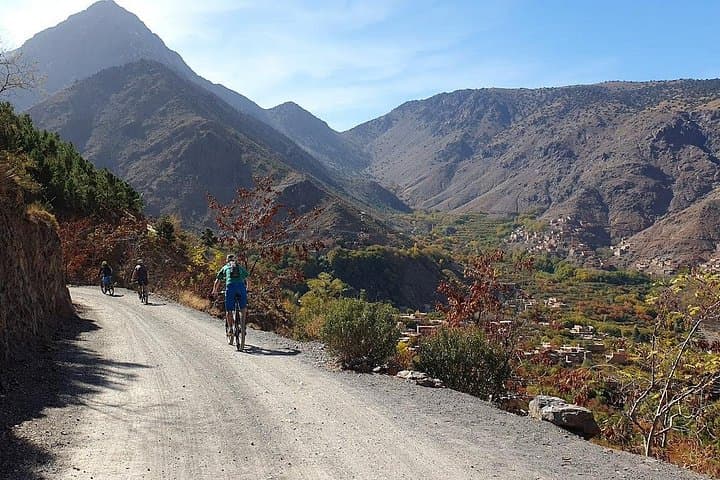
You roll out of Marrakech before the city heat builds and the road climbs into the High Atlas. Dust lifts behind the van and soon the air smells of thyme and cedar; terraces and low stone houses appear, and the trail opens to the Imlil Valley at about 1,700 m.
Verified experiences and guided adventures in the surrounding area.
Operated by Mountain Bike Morocco · Imlil, Marrakech-Safi
You roll out of Marrakech before the city heat builds and the road climbs into the High Atlas. Dust lifts behind the van and soon the air smells of thyme and cedar; terraces and low stone houses appear, and the trail opens to the Imlil Valley at about 1,700 m.
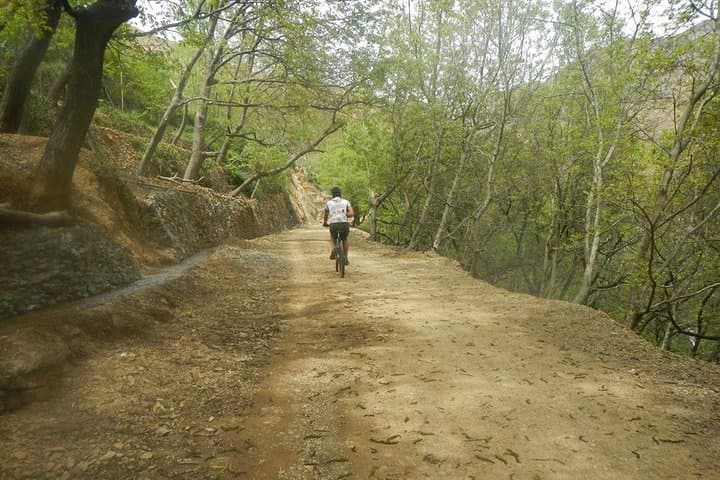
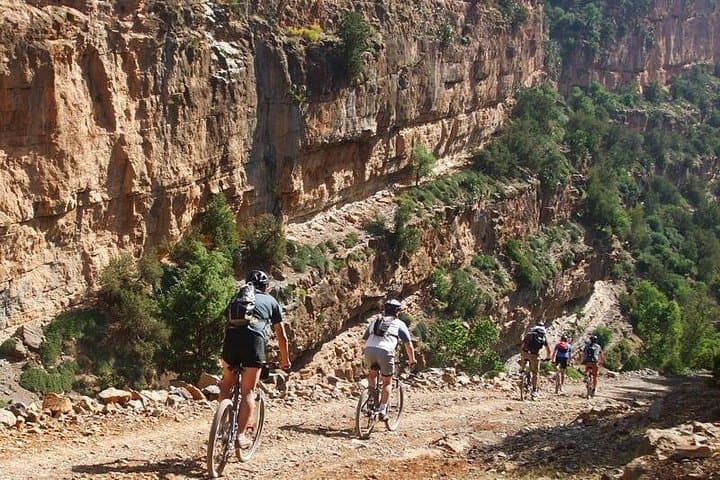
The route follows old mule tracks and rough dirt roads through Berber villages, offering regular climbs and technical descents. Geologically the High Atlas is a band of folded and uplifted rock—granite cores and older metamorphics—so expect rocky switchbacks and sections where loose scree tests your wheel control.
Culturally, this is Berber country: flat-roofed homes, irrigation furrows, and shepherds moving goats. Guides often point out seasonal barley fields and the mosque bells in remote hamlets, and provide afternoon mint tea in a village home.
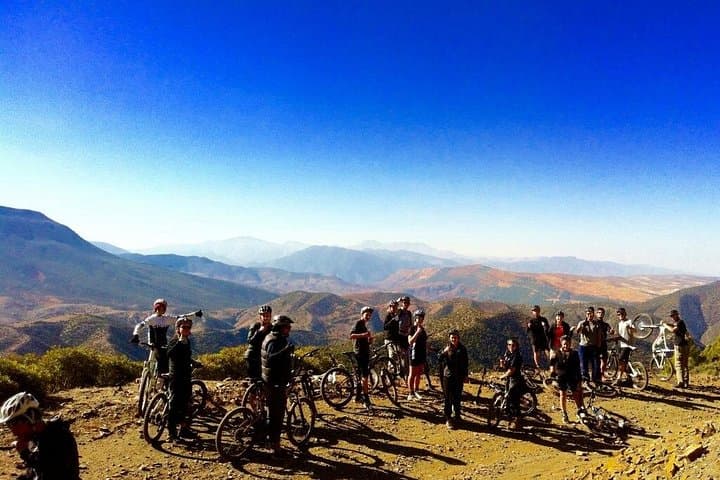
Practically, this is a full day ride: typical loops from the Imlil area range from 30–45 km with roughly 800–1,000 m cumulative climbing, completed in 5–6 hours including stops. Terrain is a mix of hard-packed dirt, loose stone, and narrow singletrack; strong climbing fitness and confident descending techniques are required. Bring layered clothing for mountain mornings, a robust mountain bike with good brakes and tires, and at least 2 liters of water—bottled water and lunch are usually provided by the operator. Start early to avoid midday heat and allow time for photographic stops in villages and viewpoints toward Mount Toubkal.
challenging.
5–6 hours.
Good cardiovascular fitness and leg endurance for sustained climbs; comfortable on technical descents.
Typical loops in this itinerary are 30–45 km with about 800–1,000 m of cumulative climbing; it's a challenging day for riders used to mountainous terrain.
Yes — riders should be comfortable on loose, rocky singletrack and steep descents; guides can tailor pace but not basic skill levels.
The operator usually provides a professional guide, bottled water, snacks, lunch, afternoon tea and private transport to and from Marrakech.
Infants can be accommodated in specialized seats, but the route is not recommended for inexperienced riders or anyone with cardiovascular or spinal issues.
The High Atlas has long been inhabited by Berber communities; these valleys were traditional mule-trade routes and remain agriculturally focused with age-old irrigation practices.
Trails are sensitive to erosion—ride singletrack respectfully, avoid widening tracks, and follow guide instructions to protect terraced fields and water sources.
Mountain Bike Morocco operates guided outdoor trips and adventures with an emphasis on safety, stewardship, and memorable experiences.
You roll out of Marrakech before the city heat builds and the road climbs into the High Atlas. Dust lifts behind the van and soon the air smells of thyme and cedar; terraces and low stone houses appear, and the trail opens to the Imlil Valley at about 1,700 m.
You roll out of Marrakech before the city heat builds and the road climbs into the High Atlas. Dust lifts behind the van and soon the air smells of thyme and cedar; terraces and low stone houses appear, and the trail opens to the Imlil Valley at about 1,700 m.
The route follows old mule tracks and rough dirt roads through Berber villages, offering regular climbs and technical descents. Geologically the High Atlas is a band of folded and uplifted rock—granite cores and older metamorphics—so expect rocky switchbacks and sections where loose scree tests your wheel control.
Culturally, this is Berber country: flat-roofed homes, irrigation furrows, and shepherds moving goats. Guides often point out seasonal barley fields and the mosque bells in remote hamlets, and provide afternoon mint tea in a village home.
Practically, this is a full day ride: typical loops from the Imlil area range from 30–45 km with roughly 800–1,000 m cumulative climbing, completed in 5–6 hours including stops. Terrain is a mix of hard-packed dirt, loose stone, and narrow singletrack; strong climbing fitness and confident descending techniques are required. Bring layered clothing for mountain mornings, a robust mountain bike with good brakes and tires, and at least 2 liters of water—bottled water and lunch are usually provided by the operator. Start early to avoid midday heat and allow time for photographic stops in villages and viewpoints toward Mount Toubkal.