THE ADVENTURE COLLECTIVE® · Independent discovery and booking for outdoor travel

Escape Marrakech for a day and hike the valleys above Imlil, where jagged High Atlas ridges meet oak woods and terraced farms. The highlight: a handcrafted lunch and tea ceremony with a local Berber family.
Escape Marrakech for a day and hike the valleys above Imlil, where jagged High Atlas ridges meet oak woods and terraced farms. The highlight: a handcrafted lunch and tea ceremony with a local Berber family.
A morning drive peels away the bustle of Marrakech and the road climbs into sunlight and olive terraces; by the time the valley opens, you can feel the air change—cooler, pine-scented, and alive with the distant clack of village life.
Verified experiences and guided adventures in the surrounding area.
Operated by Morocco Travelogue · Imlil, Marrakesh-Safi
A morning drive peels away the bustle of Marrakech and the road climbs into sunlight and olive terraces; by the time the valley opens, you can feel the air change—cooler, pine-scented, and alive with the distant clack of village life.
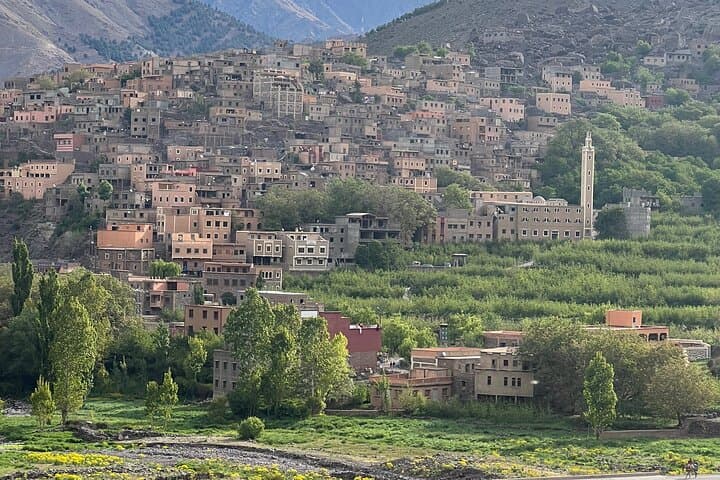
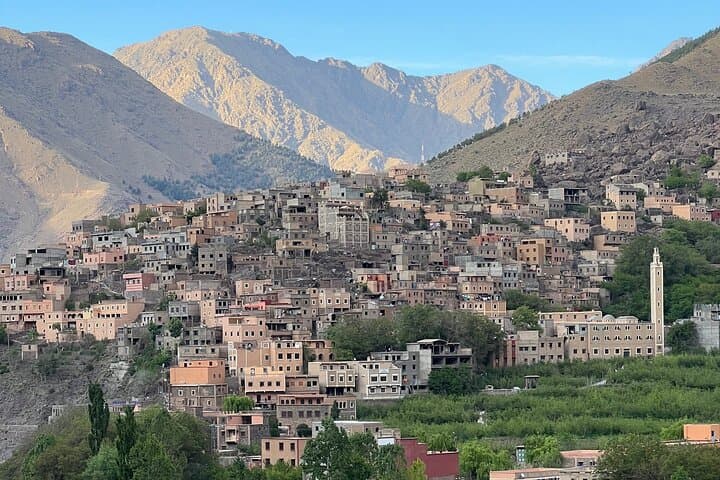
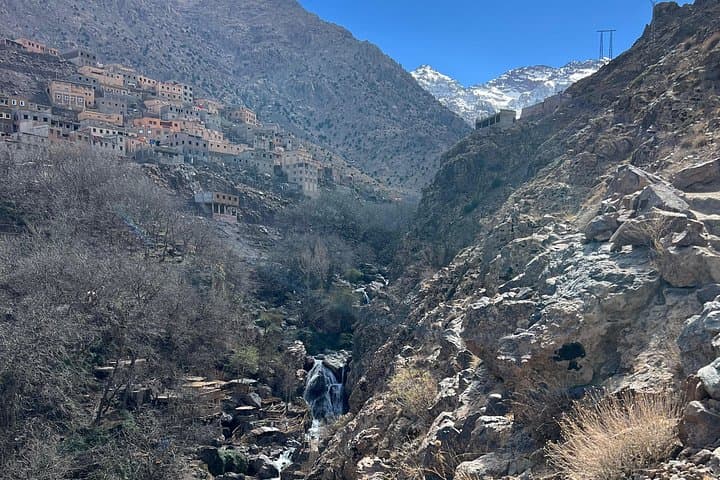
The day centers on Imlil, a traditional Berber village at the foot of the High Atlas. Geology here is visible: folded schist and limestone rise into serrated ridges carved by winter snowmelt, while terraced fields cling to the lower slopes. The itinerary threads a 2–3 hour guided hike through mule tracks, oak groves, and small hamlets where you’ll see stone-built homes and flat-roofed granaries.
Cultural exchange is a focus: lunch with a Berber family is as much about technique—how to brew mint tea, serve communal tagine—as it is about taste. Guides typically explain local livelihoods, from seasonal shepherding to traditional weaving. Wildlife is subtle but present: watch for choughs on the ridges and Barbary macaques in shaded ravines.
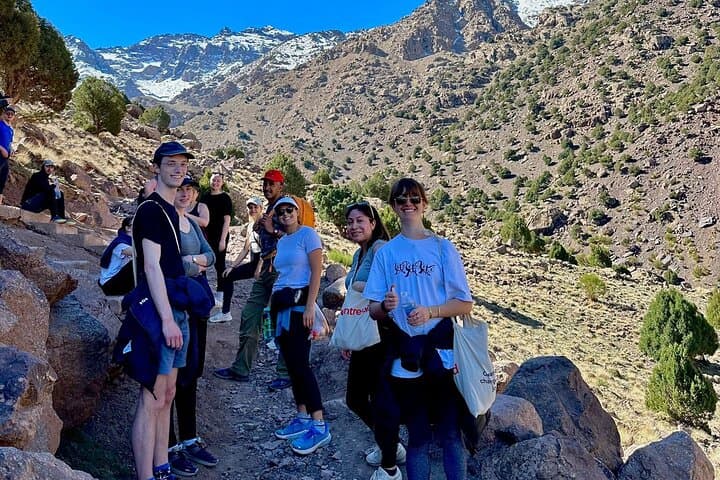
Practical guidance: wear sturdy shoes and layers for a range of temperatures; the trail includes short steep sections and uneven stone steps. Carry water, small change for village purchases and tips, and a light daypack. Expect about 4–6 hours for the whole excursion including transfers—ample time to move at a moderate pace, linger at viewpoints, and savor the picnic.
This is a day that balances scenery, straightforward hiking, and an authentic cultural pause—ideal for travelers who want a compact, interpretive mountain experience without technical climbing.
moderate.
4–6 hours.
Suitable for hikers comfortable walking 2–3 hours with some elevation gain; basic stamina required.
Guides typically lead a 2–3 hour hike on well-marked mule tracks and village paths, with time to rest and take photos.
Hosts can often accommodate common dietary needs if informed at booking—notify the operator in advance.
Expect about 1–1.5 hours each way by private vehicle depending on traffic and chosen drop-off point.
Imlil sits around 1,740 m (5,700 ft); most visitors acclimatize fine, but anyone with heart or respiratory issues should consult a doctor before travel.
The High Atlas has been home to Amazigh (Berber) communities for centuries; villages like Imlil grew as seasonal mountain farming and trade hubs tied to Marrakech.
Stick to established trails, avoid single-use plastics at the family lunch, and follow guide advice to minimize impact on fragile alpine soils and village water resources.
Morocco Travelogue operates guided outdoor trips and adventures with an emphasis on safety, stewardship, and memorable experiences.
A morning drive peels away the bustle of Marrakech and the road climbs into sunlight and olive terraces; by the time the valley opens, you can feel the air change—cooler, pine-scented, and alive with the distant clack of village life.
A morning drive peels away the bustle of Marrakech and the road climbs into sunlight and olive terraces; by the time the valley opens, you can feel the air change—cooler, pine-scented, and alive with the distant clack of village life.
The day centers on Imlil, a traditional Berber village at the foot of the High Atlas. Geology here is visible: folded schist and limestone rise into serrated ridges carved by winter snowmelt, while terraced fields cling to the lower slopes. The itinerary threads a 2–3 hour guided hike through mule tracks, oak groves, and small hamlets where you’ll see stone-built homes and flat-roofed granaries.
Cultural exchange is a focus: lunch with a Berber family is as much about technique—how to brew mint tea, serve communal tagine—as it is about taste. Guides typically explain local livelihoods, from seasonal shepherding to traditional weaving. Wildlife is subtle but present: watch for choughs on the ridges and Barbary macaques in shaded ravines.
Practical guidance: wear sturdy shoes and layers for a range of temperatures; the trail includes short steep sections and uneven stone steps. Carry water, small change for village purchases and tips, and a light daypack. Expect about 4–6 hours for the whole excursion including transfers—ample time to move at a moderate pace, linger at viewpoints, and savor the picnic.
This is a day that balances scenery, straightforward hiking, and an authentic cultural pause—ideal for travelers who want a compact, interpretive mountain experience without technical climbing.