THE ADVENTURE COLLECTIVE® · Independent discovery and booking for outdoor travel

Trade Marrakech’s bustle for a six-hour journey into the High Atlas: a guided walk from Imlil through Aroumd to Ait-Souka, mint tea at a village home, and a shared Berber lunch with views of Mount Toubkal. Expect easy, uneven trails, cultural stops, and straightforward logistics.
Trade Marrakech’s bustle for a six-hour journey into the High Atlas: a guided walk from Imlil through Aroumd to Ait-Souka, mint tea at a village home, and a shared Berber lunch with views of Mount Toubkal. Expect easy, uneven trails, cultural stops, and straightforward logistics.
The minivan drops you on the edge of Imlil at 1,740 m and the air changes—thinner, cooler, scented with thyme and wood smoke. A steaming glass of mint tea is passed across the low stone threshold and the guide maps out a walking route that threads between terraced fields, mule tracks and low-slung stone houses.
Verified experiences and guided adventures in the surrounding area.
Operated by Nomadic Legacy Tour · Imlil, Marrakesh-Safi
The minivan drops you on the edge of Imlil at 1,740 m and the air changes—thinner, cooler, scented with thyme and wood smoke. A steaming glass of mint tea is passed across the low stone threshold and the guide maps out a walking route that threads between terraced fields, mule tracks and low-slung stone houses.
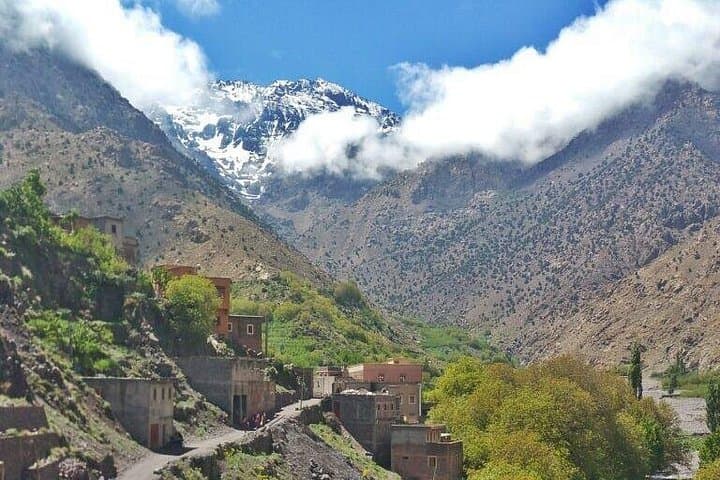
Geology here is blunt and immediate: eroded schists and volcanic ridges sculpt the High Atlas, and Mount Toubkal rises to 4,167 m as the region’s uncompromising apex. The villages you pass—Aroumd (about 1,843 m) and Ait-Souka—are agricultural hamlets where irrigation channels and walnut trees mark centuries of Berber land use. Local culture centers on communal farming, goat herding and home-cooked tagines; sharing a family lunch is as much social exchange as it is nourishment.
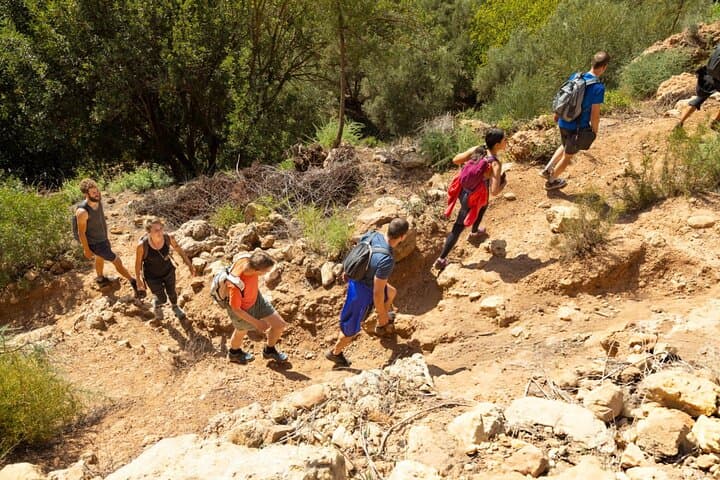
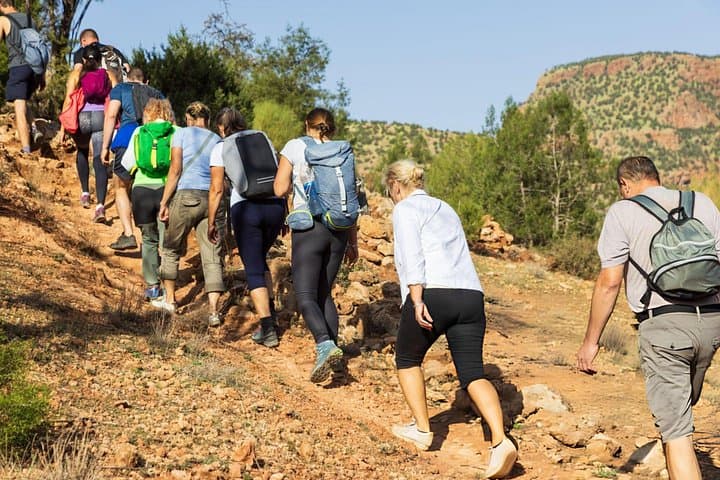
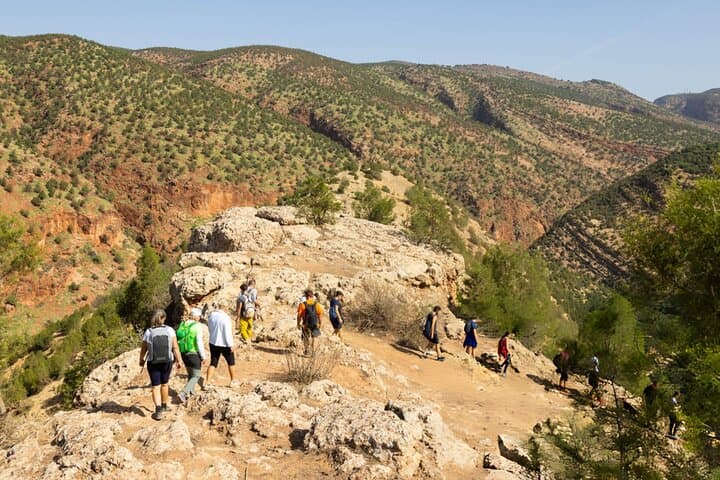
The walking itself is approachable: expect uneven, rocky trails with short climbs between villages, modest cumulative elevation gain (roughly 100–200 m between settlement points) and clear summit views most days. Photography pauses, chai breaks and conversations with villagers are built into the pace.
Practical pointers: start with sturdy shoes and layers, carry 1–2 liters of water and sun protection, and allow six hours for the full door-to-door experience. If you visit on a Saturday you can add Asni’s market—perfect for local crafts. This day trip balances compact cultural immersion with accessible mountain walking, making it ideal for travelers who want a tangible taste of Atlas life without technical hiking demands.
easy.
6 hours.
Suitable for regular walkers and travelers in average condition; short uphill sections but no technical climbing required.
The door-to-door excursion is about six hours; walking segments between villages involve modest climbs (roughly 100–200 m cumulative) on uneven but well-used mountain paths—no technical ascent required.
Meals are homemade and mostly vegetable- and grain-based; let the operator know dietary needs at booking and hosts will usually adapt where possible.
Trails around Imlil are popular and waymarked in places, but a guide adds cultural context, navigation on lesser paths and logistical ease—recommended for first-time visitors.
Bring small notes and coins, a camera, and an openness to bargaining; markets are busiest on Saturdays and offer produce, textiles and simple handicrafts.
The High Atlas has long been inhabited by Amazigh (Berber) communities who developed terraced farming and irrigation systems to sustain agriculture in steep terrain.
Foot traffic is concentrated on established mule tracks to limit erosion; visitors should stick to paths, avoid single-use plastics and support local families by buying food and crafts responsibly.
Nomadic Legacy Tour operates guided outdoor trips and adventures with an emphasis on safety, stewardship, and memorable experiences.
The minivan drops you on the edge of Imlil at 1,740 m and the air changes—thinner, cooler, scented with thyme and wood smoke. A steaming glass of mint tea is passed across the low stone threshold and the guide maps out a walking route that threads between terraced fields, mule tracks and low-slung stone houses.
The minivan drops you on the edge of Imlil at 1,740 m and the air changes—thinner, cooler, scented with thyme and wood smoke. A steaming glass of mint tea is passed across the low stone threshold and the guide maps out a walking route that threads between terraced fields, mule tracks and low-slung stone houses.
Geology here is blunt and immediate: eroded schists and volcanic ridges sculpt the High Atlas, and Mount Toubkal rises to 4,167 m as the region’s uncompromising apex. The villages you pass—Aroumd (about 1,843 m) and Ait-Souka—are agricultural hamlets where irrigation channels and walnut trees mark centuries of Berber land use. Local culture centers on communal farming, goat herding and home-cooked tagines; sharing a family lunch is as much social exchange as it is nourishment.
The walking itself is approachable: expect uneven, rocky trails with short climbs between villages, modest cumulative elevation gain (roughly 100–200 m between settlement points) and clear summit views most days. Photography pauses, chai breaks and conversations with villagers are built into the pace.
Practical pointers: start with sturdy shoes and layers, carry 1–2 liters of water and sun protection, and allow six hours for the full door-to-door experience. If you visit on a Saturday you can add Asni’s market—perfect for local crafts. This day trip balances compact cultural immersion with accessible mountain walking, making it ideal for travelers who want a tangible taste of Atlas life without technical hiking demands.