THE ADVENTURE COLLECTIVE® · Independent discovery and booking for outdoor travel

Escape Marrakech for a day of mountain walks, a camel ride in the Agafay rocky desert, and a homemade Berber lunch in Imlil. This balanced day trip pairs alpine village trails with hands-on cultural stops.
Escape Marrakech for a day of mountain walks, a camel ride in the Agafay rocky desert, and a homemade Berber lunch in Imlil. This balanced day trip pairs alpine village trails with hands-on cultural stops.
You leave Marrakech behind on a ribbon of asphalt and, within an hour to 90 minutes, the city’s heat gives way to stone walls, terraced fields and the cool hush of the High Atlas.
Verified experiences and guided adventures in the surrounding area.
Operated by Atlas Asni Experiences · Imlil, Marrakesh-Safi
You leave Marrakech behind on a ribbon of asphalt and, within an hour to 90 minutes, the city’s heat gives way to stone walls, terraced fields and the cool hush of the High Atlas.
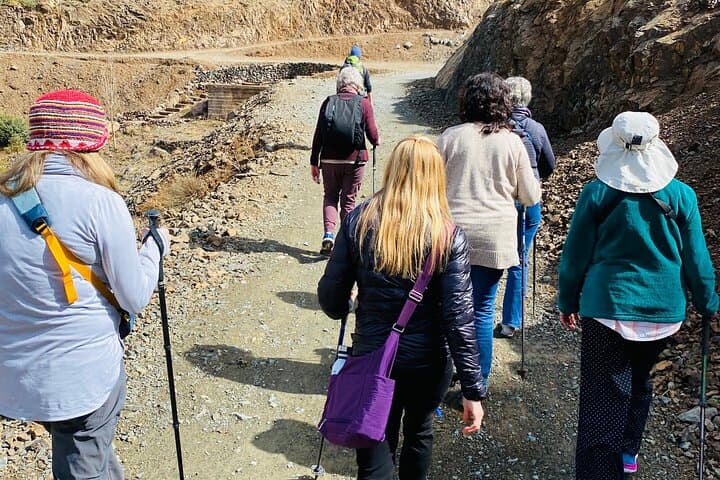
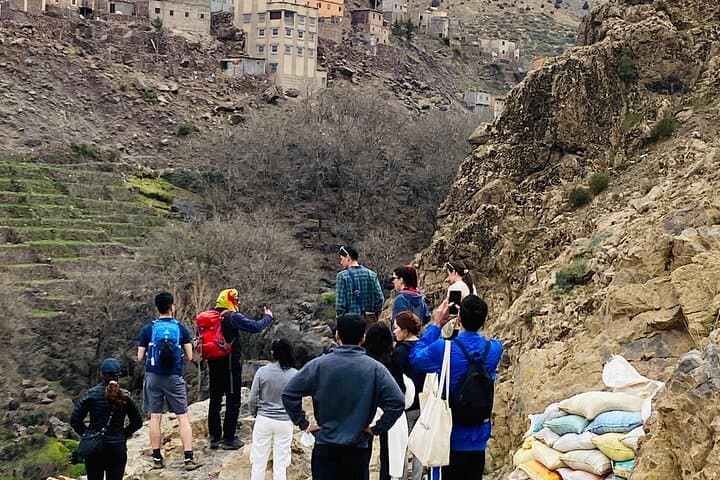
The walk begins in Imlil, a small Berber village sitting above 1,700 m with views that frame jagged ridgelines and cultivated valley floors. Footpaths follow irrigation channels and stone steps between walnut orchards; the route to the nearby waterfall is a compact, 2–4 km round trip with roughly 150–300 m of gentle ascent depending on how far you push into the side valleys.
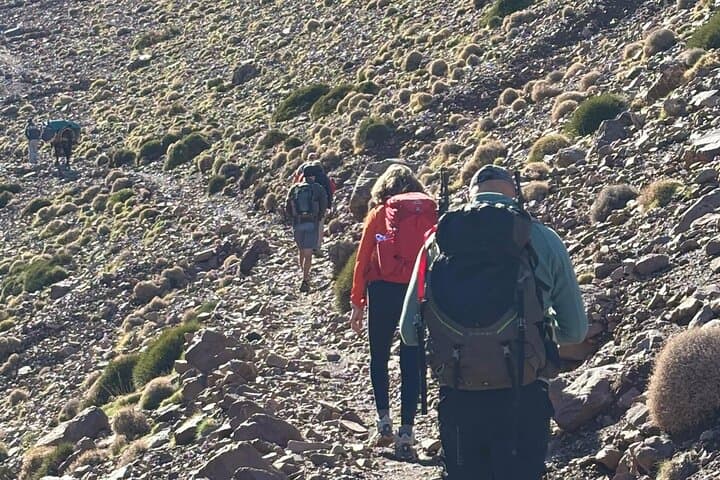
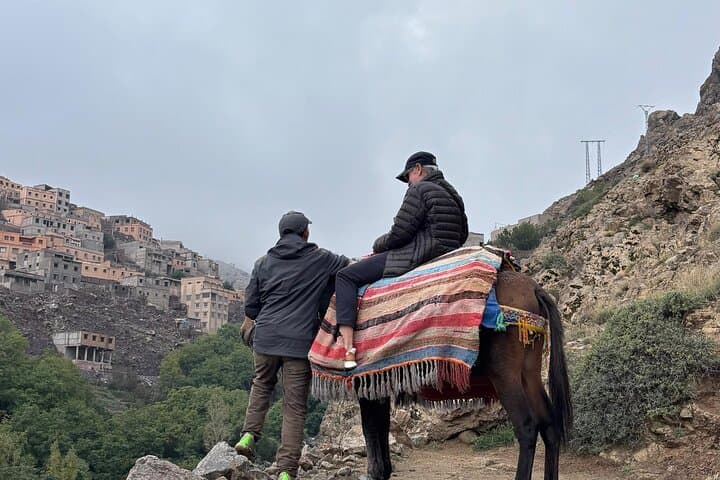
Geologically the High Atlas is young and rugged—folded sedimentary rock pushed up by African-Eurasian plate collision—so expect loose scree on steeper sections and firm packed dirt on the valley trails. Culturally, the area is defined by Amazigh (Berber) life: terraced farming, mule tracks, and community cooperatives like the women’s argan oil center you’ll visit.
The day balances two landscapes: mountain paths and the rocky Agafay “stone desert,” where short camel rides offer photo-worthy contrast to alpine green. A homemade lunch with a local family highlights seasonal ingredients and simple mountain hospitality.
Practical guidance: wear supportive shoes with good grip, bring 1–2 liters of water, and a light layer—mountain mornings are cool and afternoons can warm rapidly. Cameras and small bills for souvenirs are useful; mobile reception is spotty past the valleys. The pace is unhurried but moderate fitness makes the experience more comfortable.
moderate.
8–10 hours.
Moderate fitness recommended—able to walk 3–6 km on uneven terrain and manage short uphill sections without assistance
Expect roughly 60–90 minutes each way depending on traffic; the full tour returns to Marrakech in the early evening.
No—the camel ride takes place in the Agafay rocky desert near Marrakech, a stony landscape rather than the sand dunes of the Sahara.
Yes—the tour includes a traditional homemade Berber lunch with a local family in Imlil; drinks and extra snacks at cooperatives are usually paid separately.
The tour notes it is not recommended for pregnant travelers and young children should be supervised; infants are required to sit on an adult’s lap during transport.
Imlil has long been a mountain waypoint for Amazigh communities and a base for ascents of Toubkal; terraces and mule tracks reflect centuries of highland agriculture.
Stick to trails, avoid feeding wildlife, and favor purchases from local cooperatives—sustainable tourism supports fragile mountain ecosystems and village livelihoods.
Atlas Asni Experiences operates guided outdoor trips and adventures with an emphasis on safety, stewardship, and memorable experiences.
You leave Marrakech behind on a ribbon of asphalt and, within an hour to 90 minutes, the city’s heat gives way to stone walls, terraced fields and the cool hush of the High Atlas.
You leave Marrakech behind on a ribbon of asphalt and, within an hour to 90 minutes, the city’s heat gives way to stone walls, terraced fields and the cool hush of the High Atlas.
The walk begins in Imlil, a small Berber village sitting above 1,700 m with views that frame jagged ridgelines and cultivated valley floors. Footpaths follow irrigation channels and stone steps between walnut orchards; the route to the nearby waterfall is a compact, 2–4 km round trip with roughly 150–300 m of gentle ascent depending on how far you push into the side valleys.
Geologically the High Atlas is young and rugged—folded sedimentary rock pushed up by African-Eurasian plate collision—so expect loose scree on steeper sections and firm packed dirt on the valley trails. Culturally, the area is defined by Amazigh (Berber) life: terraced farming, mule tracks, and community cooperatives like the women’s argan oil center you’ll visit.
The day balances two landscapes: mountain paths and the rocky Agafay “stone desert,” where short camel rides offer photo-worthy contrast to alpine green. A homemade lunch with a local family highlights seasonal ingredients and simple mountain hospitality.
Practical guidance: wear supportive shoes with good grip, bring 1–2 liters of water, and a light layer—mountain mornings are cool and afternoons can warm rapidly. Cameras and small bills for souvenirs are useful; mobile reception is spotty past the valleys. The pace is unhurried but moderate fitness makes the experience more comfortable.