THE ADVENTURE COLLECTIVE® · Independent discovery and booking for outdoor travel

A full-day loop from Tbilisi through Imereti’s most dramatic karst features—Martvili’s emerald waters, Okatse’s hanging walkway and the cool chambers of Prometheus Cave. Expect boat rides, wooden platforms and limestone stairways with local lunches along the way.
A full-day loop from Tbilisi through Imereti’s most dramatic karst features—Martvili’s emerald waters, Okatse’s hanging walkway and the cool chambers of Prometheus Cave. Expect boat rides, wooden platforms and limestone stairways with local lunches along the way.
You arrive before dawn in the car, Tbilisi shrinking behind you as the road climbs toward Imereti’s limestone edges. Mist lifts from rivers that have been carving the region for millennia; rock faces lean in, daring you to step closer. The tour unfolds like a geological short story—boat gliding under verdant ledges at Martvili, a suspended walkway stretching over Okatse’s throat, and the cool hush of Prometheus Cave’s chambers.
Verified experiences and guided adventures in the surrounding area.
Operated by Must See Georgia · Kutaisi, Imereti
You arrive before dawn in the car, Tbilisi shrinking behind you as the road climbs toward Imereti’s limestone edges. Mist lifts from rivers that have been carving the region for millennia; rock faces lean in, daring you to step closer. The tour unfolds like a geological short story—boat gliding under verdant ledges at Martvili, a suspended walkway stretching over Okatse’s throat, and the cool hush of Prometheus Cave’s chambers.
This part of western Georgia sits on karstified limestone formed in the Miocene, which explains the deep canyons, cascades and cave systems. Kutaisi nearby is one of Georgia’s oldest cities, historically a regional capital in the Kingdom of Colchis; local culture mixes Soviet-era infrastructure with traditional Imeretian hospitality—expect savory pastries and strong, slightly sweet bread at lunch.
Practical note: it’s a full-day loop from Tbilisi (roughly 4–5 hours one way of driving split across stops), so expect long transfers broken by short hikes and viewpoints. Terrain ranges from paved paths and wooden platforms to uneven limestone stairs—some sections are exposed and can be slippery after rain. Boat rides in Martvili are short but intimate and often paid on site. Bring sturdy footwear, layered clothing for caves and river spray, and at least 2 liters of water. Start early to make the most of daylight and smaller crowds; carry cash for small entrances, snacks, and local souvenirs. Respect signage in protected areas, stay on marked trails, and leave no trace—the canyons are fragile and best preserved for the next visitor.
moderate.
12 hours.
Moderate fitness: able to handle several short walks (30–120 minutes total) on uneven ground and stairs while tolerating long vehicle transfers.
The tour departs from Tbilisi with private transport and returns the same day—plan for multiple hours of driving split between stops.
Boat rides at Martvili are commonly available on-site but typically charged separately; confirm with the operator before departure.
Short walks are family-friendly, but there are stairs and exposed platforms; visitors with serious mobility or back/heart issues should avoid steep sections or consult the operator.
Late spring through early autumn offers the best weather and fuller waterfalls; summer is warmest, while spring and fall provide cooler temperatures and fewer crowds.
Kutaisi and the Imereti region have deep historical roots as part of ancient Colchis and later Georgian kingdoms; much of the canyon landscape formed on Miocene limestone.
Many canyons and caves are designated natural monuments—stay on trails, avoid swimming where prohibited, and carry out all waste to preserve fragile karst habitats.
Must See Georgia operates guided outdoor trips and adventures with an emphasis on safety, stewardship, and memorable experiences.
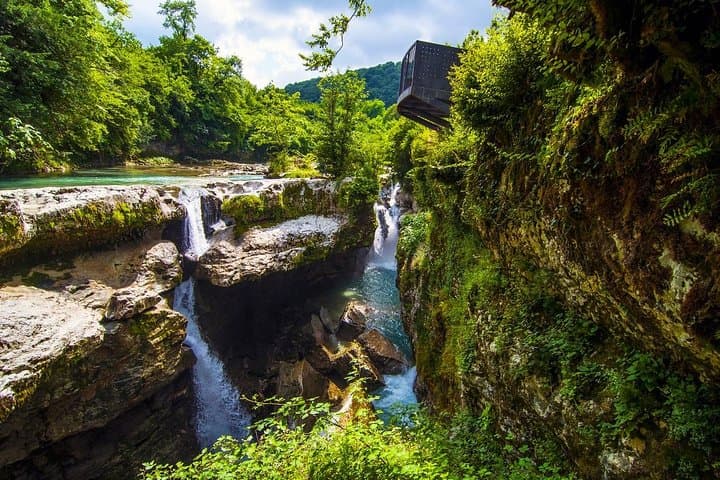
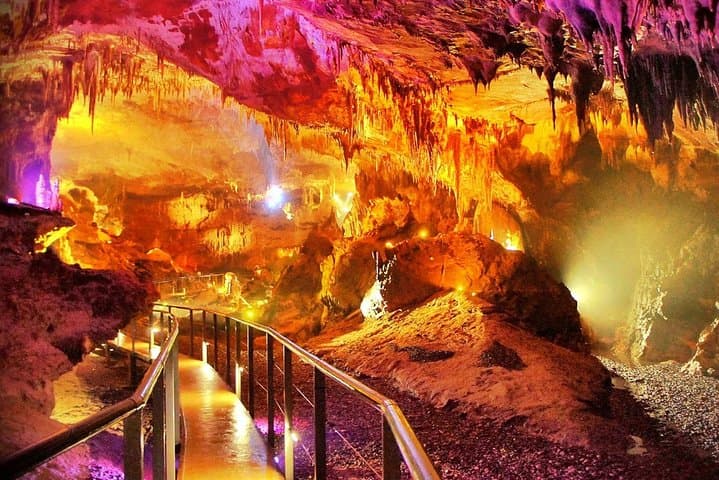
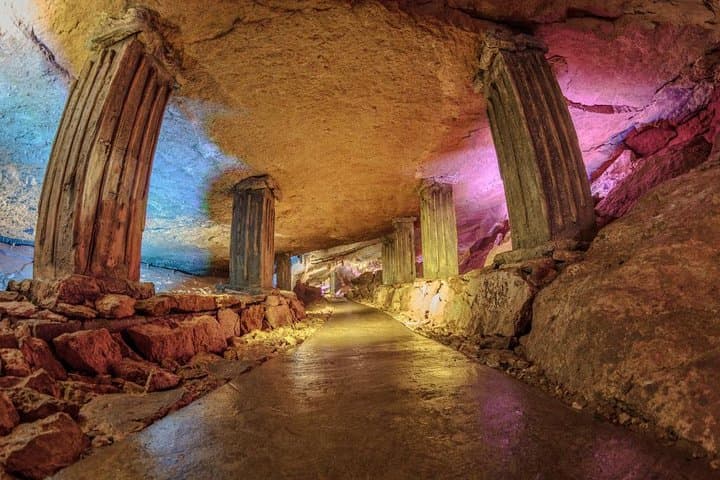
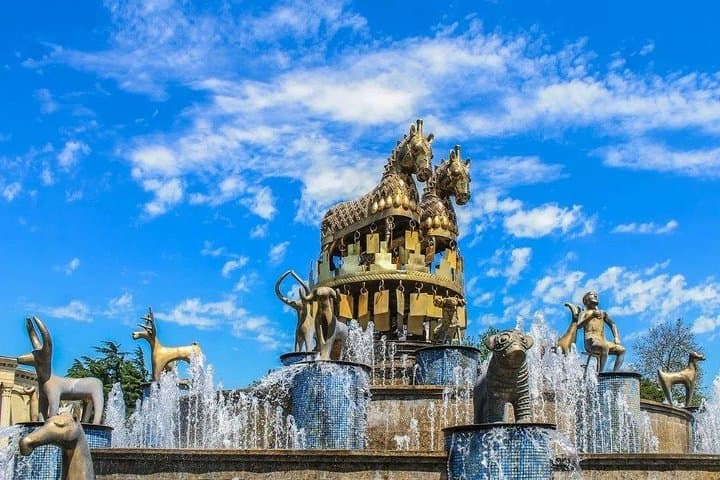
You arrive before dawn in the car, Tbilisi shrinking behind you as the road climbs toward Imereti’s limestone edges. Mist lifts from rivers that have been carving the region for millennia; rock faces lean in, daring you to step closer. The tour unfolds like a geological short story—boat gliding under verdant ledges at Martvili, a suspended walkway stretching over Okatse’s throat, and the cool hush of Prometheus Cave’s chambers.
You arrive before dawn in the car, Tbilisi shrinking behind you as the road climbs toward Imereti’s limestone edges. Mist lifts from rivers that have been carving the region for millennia; rock faces lean in, daring you to step closer. The tour unfolds like a geological short story—boat gliding under verdant ledges at Martvili, a suspended walkway stretching over Okatse’s throat, and the cool hush of Prometheus Cave’s chambers.
This part of western Georgia sits on karstified limestone formed in the Miocene, which explains the deep canyons, cascades and cave systems. Kutaisi nearby is one of Georgia’s oldest cities, historically a regional capital in the Kingdom of Colchis; local culture mixes Soviet-era infrastructure with traditional Imeretian hospitality—expect savory pastries and strong, slightly sweet bread at lunch.
Practical note: it’s a full-day loop from Tbilisi (roughly 4–5 hours one way of driving split across stops), so expect long transfers broken by short hikes and viewpoints. Terrain ranges from paved paths and wooden platforms to uneven limestone stairs—some sections are exposed and can be slippery after rain. Boat rides in Martvili are short but intimate and often paid on site. Bring sturdy footwear, layered clothing for caves and river spray, and at least 2 liters of water. Start early to make the most of daylight and smaller crowds; carry cash for small entrances, snacks, and local souvenirs. Respect signage in protected areas, stay on marked trails, and leave no trace—the canyons are fragile and best preserved for the next visitor.