THE ADVENTURE COLLECTIVE® · Independent discovery and booking for outdoor travel

Head offshore from Terceira for a two-hour cruise around Ilhéus das Cabras, where basalt stacks, seabirds, and the occasional dolphin frame dramatic views of the island. This protected-area boat tour pairs geology and wildlife watching with practical small-boat operation in the Azores.
Head offshore from Terceira for a two-hour cruise around Ilhéus das Cabras, where basalt stacks, seabirds, and the occasional dolphin frame dramatic views of the island. This protected-area boat tour pairs geology and wildlife watching with practical small-boat operation in the Azores.
You push off from the quay and the Atlantic immediately sets the tempo: a steady swell that rocks the boat as cliffs of basalt recede and tiny, jagged stacks—Ilhéus das Cabras—loom ahead. Salt spray tastes bright; wind pulls at jackets. The islets jut like dark teeth from cobalt water, their faces scored by waves and nesting seabirds.
Verified experiences and guided adventures in the surrounding area.
Operated by OceanEmotion · Angra do Heroísmo, Terceira
You push off from the quay and the Atlantic immediately sets the tempo: a steady swell that rocks the boat as cliffs of basalt recede and tiny, jagged stacks—Ilhéus das Cabras—loom ahead. Salt spray tastes bright; wind pulls at jackets. The islets jut like dark teeth from cobalt water, their faces scored by waves and nesting seabirds.
These rocks are the exposed edges of Terceira’s volcanic plumbing. Formed by repeated eruptions and coastal erosion, the islets and surrounding sea-floor host kelp beds and rich marine life that drew early settlers and later scientists. The Azorean fishing culture still reads the ocean: dolphins breaking the surface, shearwaters wheeling overhead, and the cautious current that demands respect. Nearby Angra do Heroísmo, with its UNESCO harbor, gives the area a centuries-old maritime context—these waters carried traders, whalers, and islanders who navigated by swell and star.
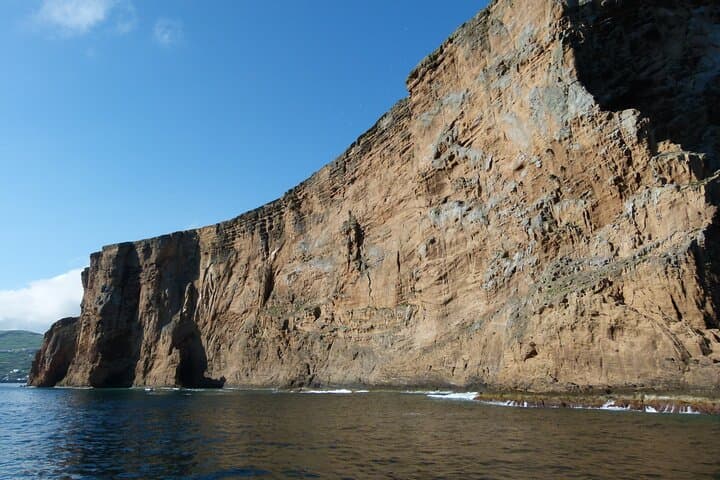
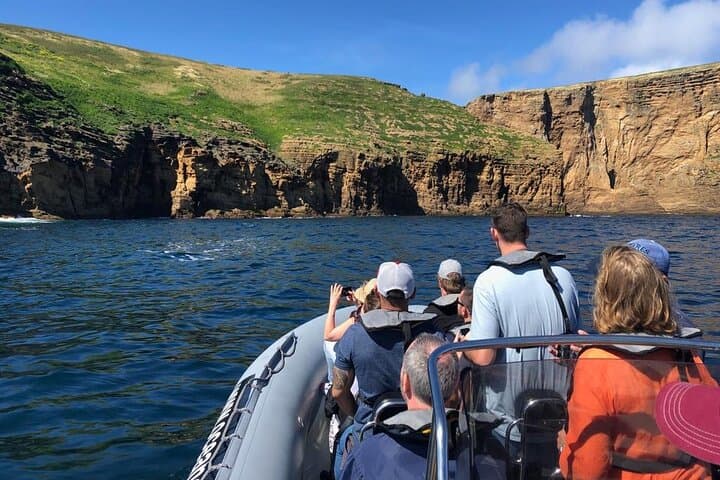
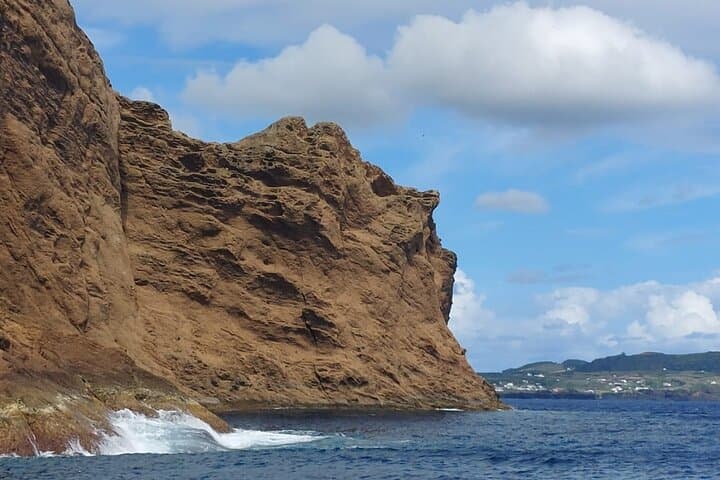
On a two-hour tour you’ll circle the islets, hear geology explained by guides, and—when conditions allow—drop anchor for a supervised swim. Expect short bursts of binocular-ready wildlife watching, panoramic views of Terceira’s steep slopes, and close-up looks at basalt formations carved into sea caves and clefts.
Practical guidance: book morning slots for calmer seas, bring a waterproof layer and motion-sickness prevention, and leave drones at home unless the operator permits them. Respect the protected-area rules: no landing on the islets, keep distance from nesting birds, and pack out any waste. The trip is short but vivid—an accessible sea-facing introduction to the Azores’ raw coastal geology and living ocean.
easy.
2 hours.
Suitable for most fitness levels; only short periods of standing and boarding are required
The tour lasts about two hours and typically circles the Ilhéus das Cabras islets, with guided commentary, wildlife watching and, weather permitting, a brief stop for supervised swimming.
No—Ilhéus das Cabras are a protected area and landing is not permitted to protect nesting seabirds and fragile geology.
Operators may cancel or reschedule if sea conditions are unsafe; check cancellation policy and dress for wind and spray since conditions can change quickly.
Yes—children are welcome but must be accompanied by an adult; infant seats are available and guides will outline safety procedures before departure.
Ilhéus das Cabras sits within the Azores’ volcanic landscape shaped over millennia; nearby Angra do Heroísmo was a key Atlantic port in the Age of Discovery.
The islets are part of a protected marine area—operators follow strict rules to avoid disturbing wildlife; pack out waste and respect exclusion zones.
OceanEmotion operates guided outdoor trips and adventures with an emphasis on safety, stewardship, and memorable experiences.
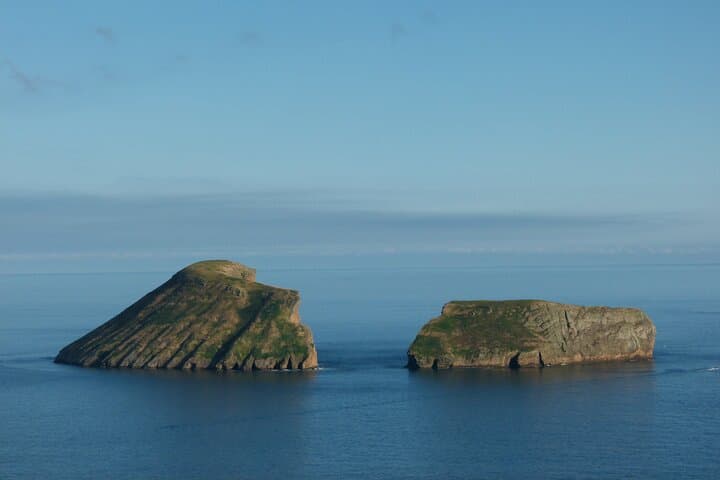
You push off from the quay and the Atlantic immediately sets the tempo: a steady swell that rocks the boat as cliffs of basalt recede and tiny, jagged stacks—Ilhéus das Cabras—loom ahead. Salt spray tastes bright; wind pulls at jackets. The islets jut like dark teeth from cobalt water, their faces scored by waves and nesting seabirds.
You push off from the quay and the Atlantic immediately sets the tempo: a steady swell that rocks the boat as cliffs of basalt recede and tiny, jagged stacks—Ilhéus das Cabras—loom ahead. Salt spray tastes bright; wind pulls at jackets. The islets jut like dark teeth from cobalt water, their faces scored by waves and nesting seabirds.
These rocks are the exposed edges of Terceira’s volcanic plumbing. Formed by repeated eruptions and coastal erosion, the islets and surrounding sea-floor host kelp beds and rich marine life that drew early settlers and later scientists. The Azorean fishing culture still reads the ocean: dolphins breaking the surface, shearwaters wheeling overhead, and the cautious current that demands respect. Nearby Angra do Heroísmo, with its UNESCO harbor, gives the area a centuries-old maritime context—these waters carried traders, whalers, and islanders who navigated by swell and star.
On a two-hour tour you’ll circle the islets, hear geology explained by guides, and—when conditions allow—drop anchor for a supervised swim. Expect short bursts of binocular-ready wildlife watching, panoramic views of Terceira’s steep slopes, and close-up looks at basalt formations carved into sea caves and clefts.
Practical guidance: book morning slots for calmer seas, bring a waterproof layer and motion-sickness prevention, and leave drones at home unless the operator permits them. Respect the protected-area rules: no landing on the islets, keep distance from nesting birds, and pack out any waste. The trip is short but vivid—an accessible sea-facing introduction to the Azores’ raw coastal geology and living ocean.