THE ADVENTURE COLLECTIVE® · Independent discovery and booking for outdoor travel

Explore the island where Paris began on a focused two-hour walking tour. Small groups, local stories, and close-up views of Notre-Dame and the Seine make for a compact, accessible introduction to the city’s origins.
Explore the island where Paris began on a focused two-hour walking tour. Small groups, local stories, and close-up views of Notre-Dame and the Seine make for a compact, accessible introduction to the city’s origins.
Step off the modern streets of Châtelet and onto a stone-slung island where the Seine narrows and the city’s oldest stories press close. The guide leads a small group through narrow lanes, past a flower market’s bright noses and the weathered facades that predate Haussmann’s boulevards. The river will dare you to slow down; bridges frame the view like stage sets and the cathedral’s towers puncture the skyline.
Verified experiences and guided adventures in the surrounding area.
Operated by Dayin · Paris, Île-de-France
Step off the modern streets of Châtelet and onto a stone-slung island where the Seine narrows and the city’s oldest stories press close. The guide leads a small group through narrow lanes, past a flower market’s bright noses and the weathered facades that predate Haussmann’s boulevards. The river will dare you to slow down; bridges frame the view like stage sets and the cathedral’s towers puncture the skyline.
Ile de la Cité is Paris’s historical core: a Roman settlement later reshaped by medieval builders, kings, and the legal institutions that ran France for centuries. Geologically the island sits on an alluvial rise in the Seine, its cobbled streets layered over centuries of human activity. Visitors learn how the Île hosted a royal palace, a market economy, and the ecclesiastical power centered at Notre-Dame. Local culture here is tactile—bakery ovens, bookstalls, and a market that still smells of cut stems.
Practical guidance: this two-hour walking tour covers roughly 1.5–2 km on mostly flat, cobbled surfaces—comfortable walking shoes are recommended. Tours run rain or shine; bring a light waterproof and an umbrella in shoulder seasons. Public transit access is excellent (Métro: Cité, Saint-Michel, Châtelet) so arrive 10 minutes early to meet the group. Keep a small amount of cash for cafés or market purchases, and expect conversational history punctuated with architectural details and local navigation tips to use after the tour. For anyone wanting concentrated history with low physical demand, this walking tour is a compact, informative way to experience Paris’s birthplace.
easy.
2 hours.
Suitable for all fitness levels; minimal walking but on uneven cobbles so basic mobility is needed
The tour is easy—roughly 1.5–2 km on mostly flat, cobbled streets; participants should be able to walk for two hours with brief stops.
This itinerary focuses on exterior views and the island’s streets; interior access is not included (and may be restricted depending on restoration work).
The public shared tour follows cobbled streets and some bridges; accessibility may be limited—private accessible options are available upon request.
Tours are led by a local guide in the advertised language—confirm at booking; small-group sizes help with Q&A and personalized commentary.
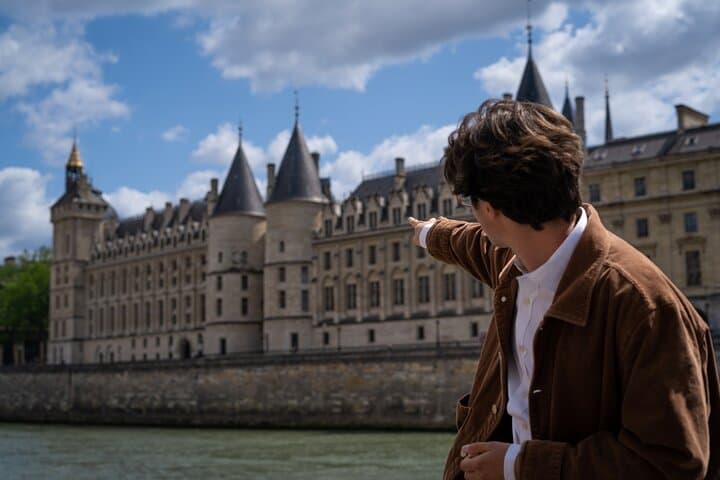
Ile de la Cité evolved from a Roman trading post to a medieval power center; Notre-Dame and the Conciergerie reflect layers of royal, religious, and judicial history.
The Seine’s islands are managed to balance tourism and preservation; visitors are asked to respect markets, avoid littering, and follow local guidance near restoration sites.
Dayin operates guided outdoor trips and adventures with an emphasis on safety, stewardship, and memorable experiences.

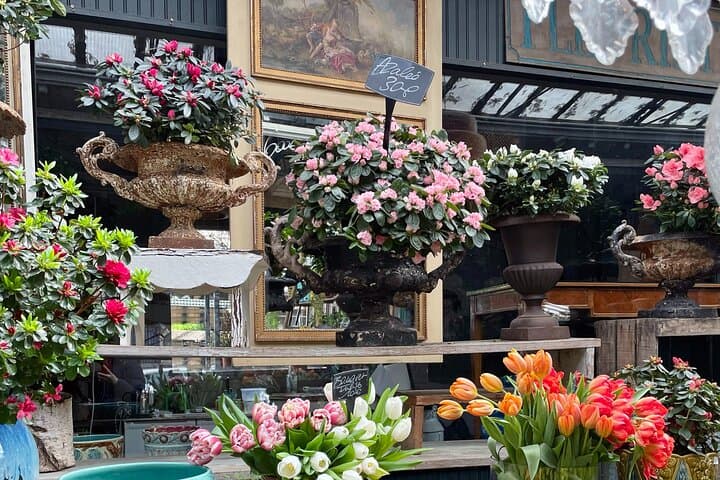
Step off the modern streets of Châtelet and onto a stone-slung island where the Seine narrows and the city’s oldest stories press close. The guide leads a small group through narrow lanes, past a flower market’s bright noses and the weathered facades that predate Haussmann’s boulevards. The river will dare you to slow down; bridges frame the view like stage sets and the cathedral’s towers puncture the skyline.
Step off the modern streets of Châtelet and onto a stone-slung island where the Seine narrows and the city’s oldest stories press close. The guide leads a small group through narrow lanes, past a flower market’s bright noses and the weathered facades that predate Haussmann’s boulevards. The river will dare you to slow down; bridges frame the view like stage sets and the cathedral’s towers puncture the skyline.
Ile de la Cité is Paris’s historical core: a Roman settlement later reshaped by medieval builders, kings, and the legal institutions that ran France for centuries. Geologically the island sits on an alluvial rise in the Seine, its cobbled streets layered over centuries of human activity. Visitors learn how the Île hosted a royal palace, a market economy, and the ecclesiastical power centered at Notre-Dame. Local culture here is tactile—bakery ovens, bookstalls, and a market that still smells of cut stems.
Practical guidance: this two-hour walking tour covers roughly 1.5–2 km on mostly flat, cobbled surfaces—comfortable walking shoes are recommended. Tours run rain or shine; bring a light waterproof and an umbrella in shoulder seasons. Public transit access is excellent (Métro: Cité, Saint-Michel, Châtelet) so arrive 10 minutes early to meet the group. Keep a small amount of cash for cafés or market purchases, and expect conversational history punctuated with architectural details and local navigation tips to use after the tour. For anyone wanting concentrated history with low physical demand, this walking tour is a compact, informative way to experience Paris’s birthplace.