THE ADVENTURE COLLECTIVE® · Independent discovery and booking for outdoor travel

Dine around a communal grill in Ikseon-dong’s compact hanok lanes, learning the rhythms of Korean BBQ—banchan, wraps, and soju rituals—guided by a local host. This private 2.5-hour experience blends hands-on cooking with neighborhood history.
Dine around a communal grill in Ikseon-dong’s compact hanok lanes, learning the rhythms of Korean BBQ—banchan, wraps, and soju rituals—guided by a local host. This private 2.5-hour experience blends hands-on cooking with neighborhood history.
It starts in a narrow lane where low wooden eaves crowd the sky and the aroma of charred meat threads through the air—Ikseon-dong’s hanok alleys at dusk, a living room of Seoul’s past that hums with tonight’s feast.
Verified experiences and guided adventures in the surrounding area.
Operated by Secret Food Tours · Seoul, Seoul
It starts in a narrow lane where low wooden eaves crowd the sky and the aroma of charred meat threads through the air—Ikseon-dong’s hanok alleys at dusk, a living room of Seoul’s past that hums with tonight’s feast.
Ikseon-dong is one of the capital’s older hanok neighborhoods, built when Seoul was expanding in the early 20th century. The district’s compact courtyards and tiled roofs create intimate streets that contrast sharply with nearby glass towers. Korean BBQ itself reflects a communal culture: raw cuts arrive at the table, banchan plate the center, and conversations lift as coals glow.
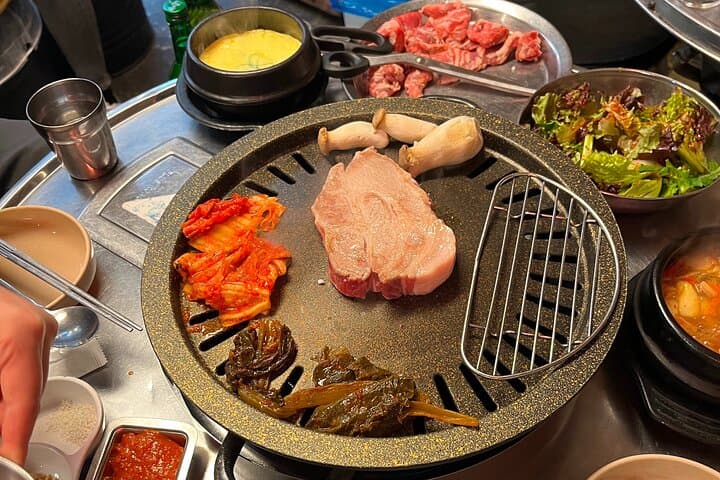
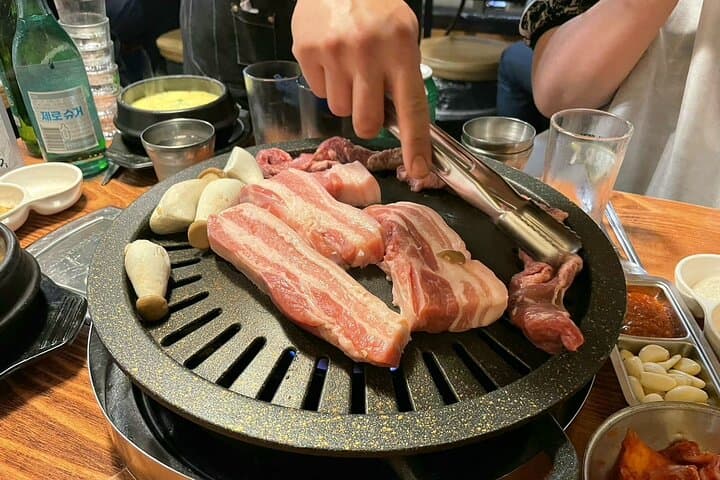
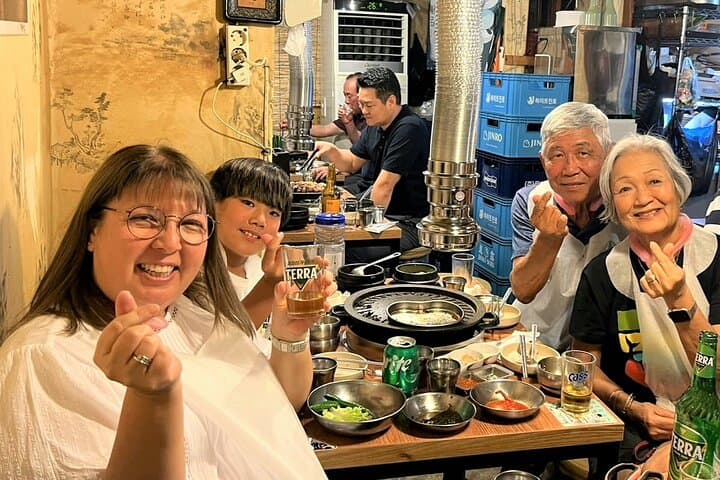
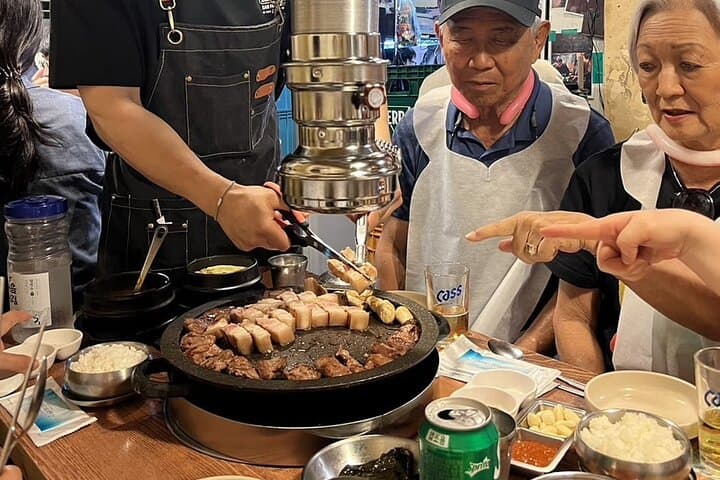
Expect hands-on cooking around a central grill, a local guide explaining how to wrap meat in lettuce with condiments, and the ritual interplay of beer, soju, and playful drinking games. The experience is as much about technique—timing a slice on the griddle—as it is about context: hanok architecture, post-war urban renewal, and Seoul’s food-forward nightlife.
Practically, this is a relaxed, 2.5-hour private tour suited to most travelers. Wear comfortable shoes for short street walking, bring a payment method accepted in Korea, and flag dietary restrictions when booking: menus center on pork and beef, though alternatives can sometimes be arranged.
Timing matters—arrive hungry and early in the evening for the liveliest scene. The setting is accessible, but tables around grills can get warm and smoky. Plan for a convivial, tactile meal where the city’s history sits as close as the grill—both asking to be tasted and understood.
easy.
2–3 hours.
Minimal fitness required — expect short walks on paved alleys and standing at/around the grill.
Tipping is not mandatory in South Korea; service charges are uncommon. If you receive exceptional service you can offer a small tip, but it’s not expected.
The menu centers on grilled meats and banchan; the operator may accommodate requests if notified in advance, but vegetarian/vegan options are limited.
The tour information notes wheelchair accessibility for routes and venues, but grills and table layouts may be tight—confirm any specific mobility needs when booking.
Secret Food Tours typically provide English-speaking guides; confirm language requirements at booking if you need another language.
Ikseon-dong contains some of Seoul’s earliest 20th-century hanok clusters; the neighborhood has shifted from residential to a curated mix of small eateries and craft shops since the 2000s.
Support small, local businesses and avoid single-use plastics; choose restaurants that source ingredients locally and minimize food waste when possible.
Secret Food Tours operates guided outdoor trips and adventures with an emphasis on safety, stewardship, and memorable experiences.
It starts in a narrow lane where low wooden eaves crowd the sky and the aroma of charred meat threads through the air—Ikseon-dong’s hanok alleys at dusk, a living room of Seoul’s past that hums with tonight’s feast.
It starts in a narrow lane where low wooden eaves crowd the sky and the aroma of charred meat threads through the air—Ikseon-dong’s hanok alleys at dusk, a living room of Seoul’s past that hums with tonight’s feast.
Ikseon-dong is one of the capital’s older hanok neighborhoods, built when Seoul was expanding in the early 20th century. The district’s compact courtyards and tiled roofs create intimate streets that contrast sharply with nearby glass towers. Korean BBQ itself reflects a communal culture: raw cuts arrive at the table, banchan plate the center, and conversations lift as coals glow.
Expect hands-on cooking around a central grill, a local guide explaining how to wrap meat in lettuce with condiments, and the ritual interplay of beer, soju, and playful drinking games. The experience is as much about technique—timing a slice on the griddle—as it is about context: hanok architecture, post-war urban renewal, and Seoul’s food-forward nightlife.
Practically, this is a relaxed, 2.5-hour private tour suited to most travelers. Wear comfortable shoes for short street walking, bring a payment method accepted in Korea, and flag dietary restrictions when booking: menus center on pork and beef, though alternatives can sometimes be arranged.
Timing matters—arrive hungry and early in the evening for the liveliest scene. The setting is accessible, but tables around grills can get warm and smoky. Plan for a convivial, tactile meal where the city’s history sits as close as the grill—both asking to be tasted and understood.