THE ADVENTURE COLLECTIVE® · Independent discovery and booking for outdoor travel

A single-night trek from Bali to Kawah Ijen offers a startling reward: the crater’s rare blue fire and a sunrise over a turquoise acid lake. This practical guide tells you what to expect on the midnight crossing and the steep, sulfur-scented climb.
A single-night trek from Bali to Kawah Ijen offers a startling reward: the crater’s rare blue fire and a sunrise over a turquoise acid lake. This practical guide tells you what to expect on the midnight crossing and the steep, sulfur-scented climb.
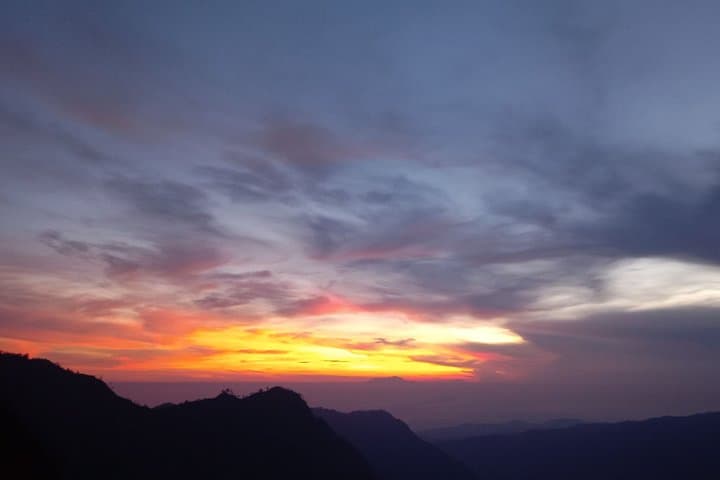
The night is thin and cool as the van eases away from Bali’s coast, the island’s lights shrinking while the silhouette of Java’s mountains rises on the horizon. By the time you reach the trailhead outside Banyuwangi, the sky has turned ink and the only light is your headlamp and the faint steam from Kawah Ijen below. The climb to the rim is a steady, breath-stealing ascent across volcanic scree and packed dirt; at the crater’s edge the sulfur vents glow and, if conditions align, the famously eerie blue flames lick the fumaroles, a chemical fire that seems to push the air forward.
Verified experiences and guided adventures in the surrounding area.
Operated by Osing Vacation · Banyuwangi, East Java
The night is thin and cool as the van eases away from Bali’s coast, the island’s lights shrinking while the silhouette of Java’s mountains rises on the horizon. By the time you reach the trailhead outside Banyuwangi, the sky has turned ink and the only light is your headlamp and the faint steam from Kawah Ijen below. The climb to the rim is a steady, breath-stealing ascent across volcanic scree and packed dirt; at the crater’s edge the sulfur vents glow and, if conditions align, the famously eerie blue flames lick the fumaroles, a chemical fire that seems to push the air forward.
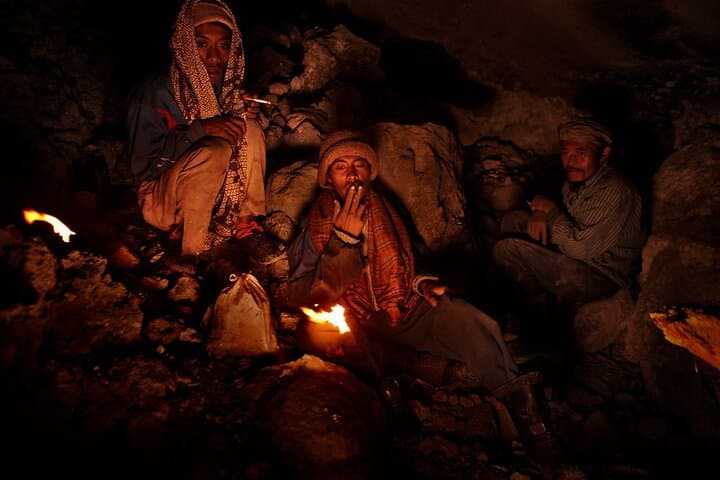
Ijen’s 2-km-wide crater holds one of the world’s largest highly acidic crater lakes and a long history of manual sulfur mining. For generations miners have hacked at yellow sulfur deposits and carried heavy loads down steep steps—an enduring cultural scene you may glimpse near the rim. Geologically it’s a young stratovolcano, restless and mineral-rich, the lake colored by dissolved metals and the fumes shaped by nightly temperature shifts.
Expect strong sulfur odor near fumaroles, loose talus underfoot, and dramatic shifts in temperature at dawn when the sun slices across the caldera. Practical notes: start before midnight from Bali to make the ferry and arrive at the trailhead in time for a 2–3 hour hike round-trip to sunrise. Bring a reliable headlamp, a respirator or mask for fumes, warm layers for wind, and sturdy footwear for steep, uneven trail. Allow extra time for ferry crossings, and respect mining areas and miners’ workspaces; the landscape is fragile and the lake’s chemistry is unforgiving.
challenging.
12–18 hours.
Should be in good cardiovascular shape; expect 2–3 hours of steep, unpaved uphill hiking at altitude and limited sleep.
No technical climbing is required, but you should be comfortable walking 2–3 hours uphill on loose volcanic terrain in the dark.
Blue fire depends on sulfur gas combustion and clear views; it's more visible in low wind and when miners are extracting sulfur—visibility is not guaranteed.
Volcanic gases and steep drops are hazards—follow guides, keep distance from fumaroles, and avoid entering miners’ work areas for safety.
Tours typically include private transport and ferry tickets from Bali to Banyuwangi; confirm pickup location and allow time for the ferry schedule and traffic.
Kawah Ijen has long been a site of informal sulfur mining; miners still extract and carry sulfur by hand along the crater rim, a practice with deep local roots.
The crater’s acidic lake and fragile fumarole zones are sensitive—stay on marked trails, pack out waste, and avoid disturbing miners’ work to limit impact.
Osing Vacation operates guided outdoor trips and adventures with an emphasis on safety, stewardship, and memorable experiences.

The night is thin and cool as the van eases away from Bali’s coast, the island’s lights shrinking while the silhouette of Java’s mountains rises on the horizon. By the time you reach the trailhead outside Banyuwangi, the sky has turned ink and the only light is your headlamp and the faint steam from Kawah Ijen below. The climb to the rim is a steady, breath-stealing ascent across volcanic scree and packed dirt; at the crater’s edge the sulfur vents glow and, if conditions align, the famously eerie blue flames lick the fumaroles, a chemical fire that seems to push the air forward.
The night is thin and cool as the van eases away from Bali’s coast, the island’s lights shrinking while the silhouette of Java’s mountains rises on the horizon. By the time you reach the trailhead outside Banyuwangi, the sky has turned ink and the only light is your headlamp and the faint steam from Kawah Ijen below. The climb to the rim is a steady, breath-stealing ascent across volcanic scree and packed dirt; at the crater’s edge the sulfur vents glow and, if conditions align, the famously eerie blue flames lick the fumaroles, a chemical fire that seems to push the air forward.
Ijen’s 2-km-wide crater holds one of the world’s largest highly acidic crater lakes and a long history of manual sulfur mining. For generations miners have hacked at yellow sulfur deposits and carried heavy loads down steep steps—an enduring cultural scene you may glimpse near the rim. Geologically it’s a young stratovolcano, restless and mineral-rich, the lake colored by dissolved metals and the fumes shaped by nightly temperature shifts.
Expect strong sulfur odor near fumaroles, loose talus underfoot, and dramatic shifts in temperature at dawn when the sun slices across the caldera. Practical notes: start before midnight from Bali to make the ferry and arrive at the trailhead in time for a 2–3 hour hike round-trip to sunrise. Bring a reliable headlamp, a respirator or mask for fumes, warm layers for wind, and sturdy footwear for steep, uneven trail. Allow extra time for ferry crossings, and respect mining areas and miners’ workspaces; the landscape is fragile and the lake’s chemistry is unforgiving.