THE ADVENTURE COLLECTIVE® · Independent discovery and booking for outdoor travel

Ascend Mount Ijen before dawn to watch sunrise over a turquoise acidic lake and, if conditions allow, the rare blue fire produced by burning sulfur gases. This guided trek combines steep pre-dawn hiking, close-up views of sulfur mining, and stark volcanic scenery.
Ascend Mount Ijen before dawn to watch sunrise over a turquoise acidic lake and, if conditions allow, the rare blue fire produced by burning sulfur gases. This guided trek combines steep pre-dawn hiking, close-up views of sulfur mining, and stark volcanic scenery.
You stand on a narrow ridgeline in the dark, headlamp cones cutting through cold air as a faint sulfurous tang tugs at the back of your throat. Guides lead a steady, murmuring line toward the rim; behind them, men—sulfur miners—move with a practiced, punishing rhythm, bamboo baskets cradling raw yellow loads.
Verified experiences and guided adventures in the surrounding area.
Operated by East Java Paradise Travel · Banyuwangi, East Java
You stand on a narrow ridgeline in the dark, headlamp cones cutting through cold air as a faint sulfurous tang tugs at the back of your throat. Guides lead a steady, murmuring line toward the rim; behind them, men—sulfur miners—move with a practiced, punishing rhythm, bamboo baskets cradling raw yellow loads.
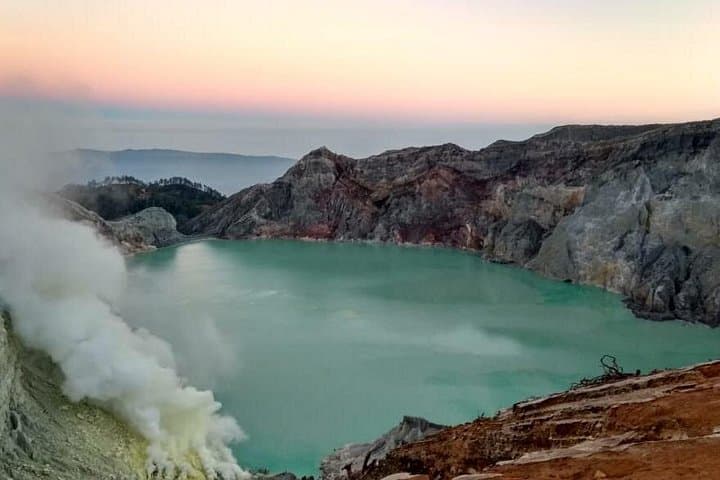
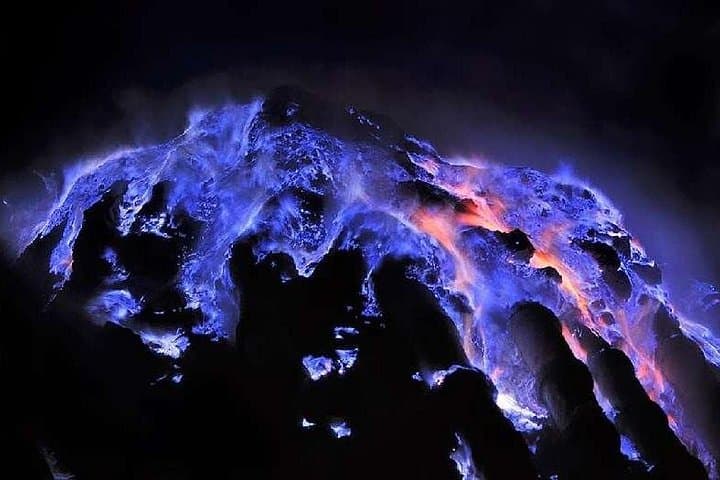
Ijen’s story is geological and human at once. The crater is a collapsed volcanic caldera whose acidic lake pours an impossible turquoise into the basin below. When sulfur gases ignite in fissures at night they create the famous “blue fire,” a rare phenomenon driven by burning sulfuric vapors rather than lava. The mountain sits in East Java near Banyuwangi, and local mining has supplied sulfur for generations—an economy and culture shaped by grit rather than glamour.
Expect a steep pre-dawn hike (often 2–3 hours from the Paltuding trailhead), cold winds on the rim, and visibility that depends on weather and volcanic activity. Tours typically provide gas masks and a guide; for safety you will view the lake and the blue fire from approved distances—descending into the crater is restricted.
Practical edge: start very early (midnight–2am departures), use a reliable headlamp, and plan for muddy trails after rains. Hydrate before you go, carry layers for a 5–10°C drop at altitude, and give miners space—photograph respectfully and keep movement quiet. The payoff is immediate: sunrise washing the plateau and a surreal turquoise lake framed by smoking vents—raw, elemental, and plainly memorable.
moderate.
12–14 hours.
Good cardiovascular fitness and leg strength; able to sustain a steep 2–3 hour climb in cool, thin air.
Blue fire is most visible at night and in the very early morning; visibility depends on gas emissions and weather—ask your guide about recent activity before booking.
Access to the crater floor is restricted for safety and conservation; most tours view the lake and blue fire from approved rim vantage points about 1 km from prohibited zones.
Not recommended for pregnant travelers or those with serious medical conditions; children can join but must be accompanied and physically capable of the pre-dawn climb.
Organized tours include guides, masks, entrance fees, and transport; a licensed local guide is required to navigate trails and provide up-to-date safety information.
Sulfur extraction at Ijen has been practiced for decades; local miners carry sulfur on bamboo frames in one of the region’s most demanding manual industries.
The crater’s acidic lake and fragile rim are sensitive to both mining and tourist traffic—stay on marked paths, follow guides, and avoid littering or approaching restricted vents.
East Java Paradise Travel operates guided outdoor trips and adventures with an emphasis on safety, stewardship, and memorable experiences.
You stand on a narrow ridgeline in the dark, headlamp cones cutting through cold air as a faint sulfurous tang tugs at the back of your throat. Guides lead a steady, murmuring line toward the rim; behind them, men—sulfur miners—move with a practiced, punishing rhythm, bamboo baskets cradling raw yellow loads.
You stand on a narrow ridgeline in the dark, headlamp cones cutting through cold air as a faint sulfurous tang tugs at the back of your throat. Guides lead a steady, murmuring line toward the rim; behind them, men—sulfur miners—move with a practiced, punishing rhythm, bamboo baskets cradling raw yellow loads.
Ijen’s story is geological and human at once. The crater is a collapsed volcanic caldera whose acidic lake pours an impossible turquoise into the basin below. When sulfur gases ignite in fissures at night they create the famous “blue fire,” a rare phenomenon driven by burning sulfuric vapors rather than lava. The mountain sits in East Java near Banyuwangi, and local mining has supplied sulfur for generations—an economy and culture shaped by grit rather than glamour.
Expect a steep pre-dawn hike (often 2–3 hours from the Paltuding trailhead), cold winds on the rim, and visibility that depends on weather and volcanic activity. Tours typically provide gas masks and a guide; for safety you will view the lake and the blue fire from approved distances—descending into the crater is restricted.
Practical edge: start very early (midnight–2am departures), use a reliable headlamp, and plan for muddy trails after rains. Hydrate before you go, carry layers for a 5–10°C drop at altitude, and give miners space—photograph respectfully and keep movement quiet. The payoff is immediate: sunrise washing the plateau and a surreal turquoise lake framed by smoking vents—raw, elemental, and plainly memorable.