THE ADVENTURE COLLECTIVE® · Independent discovery and booking for outdoor travel

Depart Bali late-night for a ferry crossing and a midnight hike to Ijen’s rim to witness the rare blue fire and sunrise over the acidic turquoise lake. This full-day trip mixes geology, culture, and an active volcano hike.
Depart Bali late-night for a ferry crossing and a midnight hike to Ijen’s rim to witness the rare blue fire and sunrise over the acidic turquoise lake. This full-day trip mixes geology, culture, and an active volcano hike.
Night air on the ferry tastes of salt and diesel as the van pushes east toward Banyuwangi; by midnight the road narrows into jungle and the mountain ahead looms like a dark promise. At the Paltuding trailhead a headlamp beam cuts through the charcoal air, and the hike begins: steep switchbacks, loose volcanic scree, and the persistent sulfur tang that grows stronger as you approach the rim.
Verified experiences and guided adventures in the surrounding area.
Operated by East Java Paradise Travel · Banyuwangi, East Java
Night air on the ferry tastes of salt and diesel as the van pushes east toward Banyuwangi; by midnight the road narrows into jungle and the mountain ahead looms like a dark promise. At the Paltuding trailhead a headlamp beam cuts through the charcoal air, and the hike begins: steep switchbacks, loose volcanic scree, and the persistent sulfur tang that grows stronger as you approach the rim.
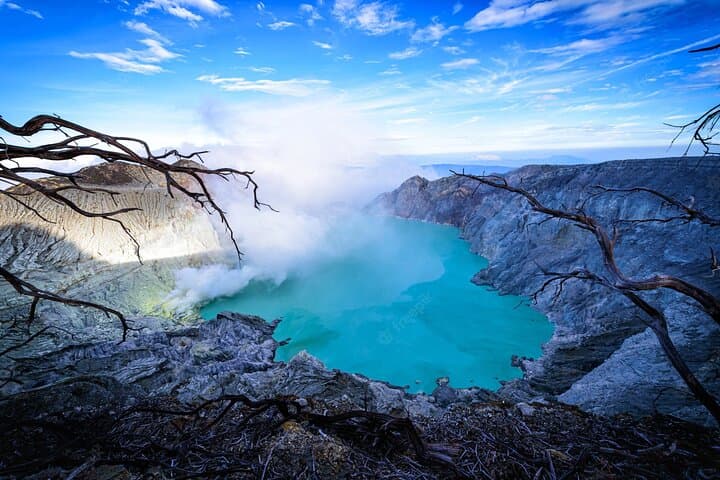
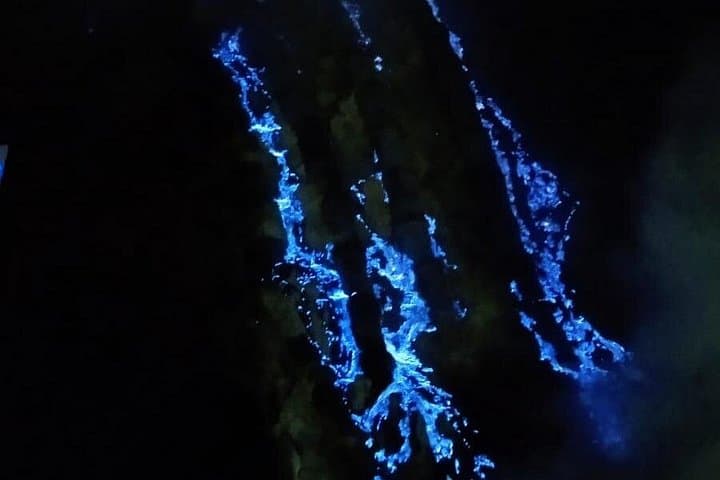
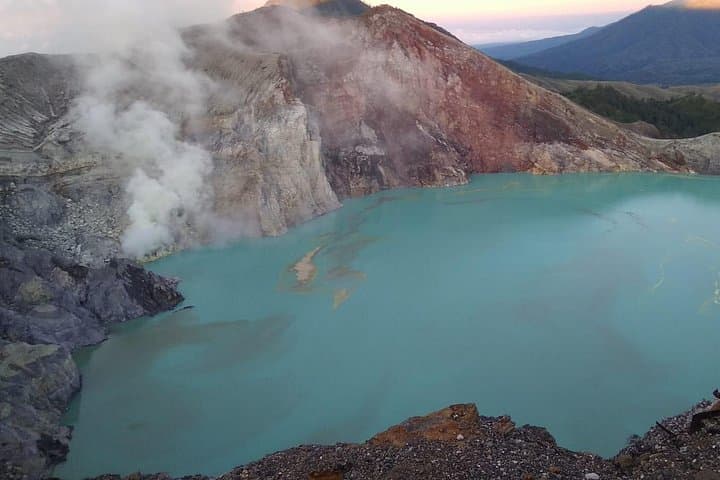
Ijen’s crater is best known for two dramatic elements — the eerie electric-blue flames that sometimes burn along exposed sulfur vents, and the almost impossibly turquoise, highly acidic crater lake. The blue fire is a chemical combustion of sulfur vapors that only appears at very high temperatures and in low light; the turquoise lake sits in the caldera of a stratovolcano formed by repeated eruptions and hydrothermal activity.
Culturally the site is still worked by local sulfur miners who haul heavy loads of cooled sulfur on their backs along the crater path. Observing their labor is a reminder that this is both a natural wonder and a working landscape.
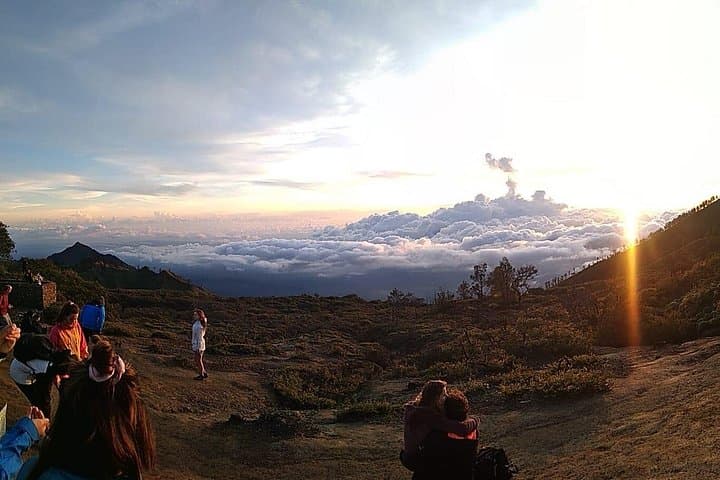
Practical planning: tours typically leave Bali late evening, include a ferry crossing and a 2–3 hour round-trip drive to the trailhead, with a 1.5–2 hour uphill walk each way over about 3 km of uneven terrain. Conditions can be cold before sunrise and intensely odorous near fumaroles; a respirator is standard for visitors. Bring warm layers, a reliable headlamp, sturdy shoes, and water. Start the hike early to catch blue fire (if present) and sunrise, and allow time to descend safely before roads get busy.
moderate.
5–6 hours (tour total); 3–4 hours hiking round-trip.
Moderate fitness: able to sustain continuous uphill walking for 1.5–2 hours and manage uneven, steep trail.
Blue fire is best seen in very low light, typically before and around sunrise; it’s a brief, localized phenomenon and depends on sulfur vent activity and conditions.
Expect 1.5–2 hours uphill over roughly 3 km of uneven, sometimes steep trail; moderate fitness and steady footing are recommended.
There are no vendors on the trail — bring water and snacks. Tours often include bottled water and a simple breakfast after the hike.
The lake is highly acidic and the air can contain hazardous gases; stay on official paths, use a mask near fumaroles, and follow your guide’s instructions.
Ijen sits within a volcanic complex in East Java; the caldera formed from past explosive eruptions and long-term hydrothermal activity shaped the acidic lake and sulfur vents.
The site is popular and fragile: stay on trails, avoid littering, and support local guides to reduce informal guiding pressure and help protect mining communities and the crater environment.
East Java Paradise Travel operates guided outdoor trips and adventures with an emphasis on safety, stewardship, and memorable experiences.
Night air on the ferry tastes of salt and diesel as the van pushes east toward Banyuwangi; by midnight the road narrows into jungle and the mountain ahead looms like a dark promise. At the Paltuding trailhead a headlamp beam cuts through the charcoal air, and the hike begins: steep switchbacks, loose volcanic scree, and the persistent sulfur tang that grows stronger as you approach the rim.
Night air on the ferry tastes of salt and diesel as the van pushes east toward Banyuwangi; by midnight the road narrows into jungle and the mountain ahead looms like a dark promise. At the Paltuding trailhead a headlamp beam cuts through the charcoal air, and the hike begins: steep switchbacks, loose volcanic scree, and the persistent sulfur tang that grows stronger as you approach the rim.
Ijen’s crater is best known for two dramatic elements — the eerie electric-blue flames that sometimes burn along exposed sulfur vents, and the almost impossibly turquoise, highly acidic crater lake. The blue fire is a chemical combustion of sulfur vapors that only appears at very high temperatures and in low light; the turquoise lake sits in the caldera of a stratovolcano formed by repeated eruptions and hydrothermal activity.
Culturally the site is still worked by local sulfur miners who haul heavy loads of cooled sulfur on their backs along the crater path. Observing their labor is a reminder that this is both a natural wonder and a working landscape.
Practical planning: tours typically leave Bali late evening, include a ferry crossing and a 2–3 hour round-trip drive to the trailhead, with a 1.5–2 hour uphill walk each way over about 3 km of uneven terrain. Conditions can be cold before sunrise and intensely odorous near fumaroles; a respirator is standard for visitors. Bring warm layers, a reliable headlamp, sturdy shoes, and water. Start the hike early to catch blue fire (if present) and sunrise, and allow time to descend safely before roads get busy.