THE ADVENTURE COLLECTIVE® · Independent discovery and booking for outdoor travel

Set out from Banyuwangi on a pre-dawn trek to Ijen’s volcanic rim to hunt the rare blue fire and watch sunrise over a turquoise crater lake. This shared tour blends a steep, rocky climb with local mining history and dramatic geology—prepare for cold, sulfur air, and a memorable sunrise.
Set out from Banyuwangi on a pre-dawn trek to Ijen’s volcanic rim to hunt the rare blue fire and watch sunrise over a turquoise crater lake. This shared tour blends a steep, rocky climb with local mining history and dramatic geology—prepare for cold, sulfur air, and a memorable sunrise.
A thin silver light slides over Banyuwangi as the van drops you at the trailhead around 01:00. The mountain keeps its own time here: a low, sulfur-scented wind moves through the black lava fields and the crater rim waits like a wide-open eye. Trekkers step into the cold, headlamps cutting ribbons through the dark, led by local guides who know where the blue flames appear.
Verified experiences and guided adventures in the surrounding area.
Operated by Transwisata Banyuwangi · Banyuwangi, East Java
A thin silver light slides over Banyuwangi as the van drops you at the trailhead around 01:00. The mountain keeps its own time here: a low, sulfur-scented wind moves through the black lava fields and the crater rim waits like a wide-open eye. Trekkers step into the cold, headlamps cutting ribbons through the dark, led by local guides who know where the blue flames appear.
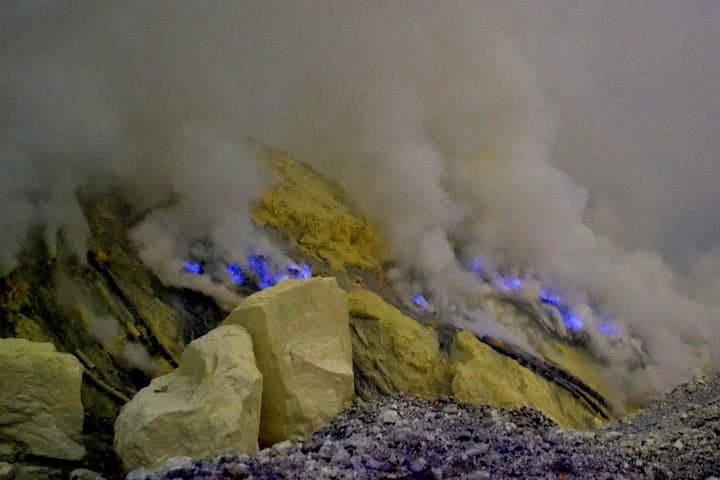
Ijen is an active stratovolcano on eastern Java whose crater holds one of the largest highly acidic crater lakes in the world. For decades sulfur miners have hacked raw sulphur from the crater floor, carrying heavy loads down steep rails—an industry that shaped local culture and the dramatic, yellow-streaked cliffs you’ll see at close range. Geologically recent eruptions and constant fumarolic activity feed the lake and the rare blue combustion of sulfur gases that sometimes burns at night, a phenomenon best seen in low wind and without moonlight.
Practical guidance: expect a steep, rocky 2–3 km ascent with roughly 300–500 m of elevation gain from the usual ticket office route; the round trip from Banyuwangi with transport commonly takes 5–9 hours. Bring a gas mask (provided on many tours), a reliable headlamp, sturdy shoes, and warm layers for the pre-dawn chill. Move deliberately on loose scree, respect miners at work, and stay with your guide—visibility and sulfur fumes can change fast. If the blue fire appears, it will feel sudden and alien, gaslight pushing through stone as the sun threatens the horizon.
moderate.
5–9 hours.
Moderate fitness: comfortable with a steep 2–3 km uphill, some scrambling on loose rock, and standing in cold pre-dawn conditions.
No. Blue fire depends on sulfur gas emissions, wind, and darkness; it appears more reliably on calm, moonless nights but is not guaranteed.
The trail is steep and can be slippery; risks include falls and exposure to sulfur fumes—travel with a guide and follow safety instructions.
Many operators include a basic gas mask in the tour; if you have respiratory issues, bring a certified respirator and consult the operator beforehand.
Most shared tours depart around midnight and return between early morning and late morning depending on pickup points—confirm your pickup location and schedule with the operator.
Ijen’s crater has been mined for sulfur for over a century; miners still extract and carry sulfur by hand from the crater floor to the rim.
The crater’s acidic lake and fumaroles form a fragile environment; stick to trails, avoid litter, and support local guides who balance tourism with miners’ livelihoods.
Transwisata Banyuwangi operates guided outdoor trips and adventures with an emphasis on safety, stewardship, and memorable experiences.
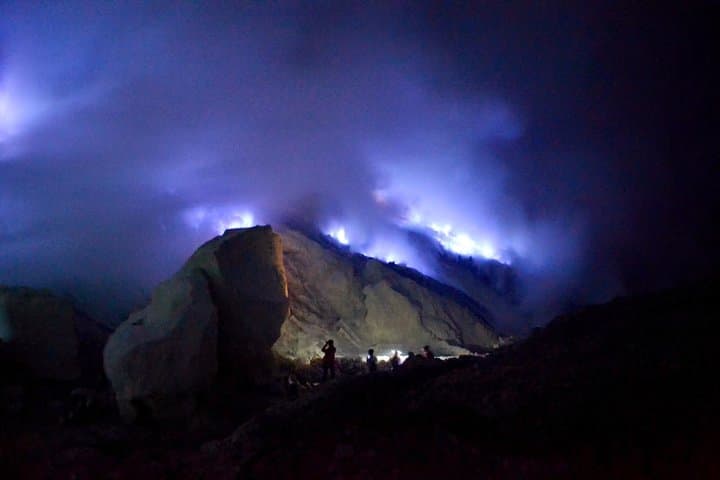
A thin silver light slides over Banyuwangi as the van drops you at the trailhead around 01:00. The mountain keeps its own time here: a low, sulfur-scented wind moves through the black lava fields and the crater rim waits like a wide-open eye. Trekkers step into the cold, headlamps cutting ribbons through the dark, led by local guides who know where the blue flames appear.
A thin silver light slides over Banyuwangi as the van drops you at the trailhead around 01:00. The mountain keeps its own time here: a low, sulfur-scented wind moves through the black lava fields and the crater rim waits like a wide-open eye. Trekkers step into the cold, headlamps cutting ribbons through the dark, led by local guides who know where the blue flames appear.
Ijen is an active stratovolcano on eastern Java whose crater holds one of the largest highly acidic crater lakes in the world. For decades sulfur miners have hacked raw sulphur from the crater floor, carrying heavy loads down steep rails—an industry that shaped local culture and the dramatic, yellow-streaked cliffs you’ll see at close range. Geologically recent eruptions and constant fumarolic activity feed the lake and the rare blue combustion of sulfur gases that sometimes burns at night, a phenomenon best seen in low wind and without moonlight.
Practical guidance: expect a steep, rocky 2–3 km ascent with roughly 300–500 m of elevation gain from the usual ticket office route; the round trip from Banyuwangi with transport commonly takes 5–9 hours. Bring a gas mask (provided on many tours), a reliable headlamp, sturdy shoes, and warm layers for the pre-dawn chill. Move deliberately on loose scree, respect miners at work, and stay with your guide—visibility and sulfur fumes can change fast. If the blue fire appears, it will feel sudden and alien, gaslight pushing through stone as the sun threatens the horizon.