THE ADVENTURE COLLECTIVE® · Independent discovery and booking for outdoor travel

A night trek to Kawah Ijen from Bali delivers the rare blue fire phenomenon and a dawn rim view after a steep, volcanic hike. This guided, multi-day transfer combines ferry travel, a two-hour ascent, and close-up encounters with traditional sulfur miners.
A night trek to Kawah Ijen from Bali delivers the rare blue fire phenomenon and a dawn rim view after a steep, volcanic hike. This guided, multi-day transfer combines ferry travel, a two-hour ascent, and close-up encounters with traditional sulfur miners.
You arrive in the small hours at the Paltuding parking lot, headlights cutting a path through mist, and the crater mouth waits like a sleeping animal that will wake with light. Guides fit you with torches and gas masks, coffee warms your hands, and the first steps lead down a steep, ash-strewn trail toward the crater floor where the famous blue fire ignites against sulfur smoke.
Verified experiences and guided adventures in the surrounding area.
Operated by Java Exotica Tour · Banyuwangi, East Java
You arrive in the small hours at the Paltuding parking lot, headlights cutting a path through mist, and the crater mouth waits like a sleeping animal that will wake with light. Guides fit you with torches and gas masks, coffee warms your hands, and the first steps lead down a steep, ash-strewn trail toward the crater floor where the famous blue fire ignites against sulfur smoke.
Kawah Ijen sits on the eastern edge of Java and is a complex of stratovolcanoes formed by subduction of the Indo-Australian Plate beneath Eurasia. For generations local miners have harvested sulfur by hand from fumaroles, carrying heavy loads along the same switchbacks modern trekkers use. The blue flame itself is a chemical curiosity: burning sulfur gases that ignite at high temperature and are visible at night.
Culturally the trek intersects living industry — miners, ferrymen, and small coffee stalls — offering a grounded look at daily life around the crater. Expect volcanic scree, steep descent/ascent sections and a sharp, cool wind at elevation.
Practical guidance: the climb to the rim takes roughly two hours one way over loose talus and uneven steps; wear sturdy boots and bring warm layers for summit winds. Gas masks are provided but a well-fitting respirator is useful if you are sensitive to fumes. Start times are set to catch the blue fire in darkness and sunrise from the rim, so plan for late-night pickup and a return ferry crossing. Move deliberately on the descent, mindful of tired legs and shifting volcanic ash — the crater rewards patience with a rare, otherworldly light display and a sweeping dawn view back toward Bali.
moderate.
24–36 hours.
Should be able to hike uphill for 2 hours on uneven terrain and tolerate late-night activity; moderate cardiovascular fitness recommended.
Blue fire is visible only at night when sulfur gases burn; sightings occur during pre-dawn hours and visibility depends on wind and gas flow — plan for a 30–60 minute window at the crater floor.
Expect roughly two hours uphill on uneven, steep terrain; it’s rated moderate, with sections of loose scree and stone steps requiring steady footing.
Guides typically provide gas masks; they are strongly recommended near fumaroles, though sensitive individuals may prefer bringing a certificated respirator.
Yes — operators offer overnight transfers with a ferry crossing and a night hike; travel time includes ferry and road transit, so the schedule is long and often spans two calendar days.
Local sulfur extraction has been practiced for decades; miners who collect sulfur by hand continue a labor-intensive tradition that predates modern mechanization.
The crater environment is fragile — stay on marked trails, pack out waste, and support guides who follow responsible access and minimize disturbance to miners and wildlife.
Java Exotica Tour operates guided outdoor trips and adventures with an emphasis on safety, stewardship, and memorable experiences.
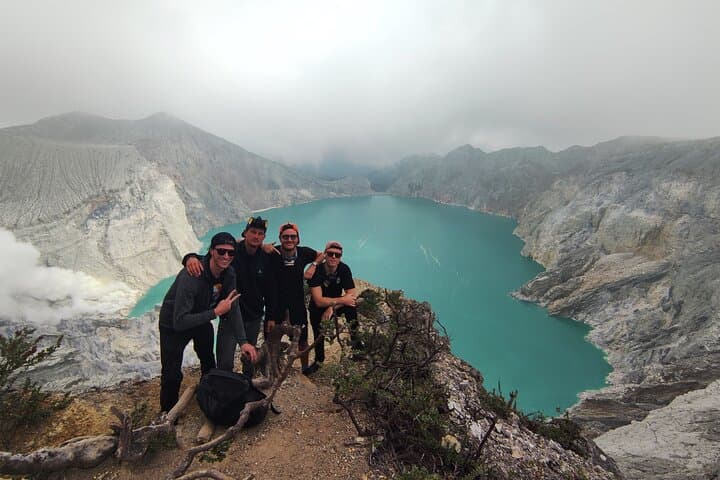
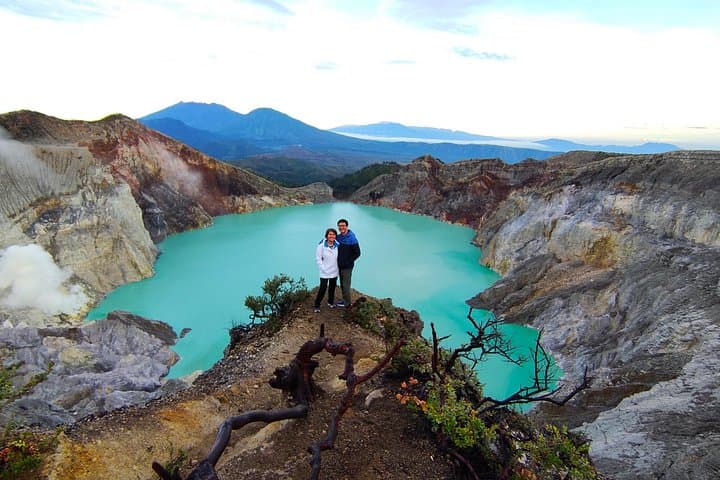
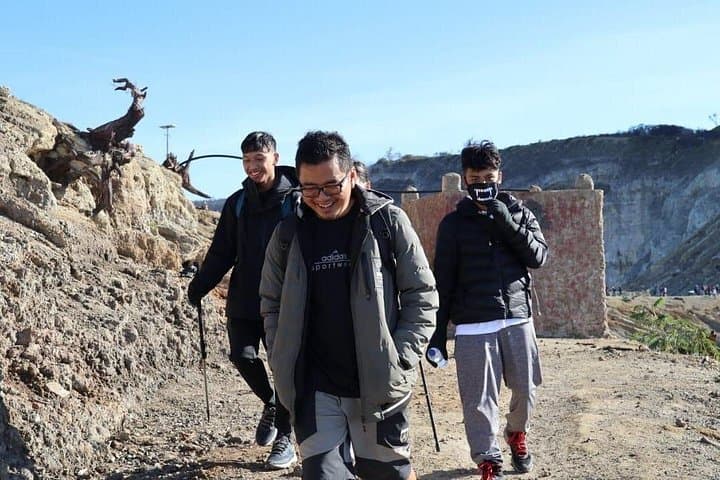
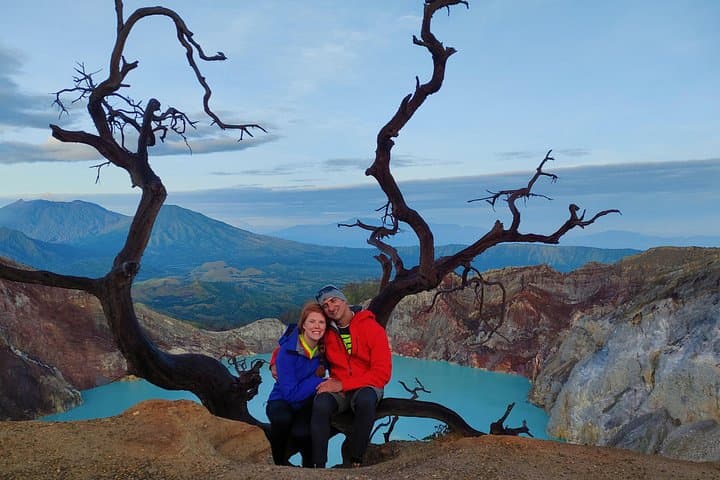
You arrive in the small hours at the Paltuding parking lot, headlights cutting a path through mist, and the crater mouth waits like a sleeping animal that will wake with light. Guides fit you with torches and gas masks, coffee warms your hands, and the first steps lead down a steep, ash-strewn trail toward the crater floor where the famous blue fire ignites against sulfur smoke.
You arrive in the small hours at the Paltuding parking lot, headlights cutting a path through mist, and the crater mouth waits like a sleeping animal that will wake with light. Guides fit you with torches and gas masks, coffee warms your hands, and the first steps lead down a steep, ash-strewn trail toward the crater floor where the famous blue fire ignites against sulfur smoke.
Kawah Ijen sits on the eastern edge of Java and is a complex of stratovolcanoes formed by subduction of the Indo-Australian Plate beneath Eurasia. For generations local miners have harvested sulfur by hand from fumaroles, carrying heavy loads along the same switchbacks modern trekkers use. The blue flame itself is a chemical curiosity: burning sulfur gases that ignite at high temperature and are visible at night.
Culturally the trek intersects living industry — miners, ferrymen, and small coffee stalls — offering a grounded look at daily life around the crater. Expect volcanic scree, steep descent/ascent sections and a sharp, cool wind at elevation.
Practical guidance: the climb to the rim takes roughly two hours one way over loose talus and uneven steps; wear sturdy boots and bring warm layers for summit winds. Gas masks are provided but a well-fitting respirator is useful if you are sensitive to fumes. Start times are set to catch the blue fire in darkness and sunrise from the rim, so plan for late-night pickup and a return ferry crossing. Move deliberately on the descent, mindful of tired legs and shifting volcanic ash — the crater rewards patience with a rare, otherworldly light display and a sweeping dawn view back toward Bali.