THE ADVENTURE COLLECTIVE® · Independent discovery and booking for outdoor travel

Hike through a starry Javan sky to witness the Ijen crater’s eerie blue fire and a sunrise over an acid lake. This 7‑hour overnight tour from Banyuwangi combines a strenuous night ascent, sulfuric fumes, and close-up views of artisanal sulphur mining.
Hike through a starry Javan sky to witness the Ijen crater’s eerie blue fire and a sunrise over an acid lake. This 7‑hour overnight tour from Banyuwangi combines a strenuous night ascent, sulfuric fumes, and close-up views of artisanal sulphur mining.
You start in the dark, a convoy of headlights rolling away from Banyuwangi toward the high ridge where the crater keeps its secret. The trail climbs under a sky freckled with stars, and the only sound is the rhythm of boots and the occasional hiss of a miner’s torch down in the crater.
Verified experiences and guided adventures in the surrounding area.
Operated by IjenStars · Banyuwangi, East Java
You start in the dark, a convoy of headlights rolling away from Banyuwangi toward the high ridge where the crater keeps its secret. The trail climbs under a sky freckled with stars, and the only sound is the rhythm of boots and the occasional hiss of a miner’s torch down in the crater.
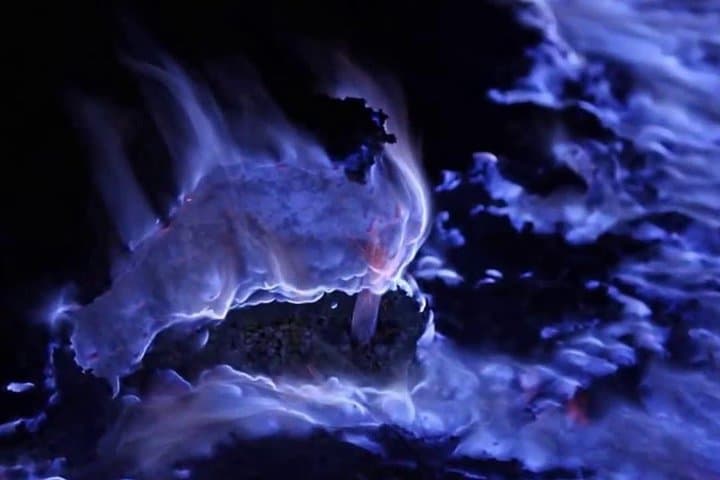
Kawah Ijen sits on the eastern edge of Java — an active volcanic complex whose acid lake and sulphur vents have shaped local livelihoods for generations. Geologically, the crater is noted for its high sulphur content; gases escaping through fissures ignite to create the rare blue fire, visible only where sulfur gases burn at high temperatures. Culturally, the site is home to artisanal sulphur miners who still carry loads by hand to nearby weigh stations. That human story is as much part of the visit as the crater’s raw geology.
Expect a steep 45–90 minute ascent from the parking area, uneven volcanic scree, and strong sulphur fumes near the crater rim. The operator provides torches, gas masks, water, snacks, and hotel pickup; tours run overnight so you arrive at the blue flames before dawn and stay for the sun to lift over the turquoise crater lake.
Plan for cold air at elevation, slippery sections after rain, and limited facilities at the trailhead. Bring a reliable headlamp, sturdy boots, a lightweight respirator if you prefer your own, and layers for pre-dawn temperatures. Move deliberately on the descent and respect miners’ working areas — low-impact behavior keeps the place accessible for everyone.
challenging.
6–8 hours (round trip, including transfers).
Moderate to fit: you should be comfortable hiking on steep, uneven terrain for up to 2 hours one way at altitude.
Blue fire is visible at night and in the early pre-dawn hours where sulfur gases ignite; guides time the ascent so you arrive when visibility is best.
This tour is not recommended for pregnant travelers or people with serious heart or spinal conditions due to steep, uneven terrain and sulphur fumes; check operator restrictions for children.
Expect a steep 30–90 minute climb from the parking area over loose volcanic material—moderate fitness and surefootedness are required.
Yes; artisanal sulphur miners still work in the crater area. Observe respectfully and follow guide instructions—do not approach mining operations.
Artisanal sulphur mining at Ijen has a long history; miners haul heavy baskets on foot and the industry shapes local livelihoods around the crater.
Kawah Ijen’s acid lake and fragile crater environment are sensitive—stick to trails, pack out waste, and follow guide rules to minimize impact.
IjenStars operates guided outdoor trips and adventures with an emphasis on safety, stewardship, and memorable experiences.
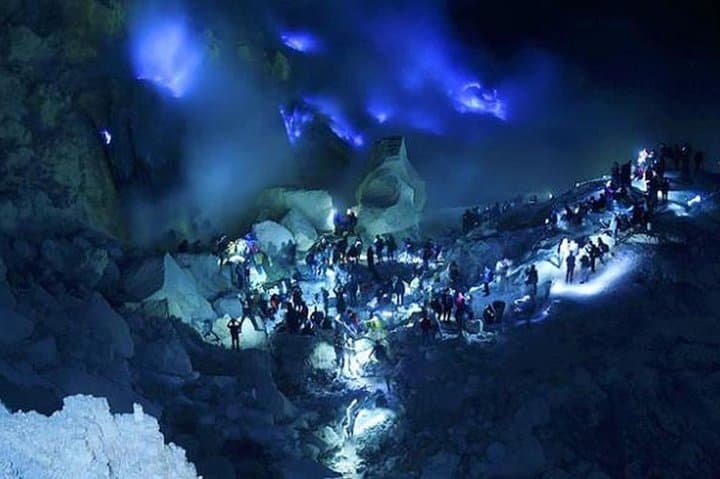
You start in the dark, a convoy of headlights rolling away from Banyuwangi toward the high ridge where the crater keeps its secret. The trail climbs under a sky freckled with stars, and the only sound is the rhythm of boots and the occasional hiss of a miner’s torch down in the crater.
You start in the dark, a convoy of headlights rolling away from Banyuwangi toward the high ridge where the crater keeps its secret. The trail climbs under a sky freckled with stars, and the only sound is the rhythm of boots and the occasional hiss of a miner’s torch down in the crater.
Kawah Ijen sits on the eastern edge of Java — an active volcanic complex whose acid lake and sulphur vents have shaped local livelihoods for generations. Geologically, the crater is noted for its high sulphur content; gases escaping through fissures ignite to create the rare blue fire, visible only where sulfur gases burn at high temperatures. Culturally, the site is home to artisanal sulphur miners who still carry loads by hand to nearby weigh stations. That human story is as much part of the visit as the crater’s raw geology.
Expect a steep 45–90 minute ascent from the parking area, uneven volcanic scree, and strong sulphur fumes near the crater rim. The operator provides torches, gas masks, water, snacks, and hotel pickup; tours run overnight so you arrive at the blue flames before dawn and stay for the sun to lift over the turquoise crater lake.
Plan for cold air at elevation, slippery sections after rain, and limited facilities at the trailhead. Bring a reliable headlamp, sturdy boots, a lightweight respirator if you prefer your own, and layers for pre-dawn temperatures. Move deliberately on the descent and respect miners’ working areas — low-impact behavior keeps the place accessible for everyone.