THE ADVENTURE COLLECTIVE® · Independent discovery and booking for outdoor travel

Climb before dawn to witness Ijen’s rare blue fire and a turquoise acid crater lake. This pre-dawn hike combines volcanic geology, local sulfur-mining culture, and steep, lunar-like terrain—plan for cold, fumes, and loose rock.
Climb before dawn to witness Ijen’s rare blue fire and a turquoise acid crater lake. This pre-dawn hike combines volcanic geology, local sulfur-mining culture, and steep, lunar-like terrain—plan for cold, fumes, and loose rock.
Cold mountain air bites at the face as headlamps carve the path toward a rim that glows electric blue before sunrise. On the Daily Ijen Blue Fire Tour you climb in the dark to where sulfur gases ignite into ghostly blue flames, then stand at the lip of the world’s largest acidic crater lake as pale light reveals a turquoise pool and miners hauling bright yellow loads down the crater shore.
Verified experiences and guided adventures in the surrounding area.
Operated by Thalia Travel · Banyuwangi, East Java
Cold mountain air bites at the face as headlamps carve the path toward a rim that glows electric blue before sunrise. On the Daily Ijen Blue Fire Tour you climb in the dark to where sulfur gases ignite into ghostly blue flames, then stand at the lip of the world’s largest acidic crater lake as pale light reveals a turquoise pool and miners hauling bright yellow loads down the crater shore.
Geology here is stark: Ijen is part of a 20 km caldera complex with a 960 × 600 m inner crater and an acid lake reported to reach roughly 200 m deep and covering several hectares. The blue fire is a rare phenomenon produced when sulfuric gas ignites at high temperatures; the same place is known for its hard-working local sulfur miners, a living—if hazardous—industry that’s shaped the area’s culture and economy.
Practical notes: expect an 8–9 hour excursion from Banyuwangi including travel; the trail gains steep, uneven ground to roughly 2,368 m elevation. Guides supply gas masks and flashlights, and miners’ paths mean loose rock and strong sulfur fumes near vents. Arrive prepared for cold pre-dawn temperatures, slippery descents, and limited services at the rim.
Tips for planning: start very early (pre-dawn) to see the blue flame, use a fitted respirator or the supplied gas mask, wear sturdy waterproof boots, and carry water and layered insulation. Respect restricted areas, keep distance from active vents, and tip local guides—the landscape is fragile and the miners’ work is dangerous.
moderate.
8–9 hours (including transfer).
Moderate fitness recommended: able to walk 3–5 km on steep, uneven terrain with 300–500 m of ascent and descent.
Pre-dawn is best—arrive in the dark before sunrise when sulfur gases ignite and the blue flame is visible; most tours leave late evening or very early night.
Yes—local operators typically provide gas masks and flashlights, but bringing a personal fitted respirator can improve comfort and protection.
The trail is steep and uneven with loose scree; it requires moderate fitness and careful footing, especially in the dark and on the descent.
Yes—the lake is highly acidic and temperatures and gases near vents are hazardous; stay on permitted paths and follow guides’ instructions.
Ijen sits within a volcanic complex shaped by repeated eruptions and a large caldera; sulfur extraction has been practiced here for decades and remains a significant local livelihood.
The crater’s fragile chemistry and active mining make minimizing impact essential—stay on trails, avoid littering, and support local guides who balance tourism with traditional work.
Thalia Travel operates guided outdoor trips and adventures with an emphasis on safety, stewardship, and memorable experiences.
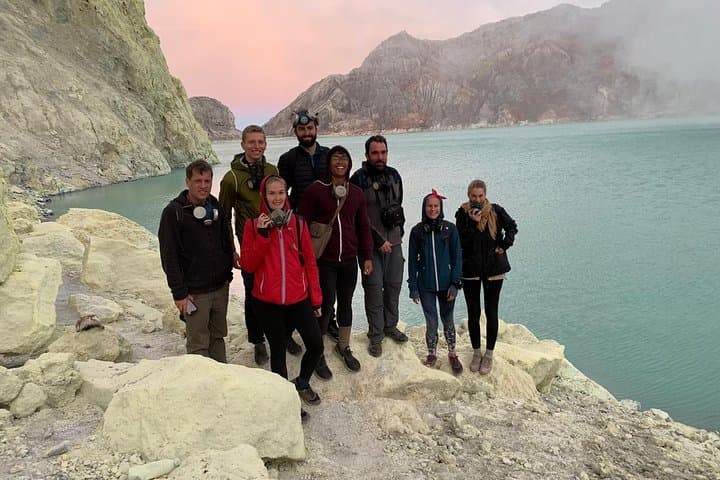
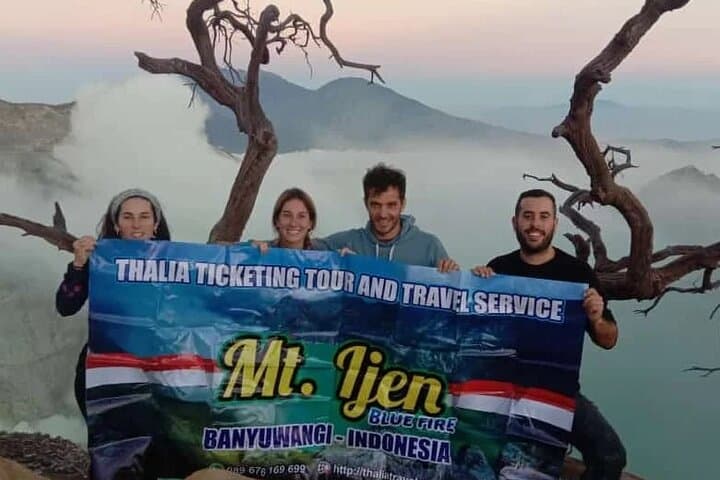
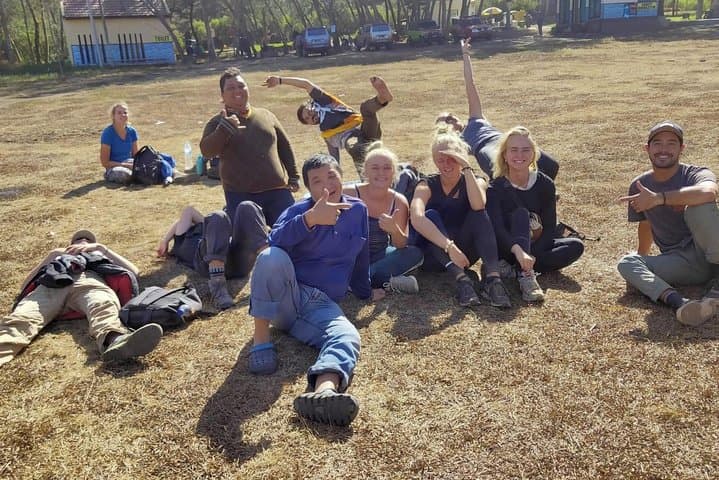
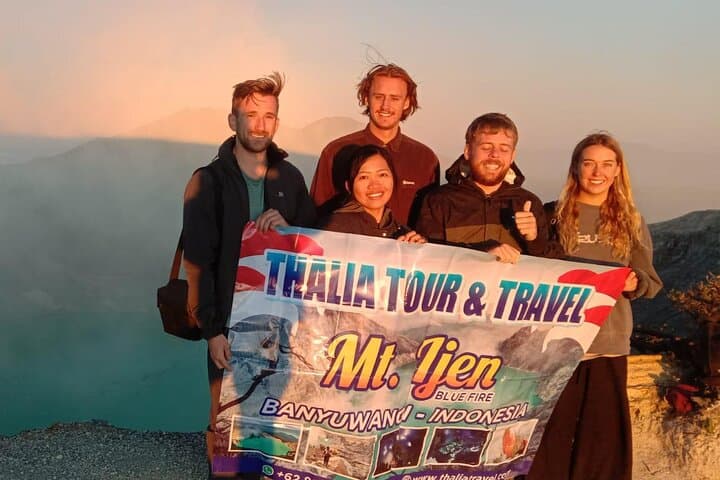
Cold mountain air bites at the face as headlamps carve the path toward a rim that glows electric blue before sunrise. On the Daily Ijen Blue Fire Tour you climb in the dark to where sulfur gases ignite into ghostly blue flames, then stand at the lip of the world’s largest acidic crater lake as pale light reveals a turquoise pool and miners hauling bright yellow loads down the crater shore.
Cold mountain air bites at the face as headlamps carve the path toward a rim that glows electric blue before sunrise. On the Daily Ijen Blue Fire Tour you climb in the dark to where sulfur gases ignite into ghostly blue flames, then stand at the lip of the world’s largest acidic crater lake as pale light reveals a turquoise pool and miners hauling bright yellow loads down the crater shore.
Geology here is stark: Ijen is part of a 20 km caldera complex with a 960 × 600 m inner crater and an acid lake reported to reach roughly 200 m deep and covering several hectares. The blue fire is a rare phenomenon produced when sulfuric gas ignites at high temperatures; the same place is known for its hard-working local sulfur miners, a living—if hazardous—industry that’s shaped the area’s culture and economy.
Practical notes: expect an 8–9 hour excursion from Banyuwangi including travel; the trail gains steep, uneven ground to roughly 2,368 m elevation. Guides supply gas masks and flashlights, and miners’ paths mean loose rock and strong sulfur fumes near vents. Arrive prepared for cold pre-dawn temperatures, slippery descents, and limited services at the rim.
Tips for planning: start very early (pre-dawn) to see the blue flame, use a fitted respirator or the supplied gas mask, wear sturdy waterproof boots, and carry water and layered insulation. Respect restricted areas, keep distance from active vents, and tip local guides—the landscape is fragile and the miners’ work is dangerous.