THE ADVENTURE COLLECTIVE® · Independent discovery and booking for outdoor travel

Trace a night road into East Java, strap on a headlamp and hike to Ijen’s crater rim to watch sulfur gases burn electric blue. This overnight tour combines the eerie glow with local culture, a coffee-farm stop and a close look at traditional sulfur mining.
Trace a night road into East Java, strap on a headlamp and hike to Ijen’s crater rim to watch sulfur gases burn electric blue. This overnight tour combines the eerie glow with local culture, a coffee-farm stop and a close look at traditional sulfur mining.
You arrive after a night drive across Bali’s ferry corridor, the van easing through quiet villages until the road climbs into Java’s cooler air. At the trailhead a guide checks headlamps and hands out respirators; the crater rim waits in the dark, a low hiss and sulfur-scented wind hinting at the show ahead.
Verified experiences and guided adventures in the surrounding area.
Operated by Rio Bali Tours · Banyuwangi, East Java
You arrive after a night drive across Bali’s ferry corridor, the van easing through quiet villages until the road climbs into Java’s cooler air. At the trailhead a guide checks headlamps and hands out respirators; the crater rim waits in the dark, a low hiss and sulfur-scented wind hinting at the show ahead.
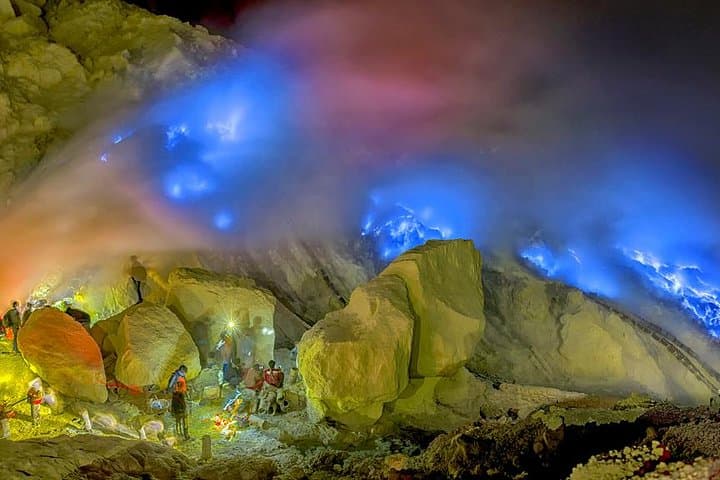
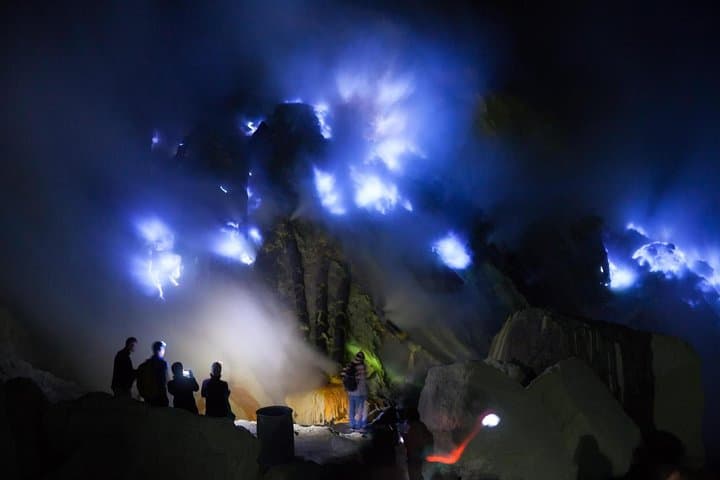
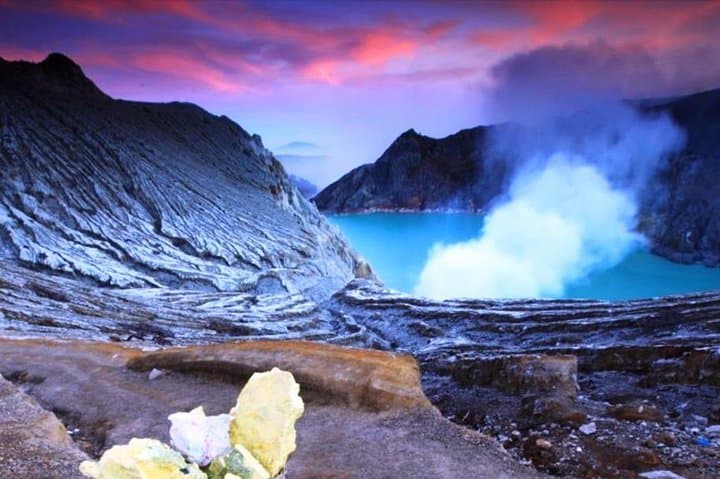
Ijen is a volcanic complex on Java’s eastern tip whose most famous curiosity is the blue fire: sulfuric gases that ignite where they escape from fissures, burning with an electric blue glow. The turquoise acid lake in the caldera is one of the largest highly acidic lakes on Earth, framed by steep crater walls that reveal layers of andesite and volcanic ash.
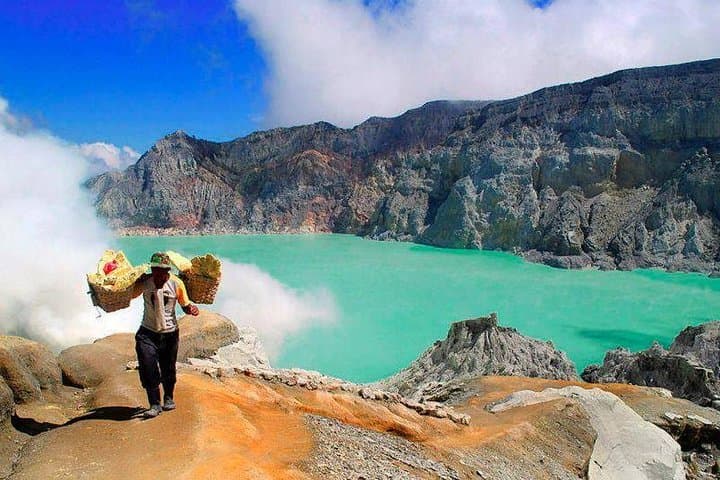
Locally, sulfur mining is still practiced along the inner slopes — miners carry heavy loads down steep paths, a living cultural element that visitors should observe respectfully. The tour’s stop at a coffee farm before or after the hike offers a practical, cultural breather and a taste of regional Arabica.
Practically, the hike is a predawn climb over loose volcanic scree and steps, 2–3 km one way from the ranger post with roughly 200–400 m of uneven elevation gain depending on start point. Temperatures at the rim can be sharply colder than Bali — bring warm layers and a reliable headlamp. Pay attention to guides about gas zones; respirators are provided but keep physical exertion low in smoky areas. Expect 3–5 hours of walking around the crater and a total overnight trip of about 48 hours from Bali to return.
challenging.
3–5 hours (hike); total tour ≈48 hours.
Moderate to good cardiovascular fitness; able to handle steep, uneven terrain at night and short bursts of exertion
The blue flames are visible only at night and predawn when sulfur gases ignite; visibility is better in dry, calm conditions but the phenomenon occurs year-round.
Guides provide respirators and direct routes that minimize gas exposure; avoid lingering near fumaroles and disclose respiratory issues before booking.
Expect 2–3 km one-way from the usual starting point with 200–400 m of uneven elevation gain—steady footing and moderate fitness are required.
A local guide is required for safety and park rules; this tour handles permissions and transport as part of the package.
Ijen sits within a volcanic complex shaped by eruptions and mining activity; sulfur extraction here has been practiced for generations and remains part of the local economy.
The Ijen area is managed to balance tourism and miner safety; visitors should stick to marked trails, avoid littering and respect mining operations to reduce environmental impact.
Rio Bali Tours operates guided outdoor trips and adventures with an emphasis on safety, stewardship, and memorable experiences.
You arrive after a night drive across Bali’s ferry corridor, the van easing through quiet villages until the road climbs into Java’s cooler air. At the trailhead a guide checks headlamps and hands out respirators; the crater rim waits in the dark, a low hiss and sulfur-scented wind hinting at the show ahead.
You arrive after a night drive across Bali’s ferry corridor, the van easing through quiet villages until the road climbs into Java’s cooler air. At the trailhead a guide checks headlamps and hands out respirators; the crater rim waits in the dark, a low hiss and sulfur-scented wind hinting at the show ahead.
Ijen is a volcanic complex on Java’s eastern tip whose most famous curiosity is the blue fire: sulfuric gases that ignite where they escape from fissures, burning with an electric blue glow. The turquoise acid lake in the caldera is one of the largest highly acidic lakes on Earth, framed by steep crater walls that reveal layers of andesite and volcanic ash.
Locally, sulfur mining is still practiced along the inner slopes — miners carry heavy loads down steep paths, a living cultural element that visitors should observe respectfully. The tour’s stop at a coffee farm before or after the hike offers a practical, cultural breather and a taste of regional Arabica.
Practically, the hike is a predawn climb over loose volcanic scree and steps, 2–3 km one way from the ranger post with roughly 200–400 m of uneven elevation gain depending on start point. Temperatures at the rim can be sharply colder than Bali — bring warm layers and a reliable headlamp. Pay attention to guides about gas zones; respirators are provided but keep physical exertion low in smoky areas. Expect 3–5 hours of walking around the crater and a total overnight trip of about 48 hours from Bali to return.