THE ADVENTURE COLLECTIVE® · Independent discovery and booking for outdoor travel

This four-day Bali-to-Java trek pairs Ijen’s rare blue fire with the thunder of Tumpak Sewu and Bromo’s sunrise. Expect predawn hikes, steep canyon descents, and close encounters with sulfur miners—plus practical tips to prepare for altitude, gas, and wet trails.
This four-day Bali-to-Java trek pairs Ijen’s rare blue fire with the thunder of Tumpak Sewu and Bromo’s sunrise. Expect predawn hikes, steep canyon descents, and close encounters with sulfur miners—plus practical tips to prepare for altitude, gas, and wet trails.
You step out of the van before dawn and the air bites: a cold, thin edge at the rim of Java's high country. Headlamps bob like a small constellation as the trail climbs toward Kawah Ijen; below, the crater's lake waits, steam rising and sulfur fumes weaving through the muscles of the mountain.
Verified experiences and guided adventures in the surrounding area.
Operated by Java Tour For School · Banyuwangi, East Java
You step out of the van before dawn and the air bites: a cold, thin edge at the rim of Java's high country. Headlamps bob like a small constellation as the trail climbs toward Kawah Ijen; below, the crater's lake waits, steam rising and sulfur fumes weaving through the muscles of the mountain.
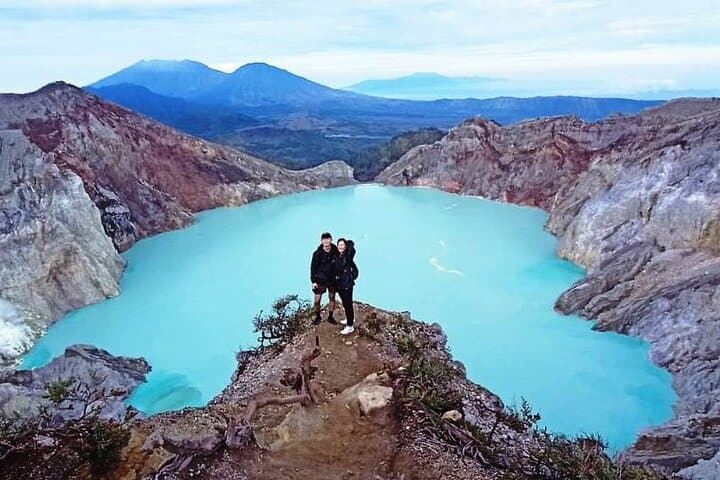
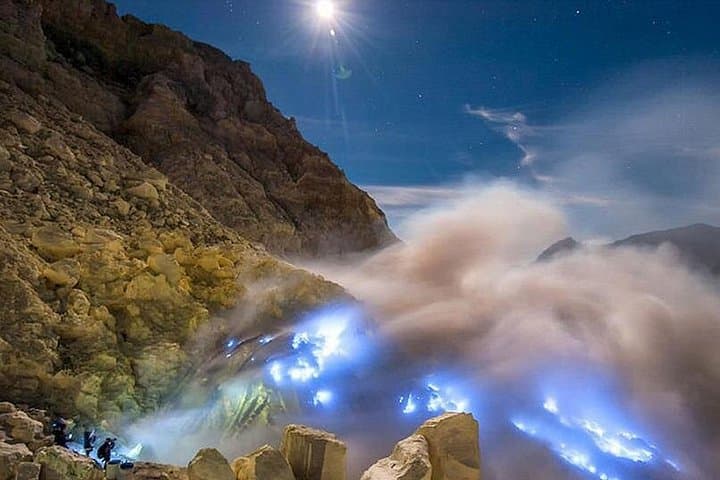
Ijen sits on the eastern tip of Java—part of a volcanic chain whose geothermal chemistry creates the rare blue fire, a sulfur combustion visible only in low light and specific gas conditions. The surrounding landscape is young geology—black lava flows, jagged fumaroles and a turquoise crater lake that UNESCO recognizes within its biosphere network. Nearby Tumpak Sewu plunges water through a narrow amphitheater; the falls slice into limestone and volcanic layers, eroding a dramatic canyon. Bromo’s broad caldera, by contrast, is a volcanic desert where wind scours pumice and the Tengger people's Hindu culture frames sunrise rituals.
Practical guidance: expect a 3–4 day itinerary with early starts—Ijen's trek typically begins around 2–4 a.m.; the ascent to the rim is roughly 3–4 km with ~300–500 m elevation gain (steep in sections). Tumpak Sewu requires a steep descent and river crossings—good balance and wet-foot tolerance help. Bromo sunrise is short but cold; pack layers.
Safety and courtesy: sulfur gas can be hazardous—trust guides and use a respirator when needed. Support local communities—many routes pass through villages whose economies rely on respectful tourism. Time your visit for dry-season clarity (May–Sept) and carry a headlamp, waterproofs and a quiet, curious attitude.
challenging.
4 days.
Good cardiovascular fitness and leg strength recommended—able to hike steep, uneven trails and manage multiple early starts.
Blue fire is visible only in darkness and when sulfur gases ignite—your best chance is a predawn trek (around 2–4 a.m.) and during lower wind conditions; visibility cannot be guaranteed.
Exposure to sulfur gas can be harmful; travelers with respiratory or cardiovascular issues, pregnant travelers, or those with spinal injuries should avoid the crater rim or consult a physician; guides will advise and provide masks.
This multi-day tour states that all entrances and inter-island transfers are included, along with hotel pickups and selected accommodations—confirm details with the operator before booking.
Tumpak Sewu involves steep descents into a canyon and river crossings; expect wet, uneven terrain and physical sections—moderate to strong fitness and sure-footedness are helpful.
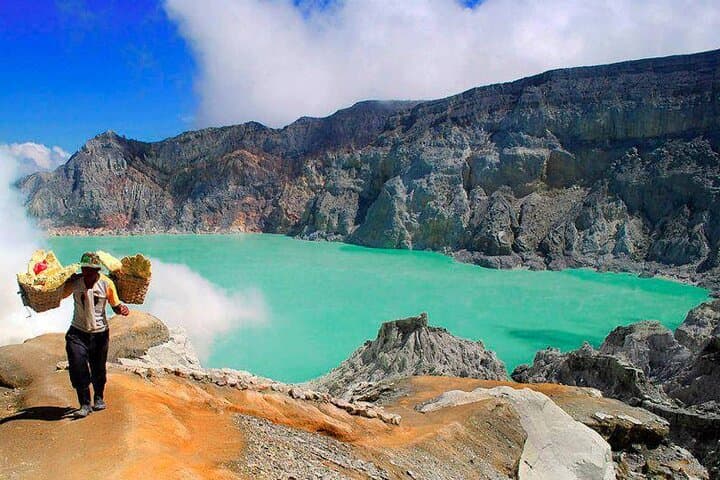
Ijen's sulfur mining has been practiced for generations; miners still carry heavy loads by foot, a labor-intensive livelihood shaped by the crater's unique geology.
Visitor pressure and sulfur extraction affect fragile crater and waterfall ecosystems—stick to trails, avoid litter, and support community-led initiatives that fund schools and restoration.
Java Tour For School operates guided outdoor trips and adventures with an emphasis on safety, stewardship, and memorable experiences.
You step out of the van before dawn and the air bites: a cold, thin edge at the rim of Java's high country. Headlamps bob like a small constellation as the trail climbs toward Kawah Ijen; below, the crater's lake waits, steam rising and sulfur fumes weaving through the muscles of the mountain.
You step out of the van before dawn and the air bites: a cold, thin edge at the rim of Java's high country. Headlamps bob like a small constellation as the trail climbs toward Kawah Ijen; below, the crater's lake waits, steam rising and sulfur fumes weaving through the muscles of the mountain.
Ijen sits on the eastern tip of Java—part of a volcanic chain whose geothermal chemistry creates the rare blue fire, a sulfur combustion visible only in low light and specific gas conditions. The surrounding landscape is young geology—black lava flows, jagged fumaroles and a turquoise crater lake that UNESCO recognizes within its biosphere network. Nearby Tumpak Sewu plunges water through a narrow amphitheater; the falls slice into limestone and volcanic layers, eroding a dramatic canyon. Bromo’s broad caldera, by contrast, is a volcanic desert where wind scours pumice and the Tengger people's Hindu culture frames sunrise rituals.
Practical guidance: expect a 3–4 day itinerary with early starts—Ijen's trek typically begins around 2–4 a.m.; the ascent to the rim is roughly 3–4 km with ~300–500 m elevation gain (steep in sections). Tumpak Sewu requires a steep descent and river crossings—good balance and wet-foot tolerance help. Bromo sunrise is short but cold; pack layers.
Safety and courtesy: sulfur gas can be hazardous—trust guides and use a respirator when needed. Support local communities—many routes pass through villages whose economies rely on respectful tourism. Time your visit for dry-season clarity (May–Sept) and carry a headlamp, waterproofs and a quiet, curious attitude.