THE ADVENTURE COLLECTIVE® · Independent discovery and booking for outdoor travel

Experience Iguazú National Park in a full-day walk: three circuits, a rainforest train ride, and the boardwalk to Devil's Throat. This practical guide outlines what to expect—terrain, timing, and must-have gear—so you arrive ready for the raw power of the falls.
Experience Iguazú National Park in a full-day walk: three circuits, a rainforest train ride, and the boardwalk to Devil's Throat. This practical guide outlines what to expect—terrain, timing, and must-have gear—so you arrive ready for the raw power of the falls.
A low, humid wind pushes through the subtropical canopy as the first boards creak underfoot—then the falls answer, a thunderous rush that rearranges the air itself. On Argentina's side of Iguazú National Park, elevated runways thread between bromeliads and ceibo trees, bringing you within arm's reach of plunging water and spray that dares you to step closer.
Verified experiences and guided adventures in the surrounding area.
Operated by Gray Line Argentina · Puerto Iguazú, Misiones
A low, humid wind pushes through the subtropical canopy as the first boards creak underfoot—then the falls answer, a thunderous rush that rearranges the air itself. On Argentina's side of Iguazú National Park, elevated runways thread between bromeliads and ceibo trees, bringing you within arm's reach of plunging water and spray that dares you to step closer.
The park sits on the Brazil–Argentina border where a million years of basalt flows and river incision created the jagged cataracts that Charles Darwin called extraordinary. Indigenous Guaraní communities long knew these falls as a place of power; European explorers later mapped them into modern tourism. Today the site balances geology and culture: basalt columns and river terraces meet small stations of the Rainforest Ecological Train and interpretive signs about local flora.
This full-day shared tour visits the three main circuits: lower (1,700 m) for close-up views at the foot of many falls, upper (1,300 m) for high-line panoramas, and the 1,000 m walk to the Devil's Throat via the train. Terrain is largely boardwalk and stairs through humid, shaded forest; streams and slick surfaces are common.
Plan practical details: buy park admission in advance when possible and carry ID for reduced rates; wear grippy waterproof shoes, quick-dry layers, and a rain shell; bring insect repellent, sun protection, and at least 2 liters of water. Morning light is best for photos, mid-afternoon brings heavier spray and fewer crowds. The falls demand respect—the river pushes, the paths guide—so stay on designated walkways and leave no trace.
easy.
8–10 hours.
Suitable for travelers who can walk on boardwalks and stairs for several hours and tolerate heat and humidity
No—entrance to Iguazú National Park is not included; buy tickets at the park window or online and carry ID to confirm visitor category.
The lower circuit is about 1,700 m, the upper circuit about 1,300 m, and the walk from Devil's Throat station is roughly 1,000 m along boardwalks.
Yes—the train takes visitors toward Devil's Throat station and is included in the park experience, though train operation follows park schedules.
The tour is rated suitable for most fitness levels and includes boardwalks with some stairs; infants must sit on an adult's lap and those with mobility limits should check accessibility details in advance.
Iguazú sits where ancient basalt flows met a shifting river system; Guaraní communities have long cultural ties to the falls and surrounding rainforest.
The park enforces strict trail use and waste policies to protect sensitive riverine habitats; visitors are asked to stay on boardwalks and avoid feeding wildlife.
Gray Line Argentina operates guided outdoor trips and adventures with an emphasis on safety, stewardship, and memorable experiences.
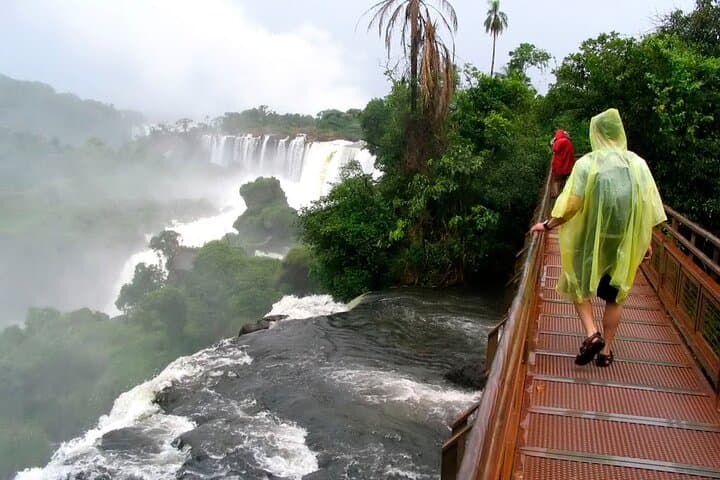
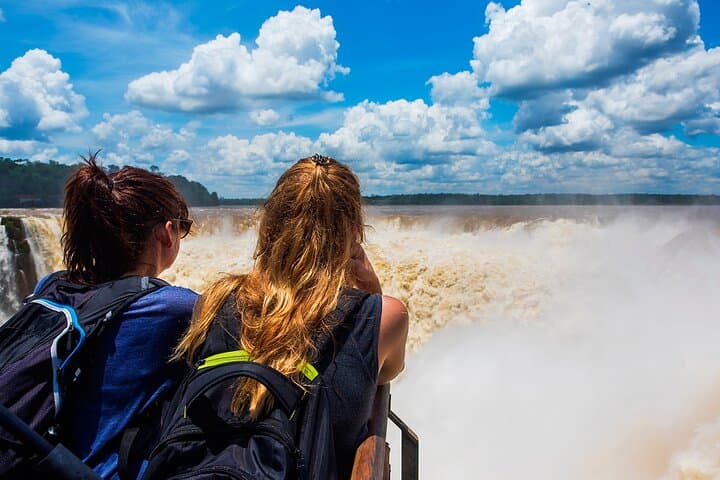
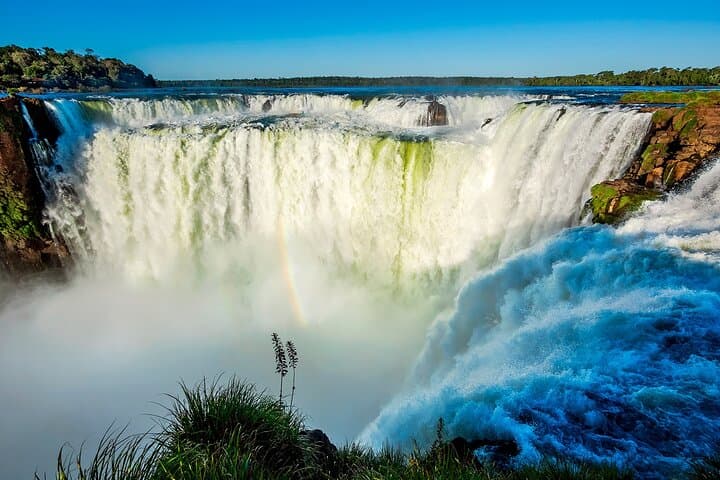
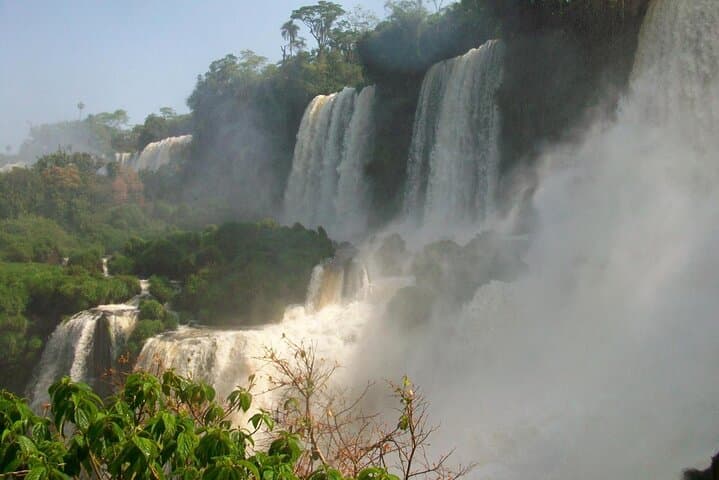
A low, humid wind pushes through the subtropical canopy as the first boards creak underfoot—then the falls answer, a thunderous rush that rearranges the air itself. On Argentina's side of Iguazú National Park, elevated runways thread between bromeliads and ceibo trees, bringing you within arm's reach of plunging water and spray that dares you to step closer.
A low, humid wind pushes through the subtropical canopy as the first boards creak underfoot—then the falls answer, a thunderous rush that rearranges the air itself. On Argentina's side of Iguazú National Park, elevated runways thread between bromeliads and ceibo trees, bringing you within arm's reach of plunging water and spray that dares you to step closer.
The park sits on the Brazil–Argentina border where a million years of basalt flows and river incision created the jagged cataracts that Charles Darwin called extraordinary. Indigenous Guaraní communities long knew these falls as a place of power; European explorers later mapped them into modern tourism. Today the site balances geology and culture: basalt columns and river terraces meet small stations of the Rainforest Ecological Train and interpretive signs about local flora.
This full-day shared tour visits the three main circuits: lower (1,700 m) for close-up views at the foot of many falls, upper (1,300 m) for high-line panoramas, and the 1,000 m walk to the Devil's Throat via the train. Terrain is largely boardwalk and stairs through humid, shaded forest; streams and slick surfaces are common.
Plan practical details: buy park admission in advance when possible and carry ID for reduced rates; wear grippy waterproof shoes, quick-dry layers, and a rain shell; bring insect repellent, sun protection, and at least 2 liters of water. Morning light is best for photos, mid-afternoon brings heavier spray and fewer crowds. The falls demand respect—the river pushes, the paths guide—so stay on designated walkways and leave no trace.