THE ADVENTURE COLLECTIVE® · Independent discovery and booking for outdoor travel

Experience the Argentinian side of Iguazu Falls in a full-day circuit that uses the Ecological Train to connect upper and lower boardwalks and the dramatic Devil’s Throat viewpoint. Plan for 6–9 hours of walking on maintained trails and powerful, close-up river views.
Experience the Argentinian side of Iguazu Falls in a full-day circuit that uses the Ecological Train to connect upper and lower boardwalks and the dramatic Devil’s Throat viewpoint. Plan for 6–9 hours of walking on maintained trails and powerful, close-up river views.
The first time you step onto the boardwalk at Iguazu’s Argentine sector the noise arrives before the view: a continuous, breath-stealing roar, mist that dares you to get closer, and a jungle that hums around the paths. Visitors follow a looped network of trails—upper, lower and the walkway to the Devil’s Throat—connected by the Ecological Train. Each circuit frames the falls differently: the upper walk offers broad, sky-wide views; the lower trail drops you nearer to the cascades and the spray; the Devil’s Throat walk ends at a thunderous horseshoe where the river vanishes.
Verified experiences and guided adventures in the surrounding area.
Operated by RipioTurismo · Puerto Iguazú, Misiones
The first time you step onto the boardwalk at Iguazu’s Argentine sector the noise arrives before the view: a continuous, breath-stealing roar, mist that dares you to get closer, and a jungle that hums around the paths. Visitors follow a looped network of trails—upper, lower and the walkway to the Devil’s Throat—connected by the Ecological Train. Each circuit frames the falls differently: the upper walk offers broad, sky-wide views; the lower trail drops you nearer to the cascades and the spray; the Devil’s Throat walk ends at a thunderous horseshoe where the river vanishes.
Geology and history are visible in the rocks and routes. The falls trace fractures in the Paraná Plateau’s basalt flows; water exploits those seams to carve channels and plunges. The site sits within Iguazú National Park (Argentina established 1934) and is part of a UNESCO World Heritage landscape shared with Brazil. The Guaraní people historically inhabited the region, and local guides often weave natural history and Guaraní place-names into their commentary.
Practicalities shape a better day: expect 6–9 hours on-site with up to 8 km of walking on boardwalks and stone steps, minimal sustained elevation gain but many stair sections on the lower circuit. Bring a lightweight rain jacket, quick-dry layers, closed walking shoes with traction and a refillable bottle. Passport is required for this tour; parking fees are paid locally. Start early to avoid midday crowds and mid-afternoon squalls—morning light gives the best visibility for photography and a drier trail underfoot. Respect signage, keep to paths, and don’t feed wildlife—coatis are persistent and the park prioritizes their protection.
moderate.
6–9 hours.
Good for visitors who can handle multiple hours of walking on mixed boardwalks and stair sections; not strenuous but sustained.
Admission to Iguazú National Park is typically not included; confirm at booking and bring local currency or card for park entry and any parking fees.
Yes — a current valid passport is required on the day of travel for all participants on this Argentinian-side visit.
Children aged 11 and under are not permitted on this tour per provider policy; check alternative family-friendly options if traveling with young kids.
The upper circuit and some boardwalks are relatively flat, but the lower circuit includes many stairs and uneven sections; travelers with mobility limitations should check specific accessibility options before booking.
The falls lie on land long inhabited by Guaraní communities; Iguazú National Park was created in 1934 and the site became a UNESCO World Heritage Area for its ecological significance.
Park rules emphasize staying on boardwalks, not feeding wildlife and minimizing plastic waste; visitor management and the train reduce trail erosion and protect riparian habitats.
RipioTurismo operates guided outdoor trips and adventures with an emphasis on safety, stewardship, and memorable experiences.
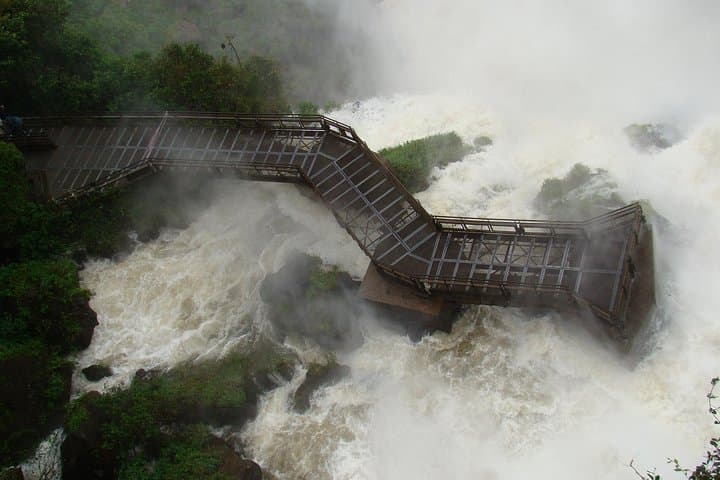
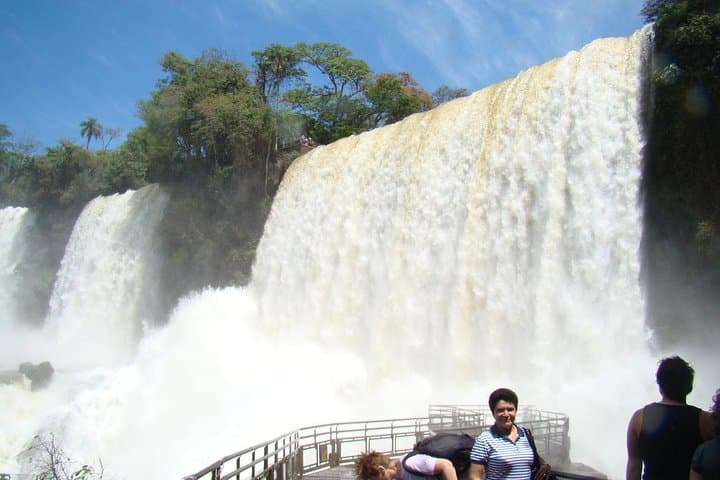
The first time you step onto the boardwalk at Iguazu’s Argentine sector the noise arrives before the view: a continuous, breath-stealing roar, mist that dares you to get closer, and a jungle that hums around the paths. Visitors follow a looped network of trails—upper, lower and the walkway to the Devil’s Throat—connected by the Ecological Train. Each circuit frames the falls differently: the upper walk offers broad, sky-wide views; the lower trail drops you nearer to the cascades and the spray; the Devil’s Throat walk ends at a thunderous horseshoe where the river vanishes.
The first time you step onto the boardwalk at Iguazu’s Argentine sector the noise arrives before the view: a continuous, breath-stealing roar, mist that dares you to get closer, and a jungle that hums around the paths. Visitors follow a looped network of trails—upper, lower and the walkway to the Devil’s Throat—connected by the Ecological Train. Each circuit frames the falls differently: the upper walk offers broad, sky-wide views; the lower trail drops you nearer to the cascades and the spray; the Devil’s Throat walk ends at a thunderous horseshoe where the river vanishes.
Geology and history are visible in the rocks and routes. The falls trace fractures in the Paraná Plateau’s basalt flows; water exploits those seams to carve channels and plunges. The site sits within Iguazú National Park (Argentina established 1934) and is part of a UNESCO World Heritage landscape shared with Brazil. The Guaraní people historically inhabited the region, and local guides often weave natural history and Guaraní place-names into their commentary.
Practicalities shape a better day: expect 6–9 hours on-site with up to 8 km of walking on boardwalks and stone steps, minimal sustained elevation gain but many stair sections on the lower circuit. Bring a lightweight rain jacket, quick-dry layers, closed walking shoes with traction and a refillable bottle. Passport is required for this tour; parking fees are paid locally. Start early to avoid midday crowds and mid-afternoon squalls—morning light gives the best visibility for photography and a drier trail underfoot. Respect signage, keep to paths, and don’t feed wildlife—coatis are persistent and the park prioritizes their protection.