THE ADVENTURE COLLECTIVE® · Independent discovery and booking for outdoor travel

Walk the panoramic boardwalks of the Brazilian side of Iguazú Falls for wide-angle views of the river canyon and Devil’s Throat. This half-day tour delivers dramatic overlooks, easy walking, and strong chances to see coatis and toucans.
Walk the panoramic boardwalks of the Brazilian side of Iguazú Falls for wide-angle views of the river canyon and Devil’s Throat. This half-day tour delivers dramatic overlooks, easy walking, and strong chances to see coatis and toucans.
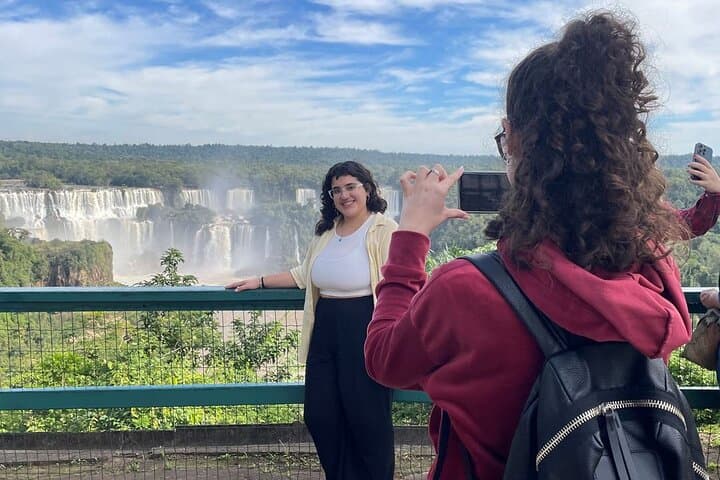
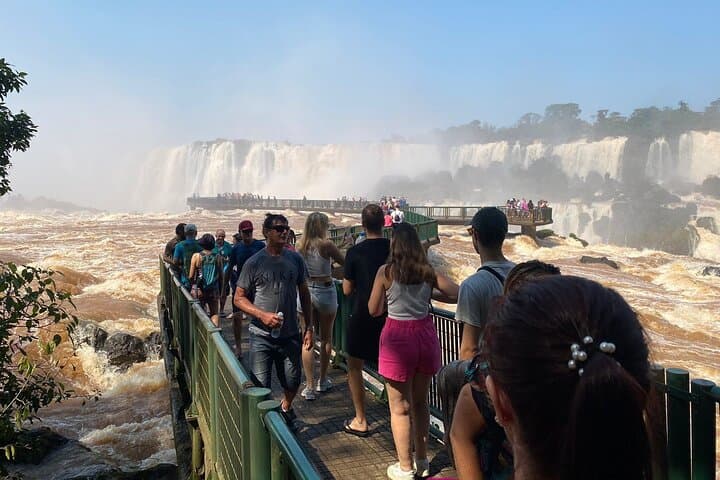
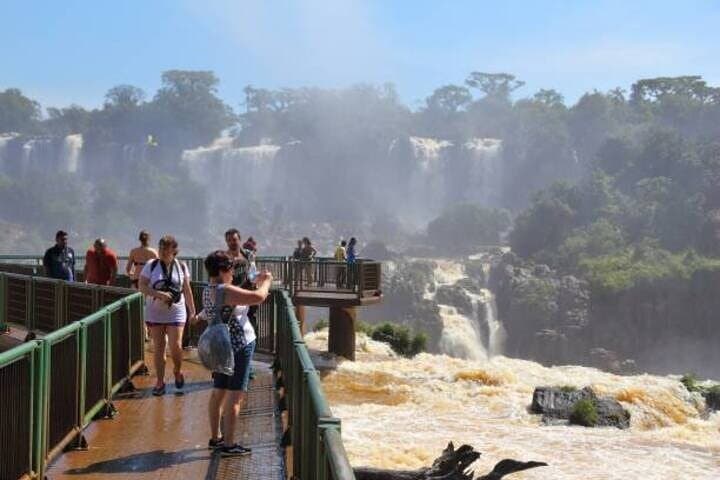
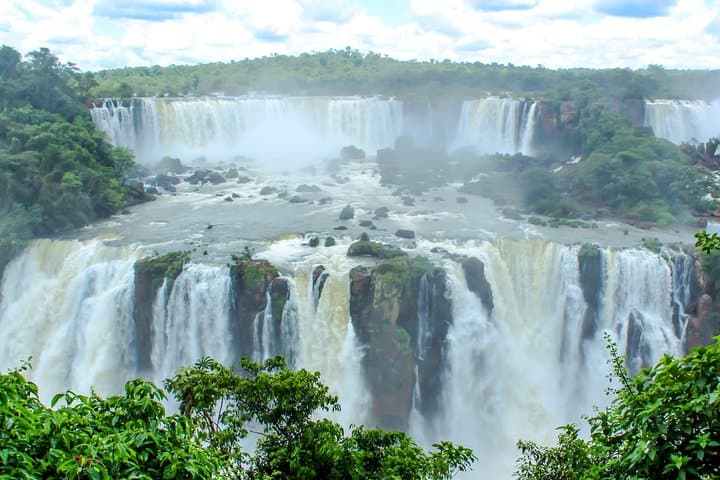
You step out of the coach at the Brazilian park portal and the spray arrives before the falls. The trail opens along a carved boardwalk that runs 1,200 meters beside the Iguazú River canyon, and every viewpoint reorients your sense of scale — broad curtains of water surging, rainbows staking brief claims in the mist.
Verified experiences and guided adventures in the surrounding area.
Operated by Tangol · Foz do Iguaçu, Paraná
You step out of the coach at the Brazilian park portal and the spray arrives before the falls. The trail opens along a carved boardwalk that runs 1,200 meters beside the Iguazú River canyon, and every viewpoint reorients your sense of scale — broad curtains of water surging, rainbows staking brief claims in the mist.
The Brazilian side was set aside as a national park to protect subtropical rainforest and the river system that feeds the world’s largest waterfall complex. Geologically, the falls mark the edge of the Serra Geral basalt plateau; water cuts across columnar lava flows, creating jagged drops and the deep gorge known as the Devil’s Throat. Culturally, the park sits between Foz do Iguaçu and Puerto Iguazú, where cross-border trade and Guarani heritage shape local life.
Practicalities: this is light walking on firm, sometimes wet boardwalks with multiple panoramic overlooks—suitable for most fitness levels. Expect dedicated viewing platforms for sweeping shots of the Argentine jumps and a short walk to a lower lookout around 200 meters from the Devil’s Throat. Border formalities can add time, so allow extra for visa checks and pickup from Puerto Iguazú hotels. Entrance fees are typically paid at the park; guides handle logistics and point out wildlife like coatis and toucans. Bring a waterproof layer, a quick-dry shirt, and a camera you don’t mind getting damp. Visit early or late in the day for softer light and thinner crowds—the falls will still be loud, insistent, and impossible to ignore.
easy.
4–9 hours.
Light aerobic fitness; able to walk 1–2 miles on boardwalks and steps with brief standing at viewpoints
Admission is usually not included; check your booking details and be prepared to pay the national park fee at the visitor center.
Possibly—visa rules depend on nationality. Confirm and obtain any visa before crossing the border; the operator requires you check this ahead of travel.
There is an elevator at Floriano leap and accessible sections, but some viewpoints require ramps or short steps—contact the operator for specifics.
The main circuit is about 1,200 meters of boardwalks with multiple viewpoints; allow 2–3 hours for the park visit including photo stops.
The park is a UNESCO World Heritage Site and part of the Iguazú complex recognized as one of the New 7 Wonders of Nature.
Park entry is regulated to control carrying capacity; stick to marked paths to protect sensitive rainforest and riverbanks.
Tangol operates guided outdoor trips and adventures with an emphasis on safety, stewardship, and memorable experiences.
You step out of the coach at the Brazilian park portal and the spray arrives before the falls. The trail opens along a carved boardwalk that runs 1,200 meters beside the Iguazú River canyon, and every viewpoint reorients your sense of scale — broad curtains of water surging, rainbows staking brief claims in the mist.
You step out of the coach at the Brazilian park portal and the spray arrives before the falls. The trail opens along a carved boardwalk that runs 1,200 meters beside the Iguazú River canyon, and every viewpoint reorients your sense of scale — broad curtains of water surging, rainbows staking brief claims in the mist.
The Brazilian side was set aside as a national park to protect subtropical rainforest and the river system that feeds the world’s largest waterfall complex. Geologically, the falls mark the edge of the Serra Geral basalt plateau; water cuts across columnar lava flows, creating jagged drops and the deep gorge known as the Devil’s Throat. Culturally, the park sits between Foz do Iguaçu and Puerto Iguazú, where cross-border trade and Guarani heritage shape local life.
Practicalities: this is light walking on firm, sometimes wet boardwalks with multiple panoramic overlooks—suitable for most fitness levels. Expect dedicated viewing platforms for sweeping shots of the Argentine jumps and a short walk to a lower lookout around 200 meters from the Devil’s Throat. Border formalities can add time, so allow extra for visa checks and pickup from Puerto Iguazú hotels. Entrance fees are typically paid at the park; guides handle logistics and point out wildlife like coatis and toucans. Bring a waterproof layer, a quick-dry shirt, and a camera you don’t mind getting damp. Visit early or late in the day for softer light and thinner crowds—the falls will still be loud, insistent, and impossible to ignore.