THE ADVENTURE COLLECTIVE® · Independent discovery and booking for outdoor travel

Experience the Brazil-side panorama of Iguazu’s 275 falls along a 1,500 m catwalk, then walk among toucans and macaws at Parque das Aves. This half-day combo pairs dramatic viewpoints with close-up wildlife encounters.
Experience the Brazil-side panorama of Iguazu’s 275 falls along a 1,500 m catwalk, then walk among toucans and macaws at Parque das Aves. This half-day combo pairs dramatic viewpoints with close-up wildlife encounters.
Morning mist greets visitors as the bus turns into the green flank of Parque Nacional do Iguaçu, and the first low rumble of falling water is a promise that grows into a physical presence by the time you reach the Cataratas Trail.
Verified experiences and guided adventures in the surrounding area.
Operated by Falls Vision Receptivo · Foz do Iguaçu, Paraná
Morning mist greets visitors as the bus turns into the green flank of Parque Nacional do Iguaçu, and the first low rumble of falling water is a promise that grows into a physical presence by the time you reach the Cataratas Trail.
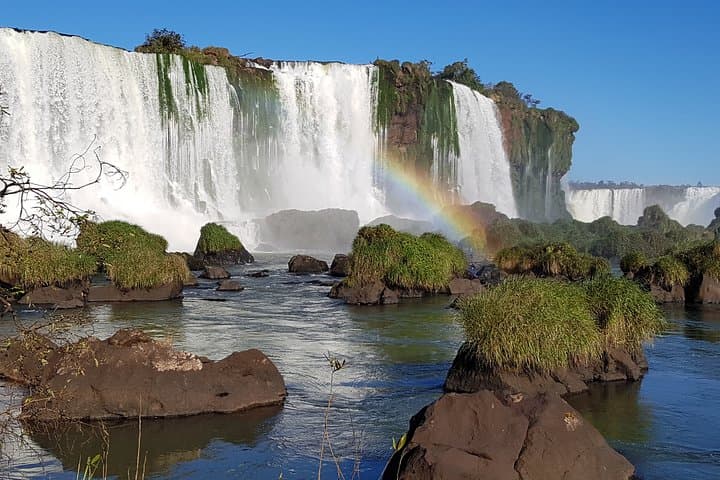
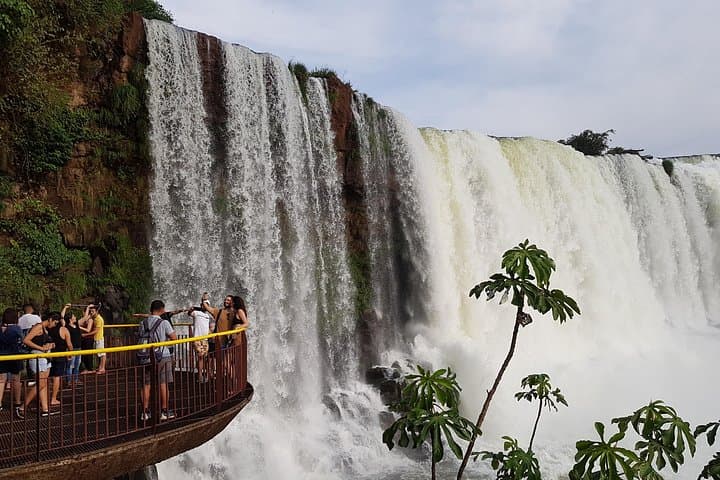
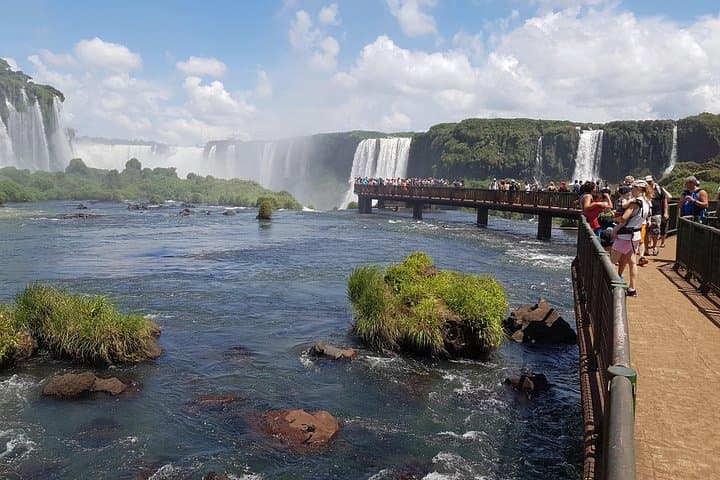
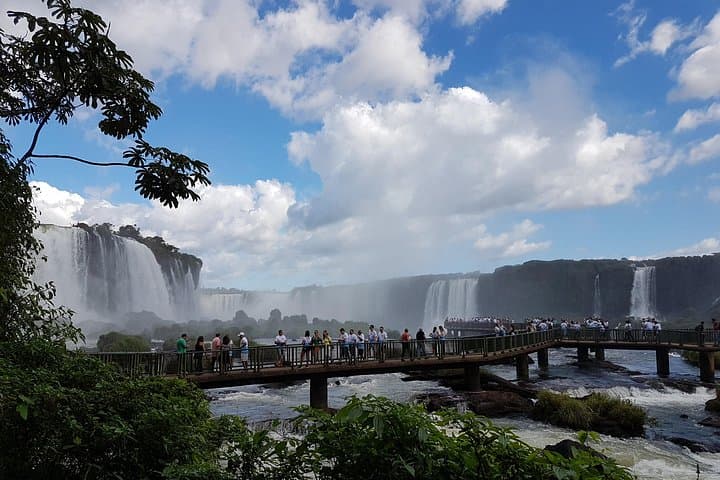
On the Brazilian side the route is compact and theatrical: a 1,500-meter catwalk runs along the rim, offering panoramic views of the 275 individual falls that stretch roughly 2.5–2.7 kilometers across the gorge. Rock and iron walkways let you edge close enough for the spray to pearl on your skin; the air itself seems to push you forward toward the loudest curtains of water. The adjacent Parque das Aves, a 16-hectare private reserve opened in 1994, places you inside shaded aviaries where toucans, macaws and lesser-known regional species move through understory and canopy.
Geologically, Iguazu is a product of basalt flows and tectonic fracture; culturally it’s a place long shared by Guarani people, Portuguese and Spanish explorers, and modern conservation efforts since UNESCO recognized the falls as a World Heritage Site in 1986.
Practical guidance: expect paved and metal boardwalks with frequent spray—waterproof footwear and a jacket make the walk pleasant. The combined visit typically runs about six hours with hotel pickup; moderate fitness is enough for short uphill approaches and steady walking. Bring a dry bag for cameras, sunscreen, insect repellent and small cash for snacks. Plan morning departures to maximize light and wildlife activity in the bird park.
moderate.
6 hours.
Suitable for travelers with moderate fitness—short uphill approaches and sustained walking on boardwalks.
The main catwalk route is about 1,500 meters round-trip on paved and metal boardwalks with minimal elevation change.
This tour includes a visit but confirm whether separate entrance fees are required; the operator lists both stops as part of the itinerary and provides pickup and drop-off.
Yes—paths are stroller-accessible, but expect wet conditions and loud noises near some viewpoints that may unsettle infants.
Use waterproof cases or dry bags and secure straps; the mist can damage electronics and make surfaces slippery.
Iguaçu was declared a UNESCO World Heritage Site in 1986; the park preserves both geological formations from ancient basalt flows and regional Guarani cultural connections.
The park enforces strict path access to protect fragile vegetation—avoid straying off boardwalks, carry out trash, and never feed wildlife to support conservation efforts.
Falls Vision Receptivo operates guided outdoor trips and adventures with an emphasis on safety, stewardship, and memorable experiences.
Morning mist greets visitors as the bus turns into the green flank of Parque Nacional do Iguaçu, and the first low rumble of falling water is a promise that grows into a physical presence by the time you reach the Cataratas Trail.
Morning mist greets visitors as the bus turns into the green flank of Parque Nacional do Iguaçu, and the first low rumble of falling water is a promise that grows into a physical presence by the time you reach the Cataratas Trail.
On the Brazilian side the route is compact and theatrical: a 1,500-meter catwalk runs along the rim, offering panoramic views of the 275 individual falls that stretch roughly 2.5–2.7 kilometers across the gorge. Rock and iron walkways let you edge close enough for the spray to pearl on your skin; the air itself seems to push you forward toward the loudest curtains of water. The adjacent Parque das Aves, a 16-hectare private reserve opened in 1994, places you inside shaded aviaries where toucans, macaws and lesser-known regional species move through understory and canopy.
Geologically, Iguazu is a product of basalt flows and tectonic fracture; culturally it’s a place long shared by Guarani people, Portuguese and Spanish explorers, and modern conservation efforts since UNESCO recognized the falls as a World Heritage Site in 1986.
Practical guidance: expect paved and metal boardwalks with frequent spray—waterproof footwear and a jacket make the walk pleasant. The combined visit typically runs about six hours with hotel pickup; moderate fitness is enough for short uphill approaches and steady walking. Bring a dry bag for cameras, sunscreen, insect repellent and small cash for snacks. Plan morning departures to maximize light and wildlife activity in the bird park.