THE ADVENTURE COLLECTIVE® · Independent discovery and booking for outdoor travel

Experience the roaring power of Iguazu Falls and the vibrant life of Parque das Aves on a compact, well-paced 3-day package. This guide covers what to expect on trails and viewpoints, plus practical tips for timing, gear, and conservation.
Experience the roaring power of Iguazu Falls and the vibrant life of Parque das Aves on a compact, well-paced 3-day package. This guide covers what to expect on trails and viewpoints, plus practical tips for timing, gear, and conservation.
The mist hits first — a cool, granular spray that smells of river and stone — then the roar arrives, low and relentless, pulling your attention toward a cliff where water unbinds itself and tumbles in curtains and cataracts. On the Brazilian side, a network of paved walkways and viewpoints lays out the falls like a dramatic stage: panoramic perspectives, close-up balconies, and the famous Devil’s Throat seen across a bowl of plunging water and dancing rainbows.
Verified experiences and guided adventures in the surrounding area.
Operated by Tangol · Foz do Iguaçu, Paraná
The mist hits first — a cool, granular spray that smells of river and stone — then the roar arrives, low and relentless, pulling your attention toward a cliff where water unbinds itself and tumbles in curtains and cataracts. On the Brazilian side, a network of paved walkways and viewpoints lays out the falls like a dramatic stage: panoramic perspectives, close-up balconies, and the famous Devil’s Throat seen across a bowl of plunging water and dancing rainbows.
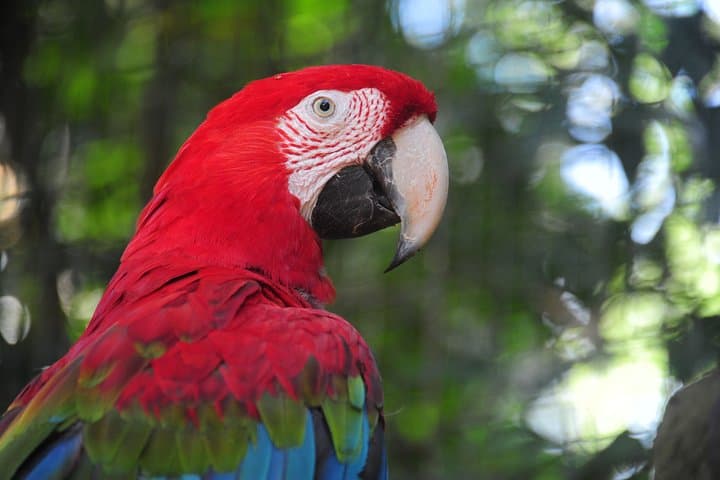
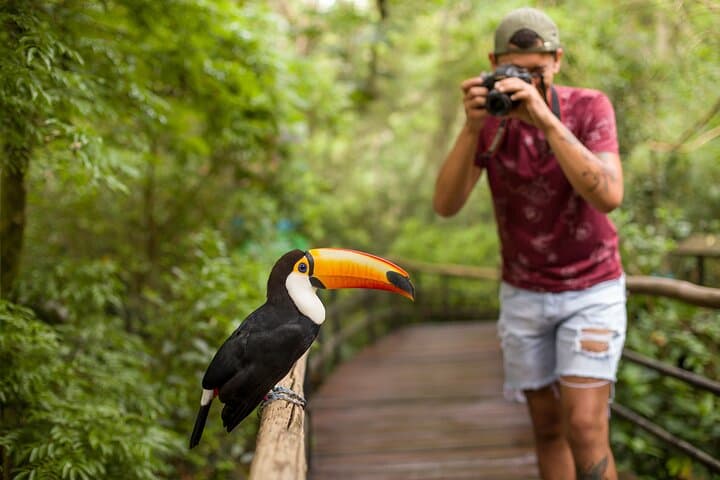
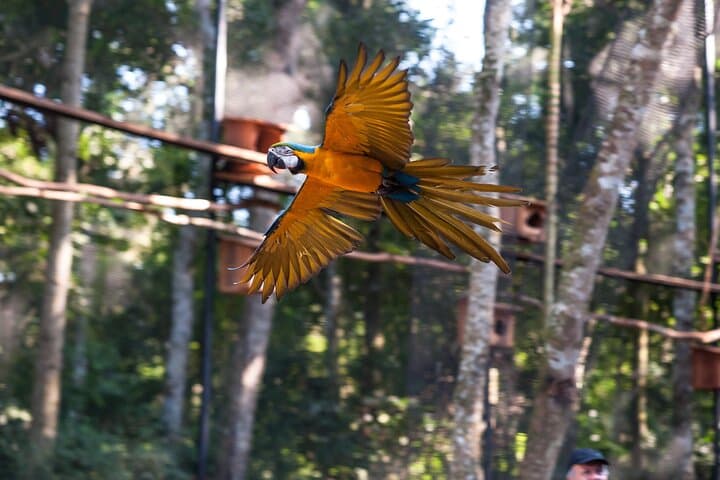
Geologically the falls are the result of ancient basalt flows cut by the Iguaçu River; the abrupt escarpments and sheer drops reflect volcanic lava beds and millions of years of erosion. The region sits on Guarani ancestral lands and today the park — a UNESCO World Heritage site — balances conservation, tourism, and local culture. Nearby, Parque das Aves (Bird Park) brings visitors close to more than 500 species, many rescued or part of conservation programs, offering intimate encounters with toucans, macaws, and hummingbirds.
Practical guidance: this 3-day package includes two nights’ accommodation, transfers, breakfast, and guided access to the Brazilian falls and Bird Park. Trails are mostly paved but include stairs and wet surfaces; expect humidity and frequent spray from the falls. Early mornings have softer light and fewer crowds. Bring a light waterproof layer, non-slip shoes, insect repellent, and a waterproof phone case. Passports are not required for the Brazilian-side visit unless you plan an independent border crossing to Argentina. Peak holiday periods (Carnival, New Year) are busiest and rates may differ. Respect marked trails, avoid feeding wildlife, and carry reusable water — the park’s protection depends on visitor care.
easy.
3 days.
Suitable for most fitness levels — ability to walk paved trails and manage stairs for short periods.
For the Brazilian-side visit and Bird Park included in this package, a passport is not required beyond normal travel documents, unless you plan to cross independently into Argentina.
This package includes access to the Bird Park; admission to the Brazilian falls area is arranged as part of the excursion described in the itinerary.
The itinerary notes infants must sit on laps and the trails are generally accessible paved boardwalks, but some viewpoints include stairs; check specific mobility needs with the operator before booking.
Visit in shoulder seasons (late winter to spring or early fall) for milder temperatures and lower visitor numbers; the falls flow year-round but volume varies with rainfall.
Iguazu Falls formed where the Iguaçu River crosses a volcanic basalt plateau; the area has long been inhabited by Guarani peoples and later conserved as a national park and UNESCO site.
Both the national park and Bird Park focus on habitat protection and species rehabilitation; visitors are asked to stay on trails, avoid single-use plastics, and support official programs rather than feeding wildlife.
Tangol operates guided outdoor trips and adventures with an emphasis on safety, stewardship, and memorable experiences.

The mist hits first — a cool, granular spray that smells of river and stone — then the roar arrives, low and relentless, pulling your attention toward a cliff where water unbinds itself and tumbles in curtains and cataracts. On the Brazilian side, a network of paved walkways and viewpoints lays out the falls like a dramatic stage: panoramic perspectives, close-up balconies, and the famous Devil’s Throat seen across a bowl of plunging water and dancing rainbows.
The mist hits first — a cool, granular spray that smells of river and stone — then the roar arrives, low and relentless, pulling your attention toward a cliff where water unbinds itself and tumbles in curtains and cataracts. On the Brazilian side, a network of paved walkways and viewpoints lays out the falls like a dramatic stage: panoramic perspectives, close-up balconies, and the famous Devil’s Throat seen across a bowl of plunging water and dancing rainbows.
Geologically the falls are the result of ancient basalt flows cut by the Iguaçu River; the abrupt escarpments and sheer drops reflect volcanic lava beds and millions of years of erosion. The region sits on Guarani ancestral lands and today the park — a UNESCO World Heritage site — balances conservation, tourism, and local culture. Nearby, Parque das Aves (Bird Park) brings visitors close to more than 500 species, many rescued or part of conservation programs, offering intimate encounters with toucans, macaws, and hummingbirds.
Practical guidance: this 3-day package includes two nights’ accommodation, transfers, breakfast, and guided access to the Brazilian falls and Bird Park. Trails are mostly paved but include stairs and wet surfaces; expect humidity and frequent spray from the falls. Early mornings have softer light and fewer crowds. Bring a light waterproof layer, non-slip shoes, insect repellent, and a waterproof phone case. Passports are not required for the Brazilian-side visit unless you plan an independent border crossing to Argentina. Peak holiday periods (Carnival, New Year) are busiest and rates may differ. Respect marked trails, avoid feeding wildlife, and carry reusable water — the park’s protection depends on visitor care.