THE ADVENTURE COLLECTIVE® · Independent discovery and booking for outdoor travel

Stand at the lip of the Devil’s Throat and feel the Iguazú River throw itself over basalt cliffs. This full-day Argentine-side tour combines boardwalk access to the falls with a quick city tour and a photo stop at the tri-border corner.
Stand at the lip of the Devil’s Throat and feel the Iguazú River throw itself over basalt cliffs. This full-day Argentine-side tour combines boardwalk access to the falls with a quick city tour and a photo stop at the tri-border corner.
The first steps onto the boardwalk feel like walking into a living postcard: mist hisses against your face, the river’s voice grows from a murmur to a roar, and the Devil’s Throat gapes ahead, a white curtain plunging roughly 90 meters into a basalt chasm that seems to breathe.
Verified experiences and guided adventures in the surrounding area.
Operated by EBL - Tours · Puerto Iguazú, Misiones
The first steps onto the boardwalk feel like walking into a living postcard: mist hisses against your face, the river’s voice grows from a murmur to a roar, and the Devil’s Throat gapes ahead, a white curtain plunging roughly 90 meters into a basalt chasm that seems to breathe.
Iguazú National Park protects this stretch of falls and Atlantic Rainforest. Established in 1934 and later recognized as a UNESCO World Heritage Site, the park’s geology is defined by Paraná basalts and river-carved escarpments that split the Iguazú River into dozens of cataracts. Indigenous Guaraní history threads through the place and local towns—Puerto Iguazú on the Argentine side, Foz do Iguaçu in Brazil, and Ciudad del Este in Paraguay—form the tri-border backdrop visitors often glimpse on city tours.
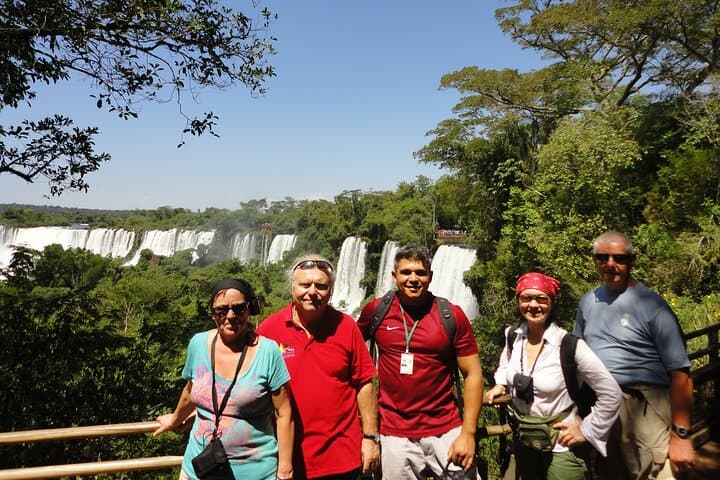
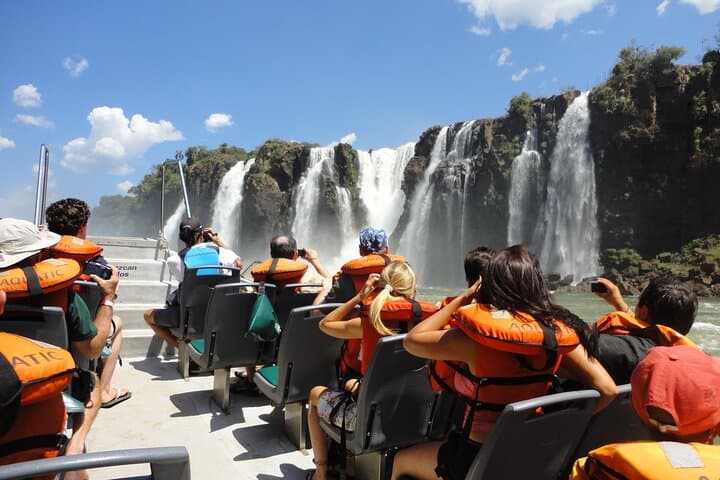
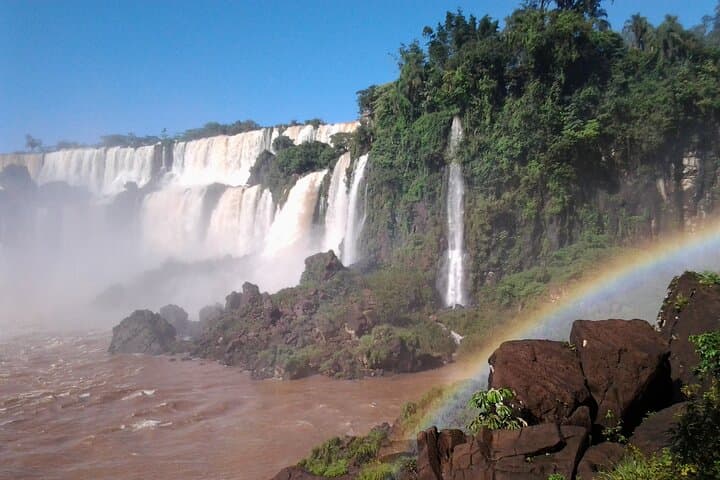
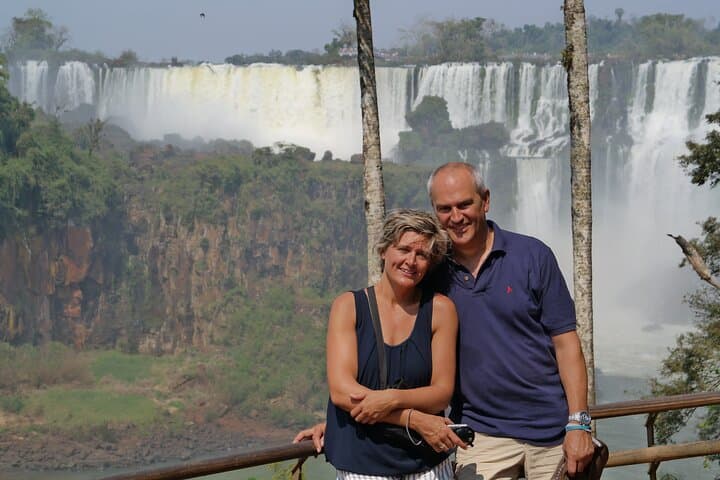
On roughly 8.7 kilometers of well-maintained trails, a mix of elevated walkways and staircases takes visitors to signature viewpoints: the panoramic Upper Circuit, the more immersive Lower Circuit, and the catwalk that reaches the Devil’s Throat. A slow, natural-gas train runs between stations, making photo stops easy; expect wet spray, loud water, and sudden rainbows in sunlight.
Practical tips: arrive early (park opens 08:00), wear non-slip shoes and a light waterproof layer, and bring water and sun protection. The Lower Trail includes about 180 steps and requires steadier footing; wheelchair-accessible sections exist on the upper routes. Expect a full-day outing (6–8 hours) if combined with a border photo stop. This is a high-reward, moderately paced natural spectacle—bring a camera, but leave time to just stand and listen to the falls.
moderate.
6–8 hours.
Suitable for travelers with moderate fitness who can handle uneven surfaces and stairs; some routes are wheelchair accessible.
Allow 6–8 hours to complete the main circuits (Upper, Lower) and the Devil’s Throat, plus transit and any border-photo stops.
The main Devil’s Throat catwalk has accessible sections via park infrastructure, but some trails (the Lower Trail) include stairs and are not accessible.
A short photo stop at the tri-border can often be done from the Argentine viewpoint; full crossings into neighboring countries require passports and appropriate entry documents.
The region is subtropical—hot and humid in summer with frequent rain; mornings are generally cooler and ideal for visits.
Iguazú National Park was created in 1934 to protect falls and Atlantic Rainforest remnants; the area is central to Guaraní cultural history and regional trade routes.
The park emphasizes visitor education and habitat protection; stay on boardwalks, avoid feeding animals, and use designated trash points to minimize impact.
EBL - Tours operates guided outdoor trips and adventures with an emphasis on safety, stewardship, and memorable experiences.
The first steps onto the boardwalk feel like walking into a living postcard: mist hisses against your face, the river’s voice grows from a murmur to a roar, and the Devil’s Throat gapes ahead, a white curtain plunging roughly 90 meters into a basalt chasm that seems to breathe.
The first steps onto the boardwalk feel like walking into a living postcard: mist hisses against your face, the river’s voice grows from a murmur to a roar, and the Devil’s Throat gapes ahead, a white curtain plunging roughly 90 meters into a basalt chasm that seems to breathe.
Iguazú National Park protects this stretch of falls and Atlantic Rainforest. Established in 1934 and later recognized as a UNESCO World Heritage Site, the park’s geology is defined by Paraná basalts and river-carved escarpments that split the Iguazú River into dozens of cataracts. Indigenous Guaraní history threads through the place and local towns—Puerto Iguazú on the Argentine side, Foz do Iguaçu in Brazil, and Ciudad del Este in Paraguay—form the tri-border backdrop visitors often glimpse on city tours.
On roughly 8.7 kilometers of well-maintained trails, a mix of elevated walkways and staircases takes visitors to signature viewpoints: the panoramic Upper Circuit, the more immersive Lower Circuit, and the catwalk that reaches the Devil’s Throat. A slow, natural-gas train runs between stations, making photo stops easy; expect wet spray, loud water, and sudden rainbows in sunlight.
Practical tips: arrive early (park opens 08:00), wear non-slip shoes and a light waterproof layer, and bring water and sun protection. The Lower Trail includes about 180 steps and requires steadier footing; wheelchair-accessible sections exist on the upper routes. Expect a full-day outing (6–8 hours) if combined with a border photo stop. This is a high-reward, moderately paced natural spectacle—bring a camera, but leave time to just stand and listen to the falls.