THE ADVENTURE COLLECTIVE® · Independent discovery and booking for outdoor travel

Experience Iguassu Falls from Argentina with the Gran Aventura: jungle drives, boardwalk viewpoints and a pulse-raising boat ride to the base of thunderous cataracts. Read on for what to expect, practical tips and local insights before you go.
Experience Iguassu Falls from Argentina with the Gran Aventura: jungle drives, boardwalk viewpoints and a pulse-raising boat ride to the base of thunderous cataracts. Read on for what to expect, practical tips and local insights before you go.
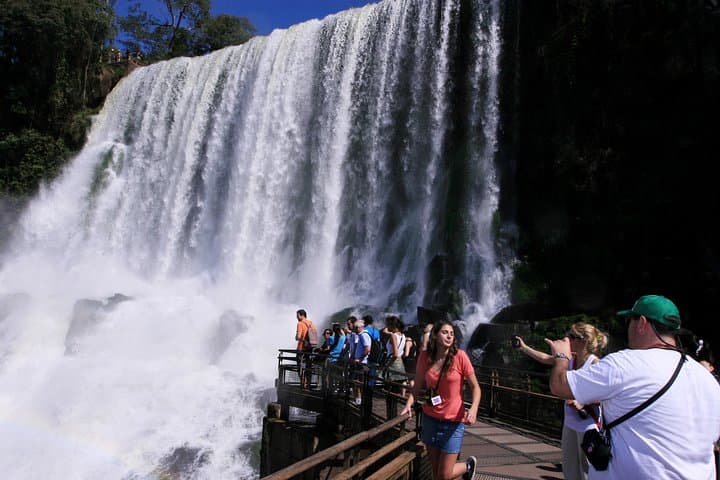
You step off the park train and the air changes—humid, green, the constant percussion of falling water rearranging the world. Walkways extend like metal ribs over the canyon; at the end, Garganta del Diablo (Devil's Throat) roars, water hurling itself into the chasm below as mist dares you to get closer.
Verified experiences and guided adventures in the surrounding area.
Operated by Gray Line Brazil · Puerto Iguazú, Misiones
You step off the park train and the air changes—humid, green, the constant percussion of falling water rearranging the world. Walkways extend like metal ribs over the canyon; at the end, Garganta del Diablo (Devil's Throat) roars, water hurling itself into the chasm below as mist dares you to get closer.
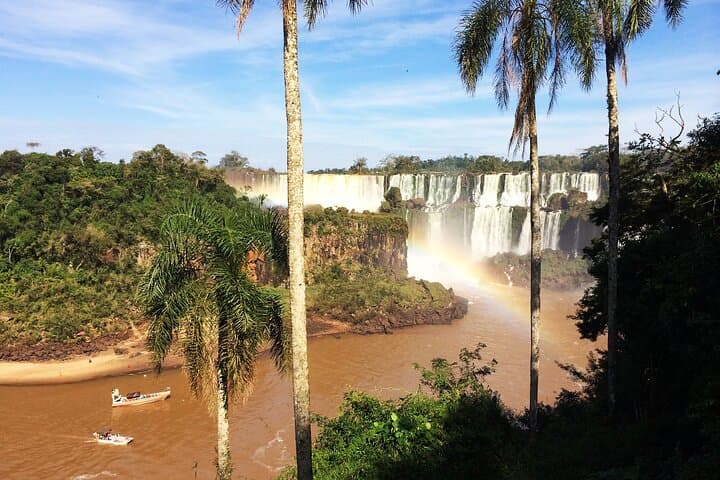
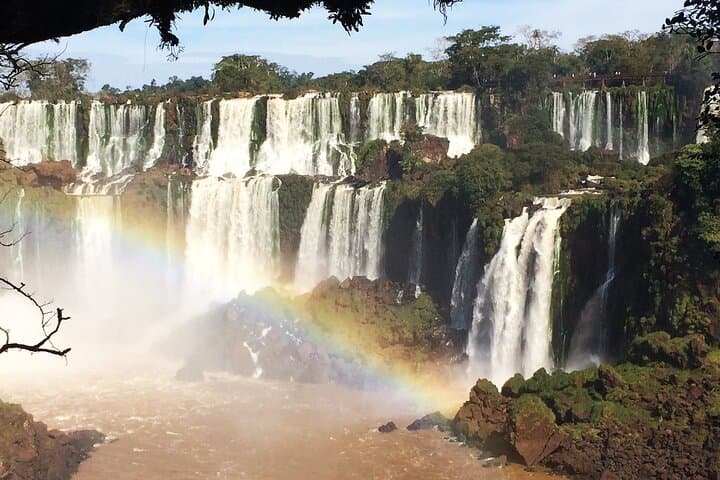
Iguazú sits where basalt flows from ancient volcanic activity were cleaved by the Paraná River, creating the stepped escarpments that feed hundreds of cataracts. The Argentine park, established in 1934 and a UNESCO site since 1984, emphasizes access: elevated circuits, viewpoint platforms, and bilingual guides who sketch cultural notes about Guaraní communities and early explorers.
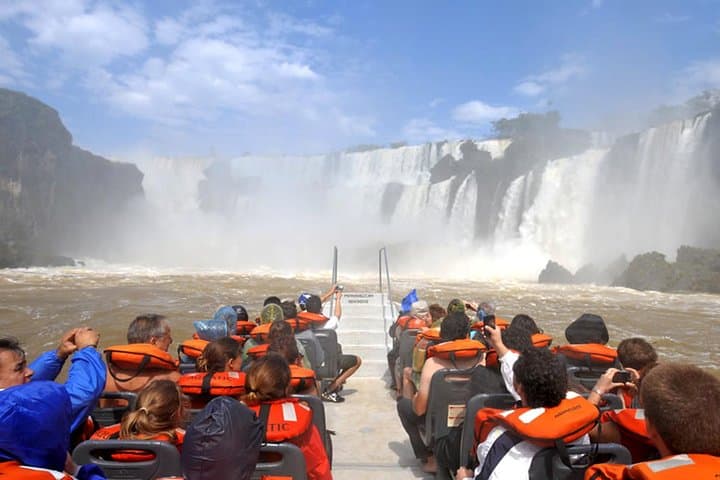
The Gran Aventura portion mixes jungle and adrenaline—a narrow off-road drive through Yacaratiá forest, a short hike to the Macuco pier, then a boat that pushes upstream and down through rapids to the base of San Martín and other falls. Trails are mostly boardwalk and compacted soil; expect stairs (150 ft/45 m climbs in sections) and wet surfaces near viewpoints.
Practical guide: bring a light waterproof layer and quick-dry clothing, carry your passport for border and park checks, and time your visit for morning or late afternoon light to avoid the largest crowds. Allow a full day—this is an 8-hour excursion with transfers and customs. Listen to guides about safety on the boat and keep electronics in waterproof cases. Respect park rules: stay on walkways and keep distance from wildlife. When the falls roar and spray, you’ll feel the scale—nature pushing forward with relentless force and clarity.
moderate.
8 hours.
Moderate fitness: able to walk several kilometers on boardwalks, climb stairs and handle short uneven jungle paths.
Yes—bring a valid passport. Visitors crossing from Brazil must clear both Brazilian and Argentine customs and may need to show documentation at pick-up.
The tour has a minimum age (commonly 12) and safety briefings; suitability depends on operator rules and the child's ability to follow instructions and sit on laps if required.
No—the Iguazú National Park entrance fee is not included and must be purchased at the Visitor Center or online before entry.
Guides on this tour typically speak Spanish and English; check with the operator if you need another language or private guiding options.
Iguazú National Park was created in 1934 to protect the waterfalls and subtropical forest; the area is part of the wider binational ecosystem shared with Brazil.
Stick to marked trails and do not feed wildlife—the park uses entry fees and visitation rules to fund conservation and reduce human impact.
Gray Line Brazil operates guided outdoor trips and adventures with an emphasis on safety, stewardship, and memorable experiences.
You step off the park train and the air changes—humid, green, the constant percussion of falling water rearranging the world. Walkways extend like metal ribs over the canyon; at the end, Garganta del Diablo (Devil's Throat) roars, water hurling itself into the chasm below as mist dares you to get closer.
You step off the park train and the air changes—humid, green, the constant percussion of falling water rearranging the world. Walkways extend like metal ribs over the canyon; at the end, Garganta del Diablo (Devil's Throat) roars, water hurling itself into the chasm below as mist dares you to get closer.
Iguazú sits where basalt flows from ancient volcanic activity were cleaved by the Paraná River, creating the stepped escarpments that feed hundreds of cataracts. The Argentine park, established in 1934 and a UNESCO site since 1984, emphasizes access: elevated circuits, viewpoint platforms, and bilingual guides who sketch cultural notes about Guaraní communities and early explorers.
The Gran Aventura portion mixes jungle and adrenaline—a narrow off-road drive through Yacaratiá forest, a short hike to the Macuco pier, then a boat that pushes upstream and down through rapids to the base of San Martín and other falls. Trails are mostly boardwalk and compacted soil; expect stairs (150 ft/45 m climbs in sections) and wet surfaces near viewpoints.
Practical guide: bring a light waterproof layer and quick-dry clothing, carry your passport for border and park checks, and time your visit for morning or late afternoon light to avoid the largest crowds. Allow a full day—this is an 8-hour excursion with transfers and customs. Listen to guides about safety on the boat and keep electronics in waterproof cases. Respect park rules: stay on walkways and keep distance from wildlife. When the falls roar and spray, you’ll feel the scale—nature pushing forward with relentless force and clarity.