THE ADVENTURE COLLECTIVE® · Independent discovery and booking for outdoor travel

Paddle quiet river bends and hike forested trails on a three-hour guided expedition outside Foz do Iguaçu. Expect easy canoeing, swimming at small waterfalls and local ecological insights from experienced guides.
Paddle quiet river bends and hike forested trails on a three-hour guided expedition outside Foz do Iguaçu. Expect easy canoeing, swimming at small waterfalls and local ecological insights from experienced guides.
The morning air along the Iguaçu River smells of wet earth and green leaves; paddles cut the surface with soft, deliberate strokes while the forest edges lean in, curious. Participants start on the Trilha Ecológica do Índio, a shaded route that opens onto a simple canoe base. From there the group slips into the Tamanduá River, moving downstream past banks where vines drop like ropes and small cascades dare you to stop and listen.
Verified experiences and guided adventures in the surrounding area.
Operated by Aguaray Eco Esportes · Foz do Iguaçu, Paraná
The morning air along the Iguaçu River smells of wet earth and green leaves; paddles cut the surface with soft, deliberate strokes while the forest edges lean in, curious. Participants start on the Trilha Ecológica do Índio, a shaded route that opens onto a simple canoe base. From there the group slips into the Tamanduá River, moving downstream past banks where vines drop like ropes and small cascades dare you to stop and listen.
This corner of Brazil sits at the southern edge of the Atlantic Forest, a biome older than many modern borders. Indigenous Guarani history threads the landscape and the Iguaçu system’s geology—basaltic plates and ancient lava flows—shapes the river’s step-like falls and plunge pools. Local guides combine natural history with practical lore about flora, fauna and how communities have used these waterways for generations.
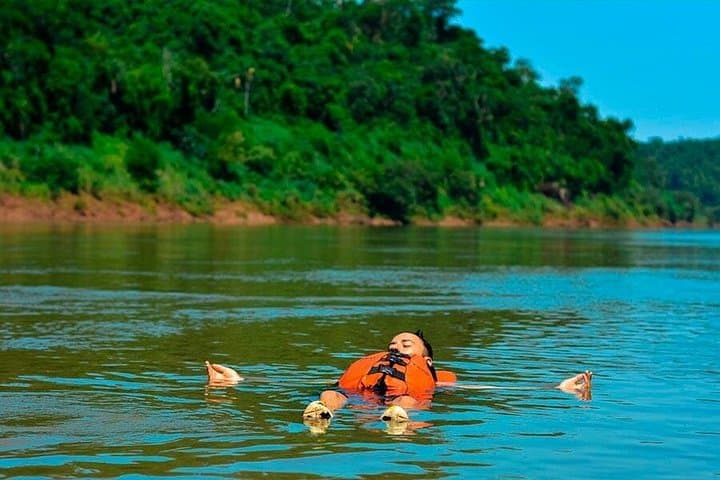
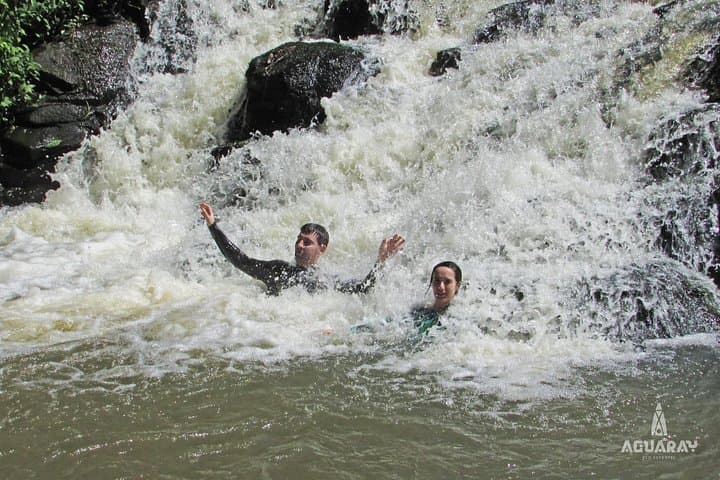
Expect three hours of mixed activity: a forest hike with interpretive stops, relaxed tandem canoeing on placid river stretches, and opportunities to bathe beneath modest waterfalls such as Cachoeira da Toca and Juruvá. Trails are humid, roots and stones common; canoeing is low-current but requires basic coordination and willingness to get wet. Guides provide safety gear and on-route briefings.
Practical notes: arrive early, wear quick-dry clothing and closed shoes suitable for water and trail, bring mosquito repellent and sun protection, and pack a small dry bag for valuables. Hydrate before and after the paddle; if you plan to swim, leave electronics in a waterproof case. The trip balances easy paddling with short hikes—an accessible way to experience Iguaçu’s quieter waterways beyond the main falls.
moderate.
3 hours.
Moderate fitness: able to hike uneven trails and paddle intermittently. Suitable for most active travelers.
No—guides provide a brief instruction and tandem canoes make it accessible for beginners.
Yes, there are supervised swimming opportunities at calm pools like Cachoeira da Toca, weather permitting.
Participants should have moderate fitness; children are usually allowed but confirm age limits with the operator before booking.
No—bring light snacks if desired; the operator does not provide food or drinks.
The area reflects long-standing Guarani presence and a landscape shaped by basalt flows that created step-like channels feeding the Iguaçu river system.
The Atlantic Forest is highly fragmented; operators emphasize low-impact travel and guides often highlight leave-no-trace practices and local conservation efforts.
Aguaray Eco Esportes operates guided outdoor trips and adventures with an emphasis on safety, stewardship, and memorable experiences.
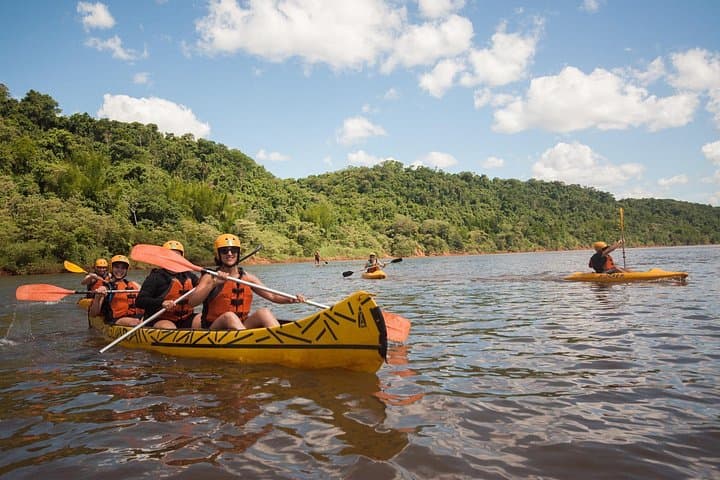
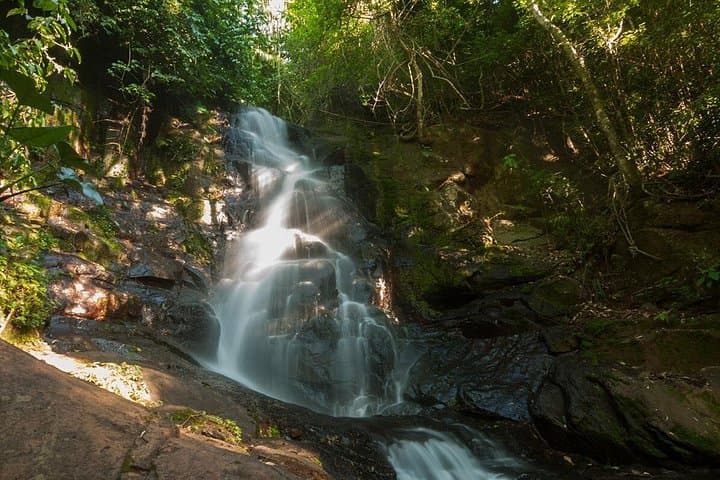
The morning air along the Iguaçu River smells of wet earth and green leaves; paddles cut the surface with soft, deliberate strokes while the forest edges lean in, curious. Participants start on the Trilha Ecológica do Índio, a shaded route that opens onto a simple canoe base. From there the group slips into the Tamanduá River, moving downstream past banks where vines drop like ropes and small cascades dare you to stop and listen.
The morning air along the Iguaçu River smells of wet earth and green leaves; paddles cut the surface with soft, deliberate strokes while the forest edges lean in, curious. Participants start on the Trilha Ecológica do Índio, a shaded route that opens onto a simple canoe base. From there the group slips into the Tamanduá River, moving downstream past banks where vines drop like ropes and small cascades dare you to stop and listen.
This corner of Brazil sits at the southern edge of the Atlantic Forest, a biome older than many modern borders. Indigenous Guarani history threads the landscape and the Iguaçu system’s geology—basaltic plates and ancient lava flows—shapes the river’s step-like falls and plunge pools. Local guides combine natural history with practical lore about flora, fauna and how communities have used these waterways for generations.
Expect three hours of mixed activity: a forest hike with interpretive stops, relaxed tandem canoeing on placid river stretches, and opportunities to bathe beneath modest waterfalls such as Cachoeira da Toca and Juruvá. Trails are humid, roots and stones common; canoeing is low-current but requires basic coordination and willingness to get wet. Guides provide safety gear and on-route briefings.
Practical notes: arrive early, wear quick-dry clothing and closed shoes suitable for water and trail, bring mosquito repellent and sun protection, and pack a small dry bag for valuables. Hydrate before and after the paddle; if you plan to swim, leave electronics in a waterproof case. The trip balances easy paddling with short hikes—an accessible way to experience Iguaçu’s quieter waterways beyond the main falls.