THE ADVENTURE COLLECTIVE® · Independent discovery and booking for outdoor travel

Visit a lively Wednesday market in Ida Ogourd, watch blacksmiths and barbers at work, then tour a Berber-run argan cooperative to see traditional oil production and taste fresh argan oil. This half-day trip blends rural culture, local craft, and a short bit of walking just outside Essaouira.
Visit a lively Wednesday market in Ida Ogourd, watch blacksmiths and barbers at work, then tour a Berber-run argan cooperative to see traditional oil production and taste fresh argan oil. This half-day trip blends rural culture, local craft, and a short bit of walking just outside Essaouira.
The market rises on a low, fertile hill like a village stage — donkeys clustered in a makeshift parking lot, the wind pushing spice-scented dust across stalls, and barbers working under canvas while farmers trade the week's essentials.
Verified experiences and guided adventures in the surrounding area.
Operated by Ecotourism and Hiking · Essaouira, Marrakesh-Safi
The market rises on a low, fertile hill like a village stage — donkeys clustered in a makeshift parking lot, the wind pushing spice-scented dust across stalls, and barbers working under canvas while farmers trade the week's essentials.
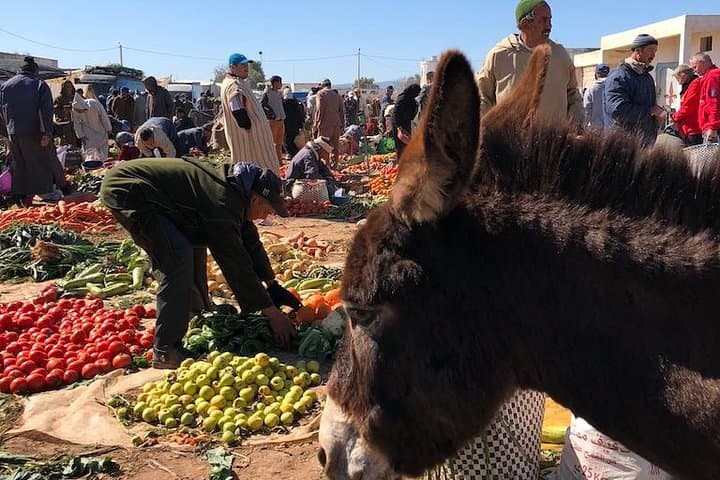
This Wednesday market, about 20 km southeast of Essaouira, is where the Haha province's Berber rhythms remain most visible: traders sell vegetables, tools, woven goods and construction materials; a blacksmith hammers horseshoes; a cobbler repairs soles. The market is as much social exchange as commerce, and visitors watching over a steaming glass of mint tea quickly see how daily life is organized around these weekly gatherings.
After the market the tour moves to an Argan cooperative. The argan tree — a slow-growing species found only in southwestern Morocco — gives fruit whose kernels are cracked, roasted, and pressed by hand. Berber women demonstrate traditional techniques; tasting fresh argan oil reveals its nutty warmth and why it’s called Morocco’s gold.
Practical guidance: markets run on Wednesdays (arrive early 09:00–11:30 for cooler temperatures and best activity), and the full excursion takes about 3–4 hours including transport. Expect unpaved paths and short walks between stalls; comfortable shoes, sunscreen, and small bills for purchases are essential. Ask before photographing people and consider buying from the cooperative to directly support local livelihoods. A short drive from Essaouira, this outing pairs cultural immersion with light outdoor movement — a compact window into rural Berber life and the unique argan landscape.
easy.
3–4 hours.
Suitable for most fitness levels; involves short walks on uneven, sometimes dusty ground and minimal elevation change.
The market in Ida Ogourd is held on Wednesdays; arrive between 09:00 and 11:30 to see the busiest period and avoid afternoon heat.
The full activity lasts about 3–4 hours, including transport from Essaouira, time at the market, and the cooperative visit.
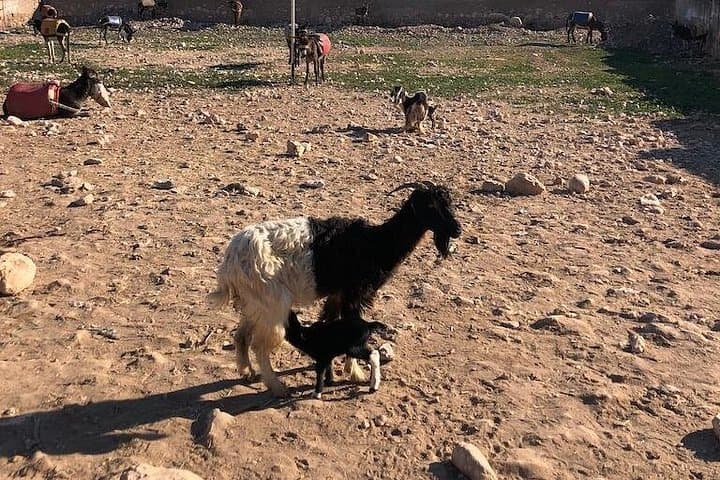
Yes—physical demands are low, but the market terrain is uneven and there may be livestock; assistance is recommended for limited mobility.
Yes; cooperatives sell freshly pressed oil and related products—buying directly supports the women who produce it.
Weekly souks are a long-standing Berber tradition in the Haha region; argan oil production is unique to southwestern Morocco and central to local economies.
The argan landscape is part of the Arganeraie Biosphere Reserve; supporting cooperatives helps promote sustainable harvesting and women's economic empowerment.
Ecotourism and Hiking operates guided outdoor trips and adventures with an emphasis on safety, stewardship, and memorable experiences.
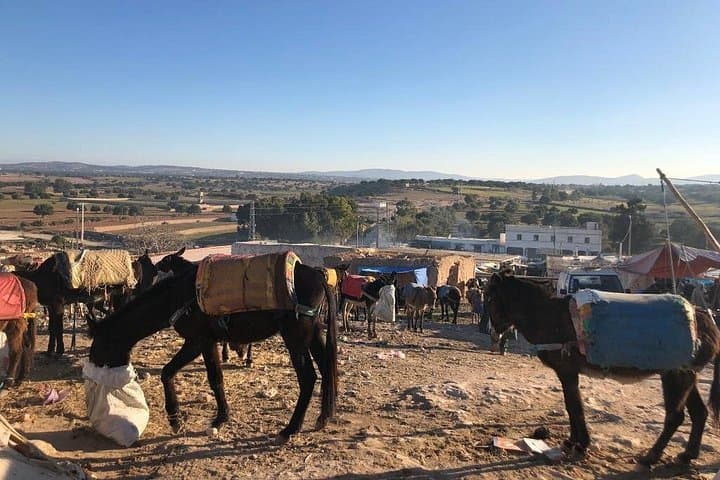
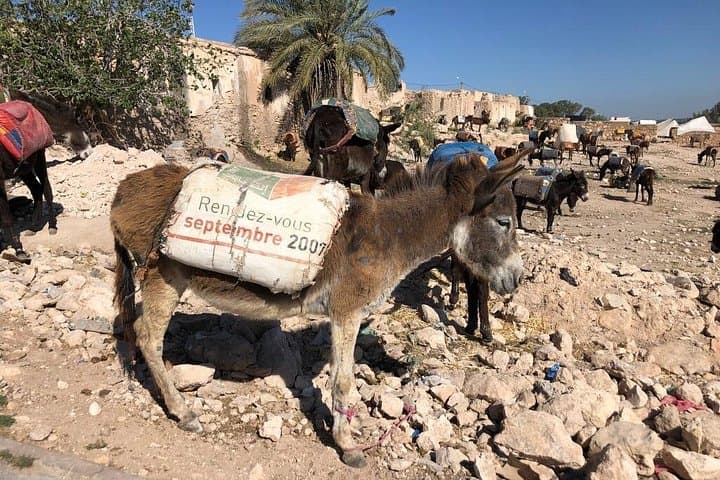
The market rises on a low, fertile hill like a village stage — donkeys clustered in a makeshift parking lot, the wind pushing spice-scented dust across stalls, and barbers working under canvas while farmers trade the week's essentials.
The market rises on a low, fertile hill like a village stage — donkeys clustered in a makeshift parking lot, the wind pushing spice-scented dust across stalls, and barbers working under canvas while farmers trade the week's essentials.
This Wednesday market, about 20 km southeast of Essaouira, is where the Haha province's Berber rhythms remain most visible: traders sell vegetables, tools, woven goods and construction materials; a blacksmith hammers horseshoes; a cobbler repairs soles. The market is as much social exchange as commerce, and visitors watching over a steaming glass of mint tea quickly see how daily life is organized around these weekly gatherings.
After the market the tour moves to an Argan cooperative. The argan tree — a slow-growing species found only in southwestern Morocco — gives fruit whose kernels are cracked, roasted, and pressed by hand. Berber women demonstrate traditional techniques; tasting fresh argan oil reveals its nutty warmth and why it’s called Morocco’s gold.
Practical guidance: markets run on Wednesdays (arrive early 09:00–11:30 for cooler temperatures and best activity), and the full excursion takes about 3–4 hours including transport. Expect unpaved paths and short walks between stalls; comfortable shoes, sunscreen, and small bills for purchases are essential. Ask before photographing people and consider buying from the cooperative to directly support local livelihoods. A short drive from Essaouira, this outing pairs cultural immersion with light outdoor movement — a compact window into rural Berber life and the unique argan landscape.