THE ADVENTURE COLLECTIVE® · Independent discovery and booking for outdoor travel

Board a heated, spacious catamaran from Hoonah for focused whale watching in Icy Strait. Stable decks, panoramic windows, and informed guides make this a strong option for families and first-time whale watchers.
Board a heated, spacious catamaran from Hoonah for focused whale watching in Icy Strait. Stable decks, panoramic windows, and informed guides make this a strong option for families and first-time whale watchers.
Morning light slices across Icy Strait as the catamaran eases away from Hoonah's timbered docks. Salt air pulls at your jacket; a chorus of gulls circles above while the vessel’s second deck promises unobstructed views. The boat hums steady—stable, heated, and fitted with panorama windows that make every breach readable from the cabin or rail.
Verified experiences and guided adventures in the surrounding area.
Morning light slices across Icy Strait as the catamaran eases away from Hoonah's timbered docks. Salt air pulls at your jacket; a chorus of gulls circles above while the vessel’s second deck promises unobstructed views. The boat hums steady—stable, heated, and fitted with panorama windows that make every breach readable from the cabin or rail.
This coastline is shaped by glaciers and tides: steep, fjord-cut channels, glacial moraines hidden beneath cold water, and kelp beds that feed rich food chains. Tlingit communities have lived in these coves for centuries; their fish camps and clan sites dot nearby shores and add human weight to marine wildlife traditions.
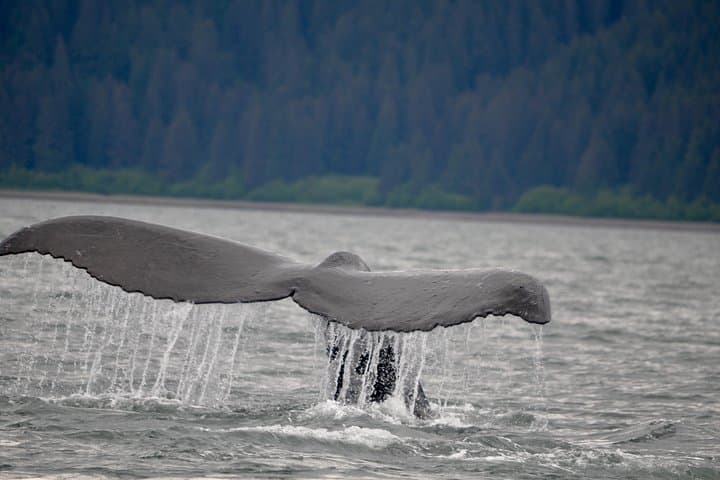
Expect humpback whales, transient orcas, and porpoises working the same currents that salmon follow. Guides scan for blows and tail flukes, and explain behavior and local regulations designed to minimize disturbance. Sightings can be dramatic—breaches, bubble-nets, long dives—or subtle: a distant blow and an answering bird flock.
Bring layers, a waterproof shell, and binoculars. Take motion-sickness meds if you’re sensitive; the catamaran is stable but open water rolls can surprise. Cameras with fast autofocus and a medium telephoto (200–400mm) capture most encounters. Plan for 2–3 hours aboard, arrive early for seating choices, and heed crew briefings about safety and wildlife approach distances. Respect closures, keep voices low near active feeding, and you’ll leave with clearer eyes for this wild, tidal theatre. Consider combining the cruise with onshore hikes around Port Frederick or a cultural visit to the Hoonah Museum for a fuller day experience.
easy.
2–3 hours.
Light activity; suitable for most ages but requires standing and climbing a few steps; mobility limitations may affect access to viewing areas.
The cruise runs about 2–3 hours (approximately 165 minutes), which includes transit time and on-water wildlife viewing.
No wildlife can be guaranteed, but the vessel operates in productive whale habitat and staff focus on known feeding areas to maximize chances.
The catamaran is family-oriented with heated cabins and stable decks; however, accessibility may be limited by vessel configuration—contact the operator for specific needs.
Policies vary by operator; check your booking confirmation for free-cancellation windows and weather-related reschedule terms.
This coastline is Tlingit homeland; villages and seasonal camps supported marine harvesting and shaped human relationships with whales and salmon.
Operators follow state and federal guidelines for vessel approach distances and encourage low-impact viewing; respecting closures and crew instructions reduces disturbance to foraging whales.
Morning light slices across Icy Strait as the catamaran eases away from Hoonah's timbered docks. Salt air pulls at your jacket; a chorus of gulls circles above while the vessel’s second deck promises unobstructed views. The boat hums steady—stable, heated, and fitted with panorama windows that make every breach readable from the cabin or rail.
Morning light slices across Icy Strait as the catamaran eases away from Hoonah's timbered docks. Salt air pulls at your jacket; a chorus of gulls circles above while the vessel’s second deck promises unobstructed views. The boat hums steady—stable, heated, and fitted with panorama windows that make every breach readable from the cabin or rail.
This coastline is shaped by glaciers and tides: steep, fjord-cut channels, glacial moraines hidden beneath cold water, and kelp beds that feed rich food chains. Tlingit communities have lived in these coves for centuries; their fish camps and clan sites dot nearby shores and add human weight to marine wildlife traditions.
Expect humpback whales, transient orcas, and porpoises working the same currents that salmon follow. Guides scan for blows and tail flukes, and explain behavior and local regulations designed to minimize disturbance. Sightings can be dramatic—breaches, bubble-nets, long dives—or subtle: a distant blow and an answering bird flock.
Bring layers, a waterproof shell, and binoculars. Take motion-sickness meds if you’re sensitive; the catamaran is stable but open water rolls can surprise. Cameras with fast autofocus and a medium telephoto (200–400mm) capture most encounters. Plan for 2–3 hours aboard, arrive early for seating choices, and heed crew briefings about safety and wildlife approach distances. Respect closures, keep voices low near active feeding, and you’ll leave with clearer eyes for this wild, tidal theatre. Consider combining the cruise with onshore hikes around Port Frederick or a cultural visit to the Hoonah Museum for a fuller day experience.