THE ADVENTURE COLLECTIVE® · Independent discovery and booking for outdoor travel

Witness the August 12, 2026 total solar eclipse from Iceland’s western Snæfellsnes Peninsula, with guided stops at Kirkjufell, Djúpalónssandur and coastal viewpoints. This full-day tour prioritizes clear skies and flexible routing so you’re well positioned for the moment of totality.
Witness the August 12, 2026 total solar eclipse from Iceland’s western Snæfellsnes Peninsula, with guided stops at Kirkjufell, Djúpalónssandur and coastal viewpoints. This full-day tour prioritizes clear skies and flexible routing so you’re well positioned for the moment of totality.
The van hums along the Reykjanes shoulder before the land opens into the stark, wind-sculpted sweep of Snæfellsnes. Salt air and volcanic stone dominate the palate; cliffs lean toward the Atlantic as if to get a better look at the sky. On August 12, 2026, guides will shepherd small groups to the clearest horizon they can find so the moon can draw its brief curtain across the sun.
Verified experiences and guided adventures in the surrounding area.
Operated by BusTravel Iceland · Reykjavík, West Iceland
The van hums along the Reykjanes shoulder before the land opens into the stark, wind-sculpted sweep of Snæfellsnes. Salt air and volcanic stone dominate the palate; cliffs lean toward the Atlantic as if to get a better look at the sky. On August 12, 2026, guides will shepherd small groups to the clearest horizon they can find so the moon can draw its brief curtain across the sun.
Snæfellsnes has long been a crossroads of geology and folklore — a peninsula of lava fields, basalt stacks and glacier-capped peaks that Icelanders have used as landmarks for centuries. Kirkjufell’s cone rises like a geological exclamation point, while Djúpalónssandur’s black pebbles recall the area’s fishing past and the iron-laden wreckage left by storms.
Expect a flexible itinerary: the primary mission is eclipse viewing, so the route may pivot from Arnarstapi’s bird cliffs to more sheltered coves depending on cloud cover. Guides bring local knowledge about wind corridors, sunrise angles and safer viewing positions, and provide eclipse eyewear or instructions for safe observation.
Practical notes: it’s a long, roughly 12-hour day, so pack layered weatherproof clothing, high-energy snacks, and a charged camera with a proper solar filter if you plan to photograph the event. Plan for wind, sudden rain and crowded viewing areas — arrive with patience and a clear plan for meeting points. With preparation, the eclipse over Iceland becomes not just a spectacle but a day in which landscape, history and sky converge.
easy.
12 hours.
Minimal stamina required for short walks and standing during viewing; comfortable mobility for exiting/entering the vehicle.
No; the tour prioritizes clear skies and will reposition within western Iceland to maximize viewing chances, but guarantees cannot be made due to weather variability.
Totality length varies by location and alignment; peak is brief (typically a few minutes) and local guides will confirm expected timing for the chosen viewing site.
Yes; the tour uses an air-conditioned vehicle with onboard restrooms and Wi‑Fi for a comfortable full-day trip from Reykjavík.
Most stops involve short walks on uneven coastal terrain; sturdy footwear is recommended but the tour is suitable for all fitness levels.
Snæfellsnes has been a navigational and cultural landmark for centuries, with fishing villages and folklore linked to the volcano and glacier at its tip.
Stick to marked paths and avoid disturbing nesting birds; coastal ecosystems here are fragile, and minimizing waste and noise helps protect them.
BusTravel Iceland operates guided outdoor trips and adventures with an emphasis on safety, stewardship, and memorable experiences.
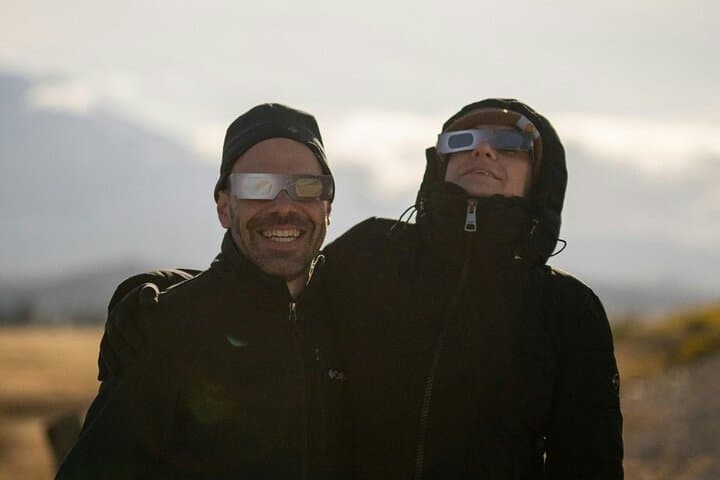


The van hums along the Reykjanes shoulder before the land opens into the stark, wind-sculpted sweep of Snæfellsnes. Salt air and volcanic stone dominate the palate; cliffs lean toward the Atlantic as if to get a better look at the sky. On August 12, 2026, guides will shepherd small groups to the clearest horizon they can find so the moon can draw its brief curtain across the sun.
The van hums along the Reykjanes shoulder before the land opens into the stark, wind-sculpted sweep of Snæfellsnes. Salt air and volcanic stone dominate the palate; cliffs lean toward the Atlantic as if to get a better look at the sky. On August 12, 2026, guides will shepherd small groups to the clearest horizon they can find so the moon can draw its brief curtain across the sun.
Snæfellsnes has long been a crossroads of geology and folklore — a peninsula of lava fields, basalt stacks and glacier-capped peaks that Icelanders have used as landmarks for centuries. Kirkjufell’s cone rises like a geological exclamation point, while Djúpalónssandur’s black pebbles recall the area’s fishing past and the iron-laden wreckage left by storms.
Expect a flexible itinerary: the primary mission is eclipse viewing, so the route may pivot from Arnarstapi’s bird cliffs to more sheltered coves depending on cloud cover. Guides bring local knowledge about wind corridors, sunrise angles and safer viewing positions, and provide eclipse eyewear or instructions for safe observation.
Practical notes: it’s a long, roughly 12-hour day, so pack layered weatherproof clothing, high-energy snacks, and a charged camera with a proper solar filter if you plan to photograph the event. Plan for wind, sudden rain and crowded viewing areas — arrive with patience and a clear plan for meeting points. With preparation, the eclipse over Iceland becomes not just a spectacle but a day in which landscape, history and sky converge.