THE ADVENTURE COLLECTIVE® · Independent discovery and booking for outdoor travel

In six days, a coach tour around Iceland’s Ring Road delivers geysers, black‑sand beaches, glacier lagoons and steaming geothermal baths. This highlights route balances long drives with short, high-impact walks—perfect for travelers who want big scenery without backcountry logistics.
In six days, a coach tour around Iceland’s Ring Road delivers geysers, black‑sand beaches, glacier lagoons and steaming geothermal baths. This highlights route balances long drives with short, high-impact walks—perfect for travelers who want big scenery without backcountry logistics.
The bus eases out of Reykjavík as morning light slides over the bay and the city recedes into a landscape that seems to rewrite itself every hour. In six days the route will shove you from geyser steam to black sand surf, from basalt pillars to a lagoon of drifting ice. Stops are short but striking—walk behind a curtain of water at Seljalandsfoss, feel the spray from Skógafoss, then stand on a shoreline where icebergs glitter like wrecked chandeliers on black sand.
Verified experiences and guided adventures in the surrounding area.
Operated by BusTravel Iceland · Reykjavík, Capital Region
The bus eases out of Reykjavík as morning light slides over the bay and the city recedes into a landscape that seems to rewrite itself every hour. In six days the route will shove you from geyser steam to black sand surf, from basalt pillars to a lagoon of drifting ice. Stops are short but striking—walk behind a curtain of water at Seljalandsfoss, feel the spray from Skógafoss, then stand on a shoreline where icebergs glitter like wrecked chandeliers on black sand.
Geology here reads like a field guide to extremes: Iceland sits astride the Mid-Atlantic Ridge, and the itinerary threads tectonic rifts, glacial outflows and countless lava fields. Þingvellir opens the trip with exposed rift valleys and a sense of human history—assemblies at this site date back to the 10th century. Drive southeast and you cross young landscapes shaped by recent volcanism; Jökulsárlón is fed by Vatnajökull, a living glacier that calves icebergs into a lagoon whose patterns of blue and white change daily.
Culture in the towns between is low-key and pragmatic—fishing harbors, turf-roofed history in Reykholt, and artful eggs on the quay in Djúpivogur. Northern waters around Akureyri bring the chance to watch whales; that marine life has long supported coastal communities and now draws ecotourism that balances economy and stewardship.
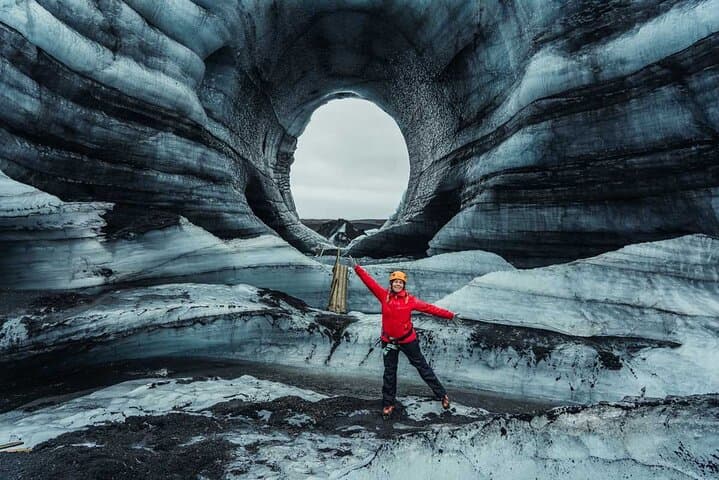
Practicalities matter on a compressed Ring Road loop. Expect multiple driving days of roughly 200–450 km; the tour covers long stretches of paved Ring Road with occasional gravel shoulders. Most on-foot stops are short: 0.5–3 km walks on uneven, sometimes muddy trails and viewpoints reached by stair sections or short slopes. The optional Katla ice cave requires guided glacier-walking with crampons and a helmet; book the Deluxe option if you want that hands-on glacial experience.
Pack layers: wind- and waterproof outer shells, insulating mid-layers, and sturdy waterproof boots with good traction. Daylight hours vary wildly by season—plan early starts in winter and evening outings in summer’s near-endless light. The route’s rhythms are built around natural phenomena, so flexibility pays: weather can close a stop or reveal an unexpected display of northern lights.
For photographers, composition is simple—foreground ice on black sand, columns of basalt, and waterfalls framed by volcanic rock. Hydration and sun protection still matter; the Atlantic wind will dry you out and UV can be strong even on cool days. In short: this is a tour of contrasts—vast driving days threaded with striking short walks—ideal for travelers who want to see Iceland’s major landscapes efficiently, without giving up the texture of local places.
moderate.
6 days.
Suitable for travelers with basic fitness—able to manage repeated short walks (0.5–3 km), stairs and uneven ground; glacier cave options require stronger balance and comfort with crampons.
Plan for several long coach segments—typically 200–450 km per travel day—so bring snacks and be ready for multi-hour drives between highlights.
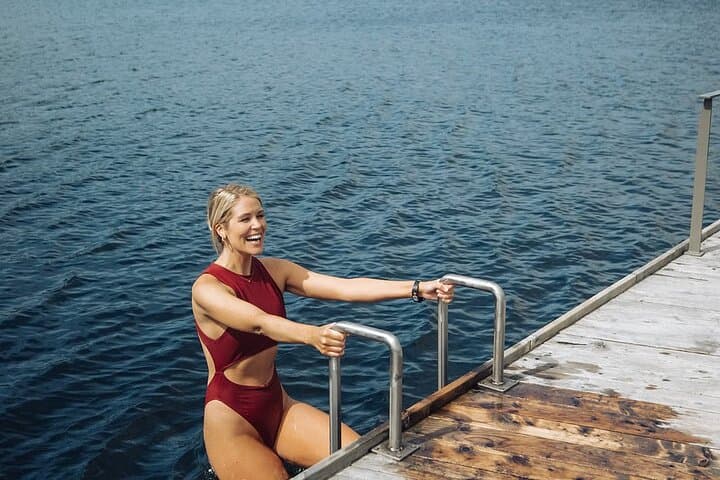
The Katla Ice Cave and Vök Baths are available only on the Deluxe tour option; the standard itinerary includes many glacier and lagoon views but not the guided ice-caving.
Most stops involve short walks up to 3 km on uneven or muddy terrain and some stair sections; no technical hiking is required for the standard itinerary.
Yes in winter months if conditions are right, but sightings are weather-dependent—clear, dark nights away from towns give the best chance.
Breakfast is included for five mornings; other meals are at your expense, with stops in towns that offer cafes and restaurants.
Yes—solo options are available; accommodations are hotel rooms with private bathrooms, and solo rooms may be selectable at booking.
Þingvellir marks one of the world’s oldest parliaments, where Iceland’s commonwealth law was established around 930 AD; many sites along the route reflect the island’s fishing and sagas heritage.
Iceland balances growing tourism with fragile environments—stay on marked paths, avoid taking natural artifacts, and follow local guidance to protect glacial and coastal habitats.
BusTravel Iceland operates guided outdoor trips and adventures with an emphasis on safety, stewardship, and memorable experiences.
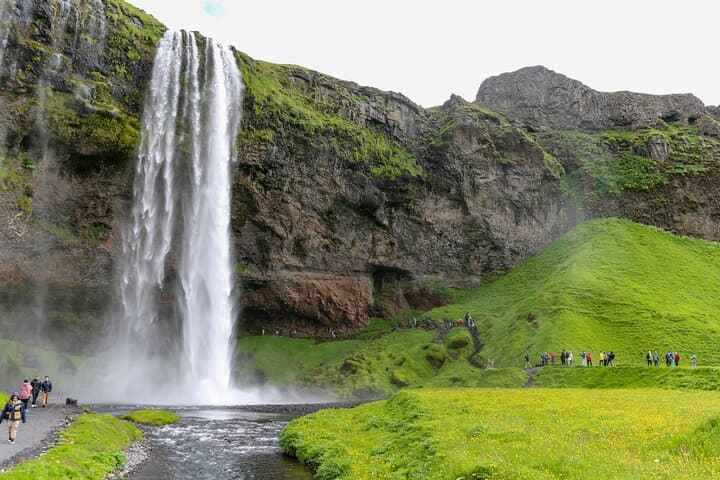
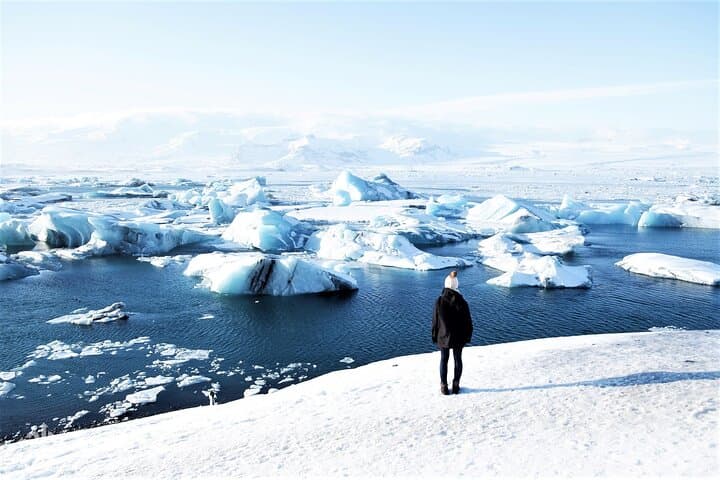
The bus eases out of Reykjavík as morning light slides over the bay and the city recedes into a landscape that seems to rewrite itself every hour. In six days the route will shove you from geyser steam to black sand surf, from basalt pillars to a lagoon of drifting ice. Stops are short but striking—walk behind a curtain of water at Seljalandsfoss, feel the spray from Skógafoss, then stand on a shoreline where icebergs glitter like wrecked chandeliers on black sand.
The bus eases out of Reykjavík as morning light slides over the bay and the city recedes into a landscape that seems to rewrite itself every hour. In six days the route will shove you from geyser steam to black sand surf, from basalt pillars to a lagoon of drifting ice. Stops are short but striking—walk behind a curtain of water at Seljalandsfoss, feel the spray from Skógafoss, then stand on a shoreline where icebergs glitter like wrecked chandeliers on black sand.
Geology here reads like a field guide to extremes: Iceland sits astride the Mid-Atlantic Ridge, and the itinerary threads tectonic rifts, glacial outflows and countless lava fields. Þingvellir opens the trip with exposed rift valleys and a sense of human history—assemblies at this site date back to the 10th century. Drive southeast and you cross young landscapes shaped by recent volcanism; Jökulsárlón is fed by Vatnajökull, a living glacier that calves icebergs into a lagoon whose patterns of blue and white change daily.
Culture in the towns between is low-key and pragmatic—fishing harbors, turf-roofed history in Reykholt, and artful eggs on the quay in Djúpivogur. Northern waters around Akureyri bring the chance to watch whales; that marine life has long supported coastal communities and now draws ecotourism that balances economy and stewardship.
Practicalities matter on a compressed Ring Road loop. Expect multiple driving days of roughly 200–450 km; the tour covers long stretches of paved Ring Road with occasional gravel shoulders. Most on-foot stops are short: 0.5–3 km walks on uneven, sometimes muddy trails and viewpoints reached by stair sections or short slopes. The optional Katla ice cave requires guided glacier-walking with crampons and a helmet; book the Deluxe option if you want that hands-on glacial experience.
Pack layers: wind- and waterproof outer shells, insulating mid-layers, and sturdy waterproof boots with good traction. Daylight hours vary wildly by season—plan early starts in winter and evening outings in summer’s near-endless light. The route’s rhythms are built around natural phenomena, so flexibility pays: weather can close a stop or reveal an unexpected display of northern lights.
For photographers, composition is simple—foreground ice on black sand, columns of basalt, and waterfalls framed by volcanic rock. Hydration and sun protection still matter; the Atlantic wind will dry you out and UV can be strong even on cool days. In short: this is a tour of contrasts—vast driving days threaded with striking short walks—ideal for travelers who want to see Iceland’s major landscapes efficiently, without giving up the texture of local places.