THE ADVENTURE COLLECTIVE® · Independent discovery and booking for outdoor travel

Drive the Icefields Parkway to see Abraham Lake’s frozen methane bubbles, peek from the Peyto viewpoint, and sample raw Rockies winter scenery on an 8-hour small-group trip from Banff. Expert guides, on-route surprises, and supplied ice cleats make this an accessible winter outing.
Drive the Icefields Parkway to see Abraham Lake’s frozen methane bubbles, peek from the Peyto viewpoint, and sample raw Rockies winter scenery on an 8-hour small-group trip from Banff. Expert guides, on-route surprises, and supplied ice cleats make this an accessible winter outing.
A low sun cuts across the Icefields Parkway, turning the dark pines to sheer silhouettes as the guide eases the van onward. Windows frame glaciers and serrated ridgelines; at Abraham Lake the frozen surface holds thousands of trapped methane bubbles — a strange, immaculate pattern beneath clear ice. The group steps out into cold air, breath visible, boots crunching on compacted snow as guides light a small fire and pass around steaming mugs.
Verified experiences and guided adventures in the surrounding area.
Operated by Radventures · Banff, Alberta
A low sun cuts across the Icefields Parkway, turning the dark pines to sheer silhouettes as the guide eases the van onward. Windows frame glaciers and serrated ridgelines; at Abraham Lake the frozen surface holds thousands of trapped methane bubbles — a strange, immaculate pattern beneath clear ice. The group steps out into cold air, breath visible, boots crunching on compacted snow as guides light a small fire and pass around steaming mugs.
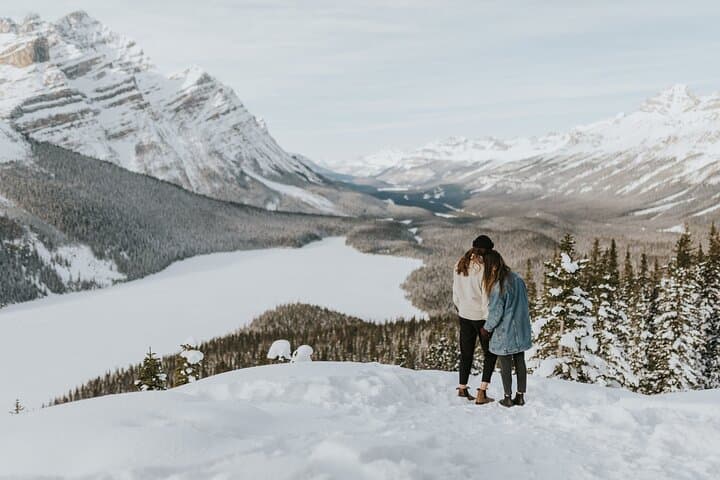
Geology here is blunt and visible: glacial melt carved U-shaped valleys, leaving moraine-sculpted basins and high cirques. Peyto Lake, fed by the Wapta Icefield, appears as an icy bowl in winter, its turquoise summer color muted but still stark against snow-dark rock. The highway itself — the Icefields Parkway — is a 232-km corridor built through ancient sedimentary layers, a route that opened access to the Rockies and the parks’ early tourism in the 20th century.
Local culture remains rooted in mountain stewardship: guides emphasize Leave No Trace and the risks of thin ice and shifting weather. Wildlife is quiet but present; tracks often rim the shoulders of the road.
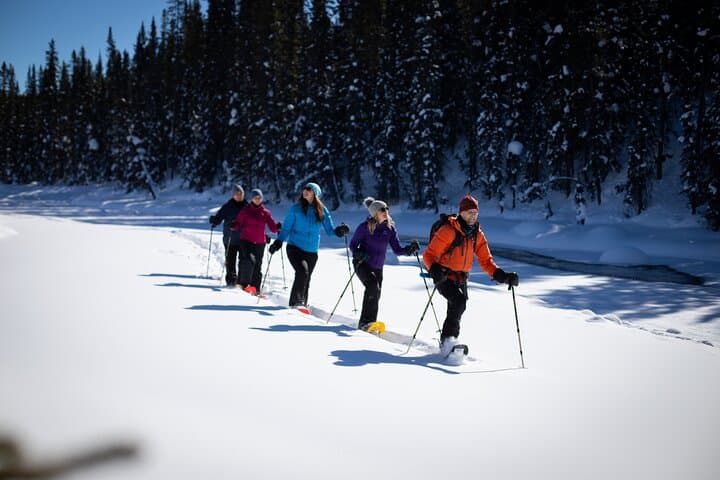
Practical guidance: expect an 8-hour day with frequent stops and short walks (Peyto viewpoint is roughly a 1.5 km round trip). Dress in insulating layers, waterproof boots, and bring a hardy water bottle and camera with spare batteries — cold drains power fast. Ice cleats and poles are provided, but if you plan to skate or snowshoe, book rentals in advance. Timing early in the day yields better light, smaller crowds, and firmer ice underfoot.
moderate.
8 hours.
Suitable for people with basic fitness; involves short, easy to moderate walks (up to 1.5 km round-trip) and periods standing outdoors in cold.
The full-day tour runs about 8 hours and meets at the front of Banff Train Station; check start-time instructions and allow extra time for parking.
Guides provide ice cleats/crampons and hiking poles; snowshoeing and skate rentals are optional extras—reserve them in advance if you want to participate.
Children under 5 are not permitted; the trip is suitable for most fitness levels but those with mobility limitations should contact the operator about accessibility and snowshoe participation.
You might spot elk, coyotes, or birds; maintain distance, follow guide instructions, and be alert for wildlife near road shoulders—do not approach or feed animals.
The Icefields Parkway was developed in the mid-20th century to connect mountain communities and grant access to glaciers and alpine passes, accelerating park visitation and conservation awareness.
Winter ecosystems are fragile—stay on designated routes, pack out waste, and follow guide instructions to minimize impacts on wildlife and wintering habitats.
Radventures operates guided outdoor trips and adventures with an emphasis on safety, stewardship, and memorable experiences.
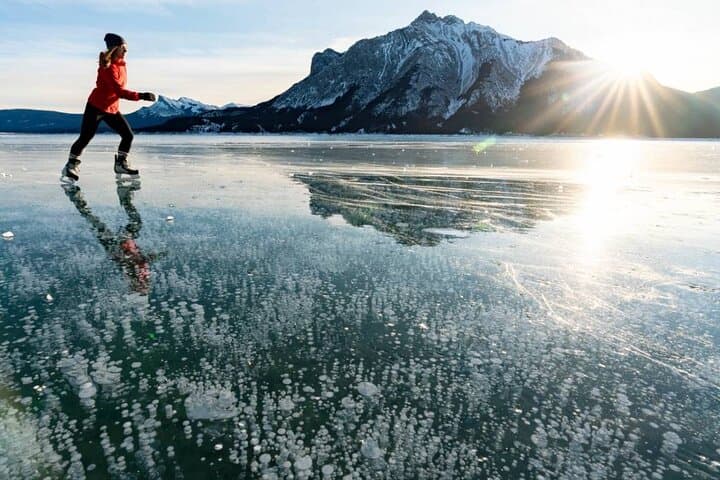
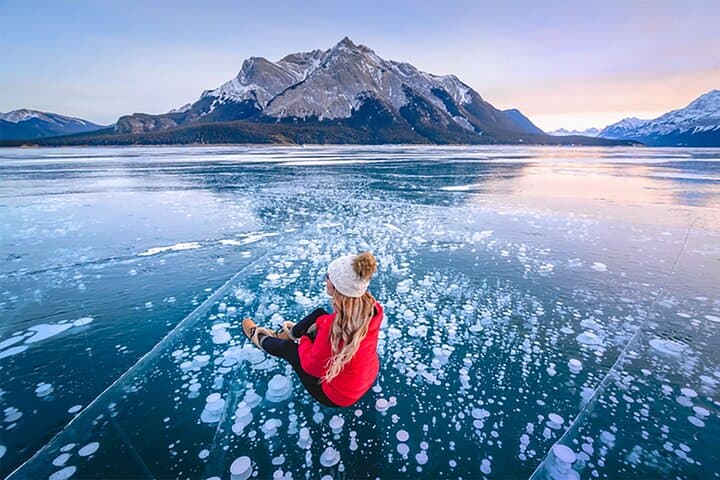
A low sun cuts across the Icefields Parkway, turning the dark pines to sheer silhouettes as the guide eases the van onward. Windows frame glaciers and serrated ridgelines; at Abraham Lake the frozen surface holds thousands of trapped methane bubbles — a strange, immaculate pattern beneath clear ice. The group steps out into cold air, breath visible, boots crunching on compacted snow as guides light a small fire and pass around steaming mugs.
A low sun cuts across the Icefields Parkway, turning the dark pines to sheer silhouettes as the guide eases the van onward. Windows frame glaciers and serrated ridgelines; at Abraham Lake the frozen surface holds thousands of trapped methane bubbles — a strange, immaculate pattern beneath clear ice. The group steps out into cold air, breath visible, boots crunching on compacted snow as guides light a small fire and pass around steaming mugs.
Geology here is blunt and visible: glacial melt carved U-shaped valleys, leaving moraine-sculpted basins and high cirques. Peyto Lake, fed by the Wapta Icefield, appears as an icy bowl in winter, its turquoise summer color muted but still stark against snow-dark rock. The highway itself — the Icefields Parkway — is a 232-km corridor built through ancient sedimentary layers, a route that opened access to the Rockies and the parks’ early tourism in the 20th century.
Local culture remains rooted in mountain stewardship: guides emphasize Leave No Trace and the risks of thin ice and shifting weather. Wildlife is quiet but present; tracks often rim the shoulders of the road.
Practical guidance: expect an 8-hour day with frequent stops and short walks (Peyto viewpoint is roughly a 1.5 km round trip). Dress in insulating layers, waterproof boots, and bring a hardy water bottle and camera with spare batteries — cold drains power fast. Ice cleats and poles are provided, but if you plan to skate or snowshoe, book rentals in advance. Timing early in the day yields better light, smaller crowds, and firmer ice underfoot.