THE ADVENTURE COLLECTIVE® · Independent discovery and booking for outdoor travel

Drive the Icefields Parkway for a full-day circuit of glacier-fed lakes, thunderous waterfalls and — in winter — Abraham Lake’s frozen bubbles. This guided tour pairs short interpretive walks with long, scenic drives between Banff and the Columbia Icefield.
Drive the Icefields Parkway for a full-day circuit of glacier-fed lakes, thunderous waterfalls and — in winter — Abraham Lake’s frozen bubbles. This guided tour pairs short interpretive walks with long, scenic drives between Banff and the Columbia Icefield.
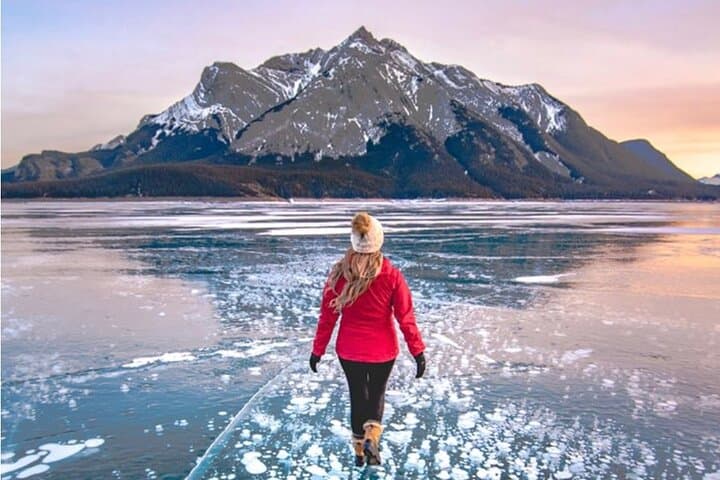
A low sun cuts across Highway 93 as the bus threads the Icefields Parkway — a ribbon of road that dares you to look away. Passengers press faces to glass as glacier-blue lakes and serrated peaks unfold; rivers push forward through narrows, falls roar like a living engine, and in winter Abraham Lake keeps secrets beneath its frozen skin.
Verified experiences and guided adventures in the surrounding area.
Operated by Rockies Journey · Banff, Alberta
A low sun cuts across Highway 93 as the bus threads the Icefields Parkway — a ribbon of road that dares you to look away. Passengers press faces to glass as glacier-blue lakes and serrated peaks unfold; rivers push forward through narrows, falls roar like a living engine, and in winter Abraham Lake keeps secrets beneath its frozen skin.
The route traces routes used by Indigenous peoples and later by early mountain explorers. Geology here is raw: uplifted sedimentary layers carved by Pleistocene ice into cirques, moraines and hanging valleys. Banff’s montane forests give way to alpine tundra as elevation rises from roughly 1,400 m near Banff to over 2,100 m at the Columbia Icefield. Local culture is a mix of mountain guiding tradition and ranching history; small communities along the David Thompson corridor provide the human scale.
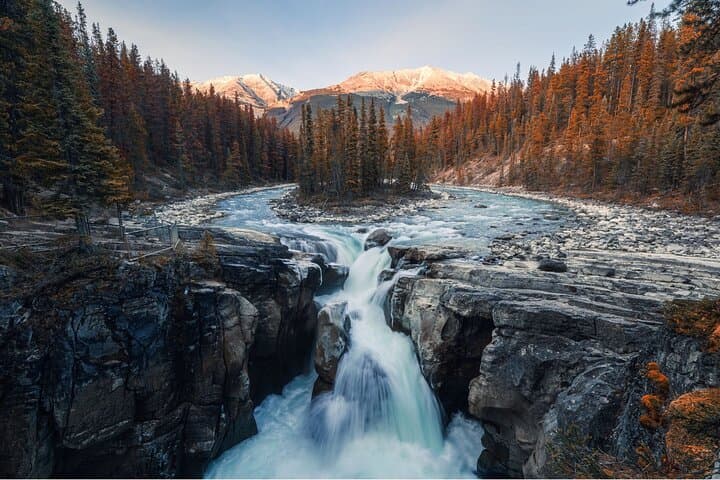
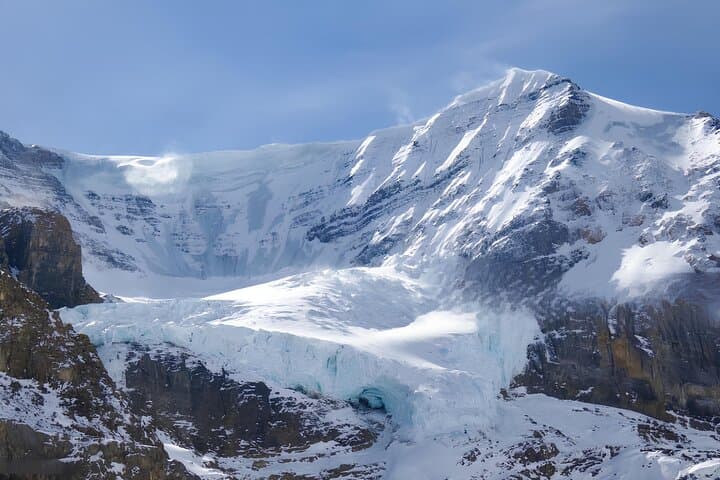
On a typical day tour the group stops for short, interpretive walks — Peyto and Bow lakes (viewpoints: 200–800 m of easy walking), a 15–60 minute stop at Athabasca Glacier or Abraham Lake depending on season, and quick viewpoints at Sunwapta and Waterfowl. Terrain is mostly paved pullouts and short rocky trails; expect stable but uneven surfaces and brief elevation gain on lookout trails.
Practical notes: bring layered outerwear, waterproof shoes, and a camera with spare batteries. Winter visits require crampons (usually provided) and a steady footing on condensed snow. Plan for a 10–12 hour day with long stretches in the vehicle; pack snacks and sun protection. Guides provide context — they turn the Parkway from a photo run into a coherent story of ice, water and human passage.
moderate.
10–12 hours.
Basic endurance for a full-day tour; able to manage short walks of up to 1 km on uneven ground.
The tour is approximately 10–12 hours, with pick-up options from Banff, Canmore or Calgary; departure times vary by pick-up location.
Lunch is not included—guests should bring their own lunch and snacks; bottled water is provided in summer and hot drinks in winter.
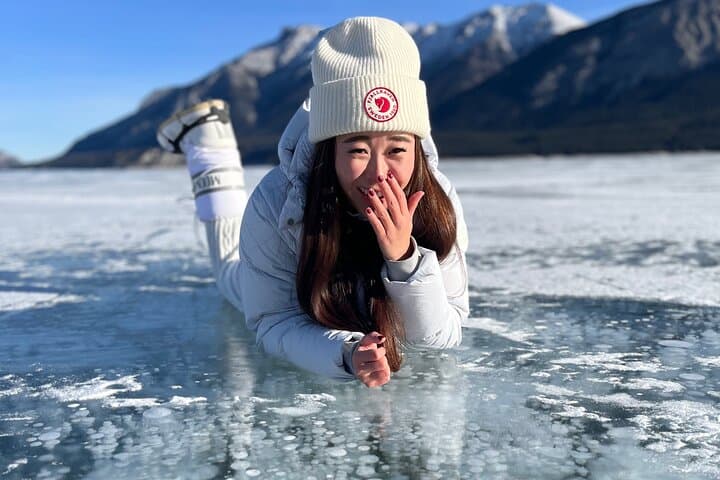
The frozen bubbles are typically visible from mid-December to early March, with prime viewing often in January–early February depending on freeze conditions.
The tour is classified as easy for mobility overall (vehicle-based) but some stops involve uneven ground; infants can ride in strollers and infant seats are available—check with the operator for assistance.
The Icefields Parkway follows routes used historically by Indigenous groups and later by early 20th-century explorers mapping the Columbia Icefield; many roadside names reflect this exploration era.
This corridor crosses sensitive alpine and subalpine habitats—stay on designated paths, pack out waste, and minimize noise to protect wildlife and fragile vegetation.
Rockies Journey operates guided outdoor trips and adventures with an emphasis on safety, stewardship, and memorable experiences.
A low sun cuts across Highway 93 as the bus threads the Icefields Parkway — a ribbon of road that dares you to look away. Passengers press faces to glass as glacier-blue lakes and serrated peaks unfold; rivers push forward through narrows, falls roar like a living engine, and in winter Abraham Lake keeps secrets beneath its frozen skin.
A low sun cuts across Highway 93 as the bus threads the Icefields Parkway — a ribbon of road that dares you to look away. Passengers press faces to glass as glacier-blue lakes and serrated peaks unfold; rivers push forward through narrows, falls roar like a living engine, and in winter Abraham Lake keeps secrets beneath its frozen skin.
The route traces routes used by Indigenous peoples and later by early mountain explorers. Geology here is raw: uplifted sedimentary layers carved by Pleistocene ice into cirques, moraines and hanging valleys. Banff’s montane forests give way to alpine tundra as elevation rises from roughly 1,400 m near Banff to over 2,100 m at the Columbia Icefield. Local culture is a mix of mountain guiding tradition and ranching history; small communities along the David Thompson corridor provide the human scale.
On a typical day tour the group stops for short, interpretive walks — Peyto and Bow lakes (viewpoints: 200–800 m of easy walking), a 15–60 minute stop at Athabasca Glacier or Abraham Lake depending on season, and quick viewpoints at Sunwapta and Waterfowl. Terrain is mostly paved pullouts and short rocky trails; expect stable but uneven surfaces and brief elevation gain on lookout trails.
Practical notes: bring layered outerwear, waterproof shoes, and a camera with spare batteries. Winter visits require crampons (usually provided) and a steady footing on condensed snow. Plan for a 10–12 hour day with long stretches in the vehicle; pack snacks and sun protection. Guides provide context — they turn the Parkway from a photo run into a coherent story of ice, water and human passage.