THE ADVENTURE COLLECTIVE® · Independent discovery and booking for outdoor travel

Step onto a frozen lake near Levi and learn traditional ice-fishing techniques from local guides. This small-group winter tour balances calm lakeside moments with practical instruction on safety, gear and Arctic species.
Step onto a frozen lake near Levi and learn traditional ice-fishing techniques from local guides. This small-group winter tour balances calm lakeside moments with practical instruction on safety, gear and Arctic species.
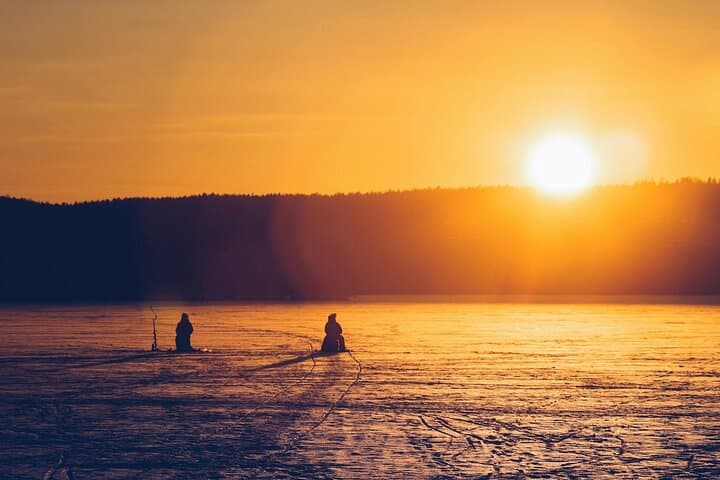
A low sun slides across a flat white field as you step from the snowmobile track onto the plane of a frozen lake. The air is thin and clean; each breath feels deliberate. Your guide makes a quick circle with an auger, drills into blue ice and gestures to a dark hole that feels like an invitation to another element.
Verified experiences and guided adventures in the surrounding area.
Operated by Arctic Midnight Group · Levi, Lapland
A low sun slides across a flat white field as you step from the snowmobile track onto the plane of a frozen lake. The air is thin and clean; each breath feels deliberate. Your guide makes a quick circle with an auger, drills into blue ice and gestures to a dark hole that feels like an invitation to another element.
This is northern Lapland — a landscape sculpted by the last ice age, where glacial kettles and clear cold lakes collect meltwater and support hardy fish populations. Levi sits on the edge of that geological story, a modern ski resort with old-rooted winter practices: ice fishing here evolved from subsistence work to a quiet cultural pastime shared by Sámi and Finnish communities alike.
Guides from local operators bring knowledge of seasonality, safe ice thickness, and where perch, whitefish and grayling concentrate beneath snow-dark water. Small-group setups favor long pauses by the fire, warm drinks and conversation about winter life far above the Arctic Circle.
Practical notes: tours run in stable winter months when ice is safe (typically December–April), last about three hours and include transport, gear and a guide. Dress in insulating layers, choose waterproof boots with good grip, and expect simple outdoor comforts rather than luxury facilities. Photographers will find stark minimalism and wide horizons; anglers should temper expectations — the catch can be modest but rewarding.
If safety is your priority, listen to local instructions about ice and wind. If curiosity drives you, let the quiet pull you into a patient rhythm of waiting, watching and, occasionally, the sudden tug of a fish on the line.
easy.
3 hours.
Suitable for most fitness levels; requires standing/walking on uneven icy surfaces and basic balance.
No. Tours are designed for beginners; guides demonstrate drilling, lines and techniques, and provide all necessary equipment.
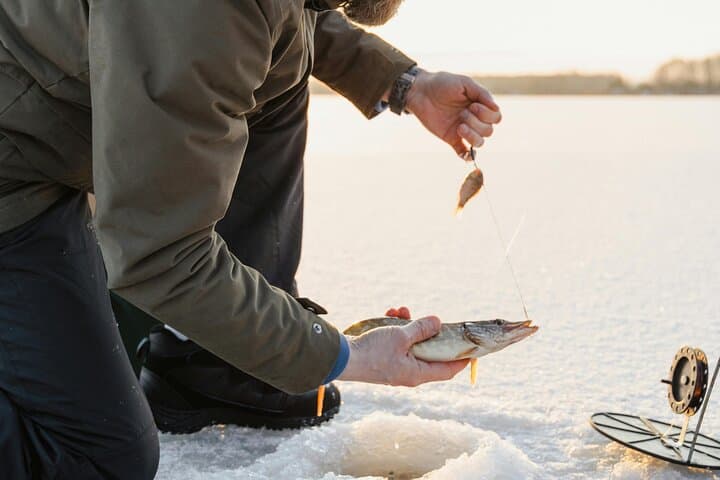
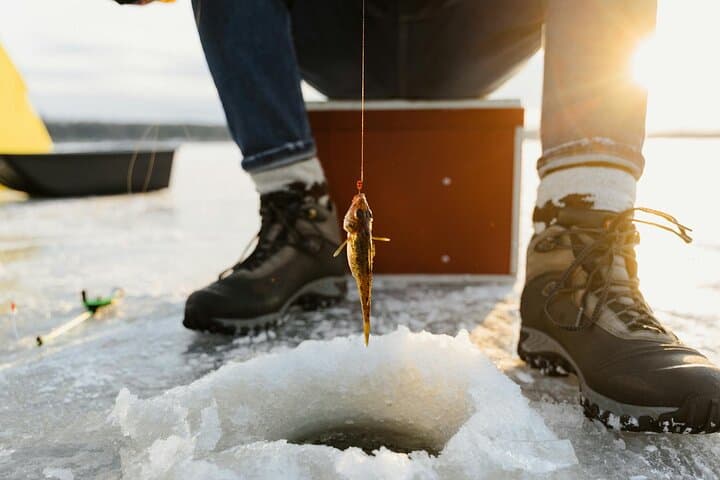
Common catches in Lapland lakes include perch, whitefish (vendace/European whitefish) and grayling; species depend on the specific lake and season.
Yes — small-group operators often welcome families, but check age restrictions during booking and ensure children are dressed for Arctic conditions.
Most guided tours include equipment and handle local permissions; confirm with the operator if any personal license is required, especially for independent fishing.
Ice fishing in Lapland has been a seasonal food strategy for Sámi and Finnish communities for centuries; modern tours adapt those techniques for recreation and education.
Operators minimize impact by following local rules on catch limits and by using established access routes to protect fragile winter vegetation and avoid thinning ice areas.
Arctic Midnight Group operates guided outdoor trips and adventures with an emphasis on safety, stewardship, and memorable experiences.

A low sun slides across a flat white field as you step from the snowmobile track onto the plane of a frozen lake. The air is thin and clean; each breath feels deliberate. Your guide makes a quick circle with an auger, drills into blue ice and gestures to a dark hole that feels like an invitation to another element.
A low sun slides across a flat white field as you step from the snowmobile track onto the plane of a frozen lake. The air is thin and clean; each breath feels deliberate. Your guide makes a quick circle with an auger, drills into blue ice and gestures to a dark hole that feels like an invitation to another element.
This is northern Lapland — a landscape sculpted by the last ice age, where glacial kettles and clear cold lakes collect meltwater and support hardy fish populations. Levi sits on the edge of that geological story, a modern ski resort with old-rooted winter practices: ice fishing here evolved from subsistence work to a quiet cultural pastime shared by Sámi and Finnish communities alike.
Guides from local operators bring knowledge of seasonality, safe ice thickness, and where perch, whitefish and grayling concentrate beneath snow-dark water. Small-group setups favor long pauses by the fire, warm drinks and conversation about winter life far above the Arctic Circle.
Practical notes: tours run in stable winter months when ice is safe (typically December–April), last about three hours and include transport, gear and a guide. Dress in insulating layers, choose waterproof boots with good grip, and expect simple outdoor comforts rather than luxury facilities. Photographers will find stark minimalism and wide horizons; anglers should temper expectations — the catch can be modest but rewarding.
If safety is your priority, listen to local instructions about ice and wind. If curiosity drives you, let the quiet pull you into a patient rhythm of waiting, watching and, occasionally, the sudden tug of a fish on the line.