THE ADVENTURE COLLECTIVE® · Independent discovery and booking for outdoor travel

Drive from Hurghada to Luxor for private guided visits to Karnak, Luxor Temple and the west bank funeral complexes, plus a hot-air balloon dawn over the valley. This multi-day tour pairs guided archaeology with local transport and overnight west-bank accommodation.
Drive from Hurghada to Luxor for private guided visits to Karnak, Luxor Temple and the west bank funeral complexes, plus a hot-air balloon dawn over the valley. This multi-day tour pairs guided archaeology with local transport and overnight west-bank accommodation.
You step out of the air-conditioned car and the Nile seems to lean toward the temples, as if it’s urging you forward. A four-hour coastal drive from Hurghada eases into the broad sweep of the Nile Valley, and the first columns of Karnak rise like a history you can walk into — sun-warmed sandstone, carved hieroglyphs, and open courtyards that still hold an echo of ritual.
Verified experiences and guided adventures in the surrounding area.
Operated by Dubai Holidays · Luxor, Luxor Governorate
You step out of the air-conditioned car and the Nile seems to lean toward the temples, as if it’s urging you forward. A four-hour coastal drive from Hurghada eases into the broad sweep of the Nile Valley, and the first columns of Karnak rise like a history you can walk into — sun-warmed sandstone, carved hieroglyphs, and open courtyards that still hold an echo of ritual.
This private transfer and multi-day itinerary threads Hurghada, Luxor and Cairo together: east-bank giants like Karnak and Luxor Temple, a riverside house on the west bank, a dawn hot-air balloon over the valley, then the funerary complexes of the west bank — the Valley of the Kings, Hatshepsut’s mortuary temple and the Colossi of Memnon. Geologically, the contrast between the alluvial Nile floodplain and the surrounding limestone bedrock defines the sites; culturally, this is the heart of New Kingdom power where tomb artisanshipevolved into monumental ritual.
Expect practical rhythms: early mornings for fewer crowds, mid-day pauses for shade and a local meal, and a late afternoon felucca glide to reset after a day of temples. Guides typically include trained Egyptologists or experienced local guides; transfers by private air‑conditioned car and train tickets to Cairo are commonly arranged.
Plan for sun, dust and long days on your feet. Hydrate, dress in layers for chilly balloon mornings and hot afternoons, and carry photocopies of travel documents for museum and tomb entry. The experience is equal parts spectacle and study — a close look at how landscape and labor produced some of history’s most deliberate architecture.
moderate.
3 days (approx.).
Able to handle multiple hours on foot, some stairs and uneven stone; not overly strenuous but expect full days
The private transfer takes about four hours on a paved highway; stops for restroom breaks or refreshments are typically included.
The itinerary lists a balloon trip among inclusions; confirm prior to booking because operators and weather can affect availability.
Admission is not universally included — local guides often handle ticket purchase on-site, so confirm which entries are covered when you book.
Yes; the tour is described as physically easy and stroller-accessible in parts, but early starts and long days may be tiring for very young children.
Luxor (ancient Thebes) was the New Kingdom political and religious capital; many temples reflect royal funerary ideology developed between the 16th and 11th centuries BCE.
Visitors are asked to avoid touching reliefs and to stay on designated paths; local guides often promote carrying out waste and conserving water in this arid environment.
Dubai Holidays operates guided outdoor trips and adventures with an emphasis on safety, stewardship, and memorable experiences.

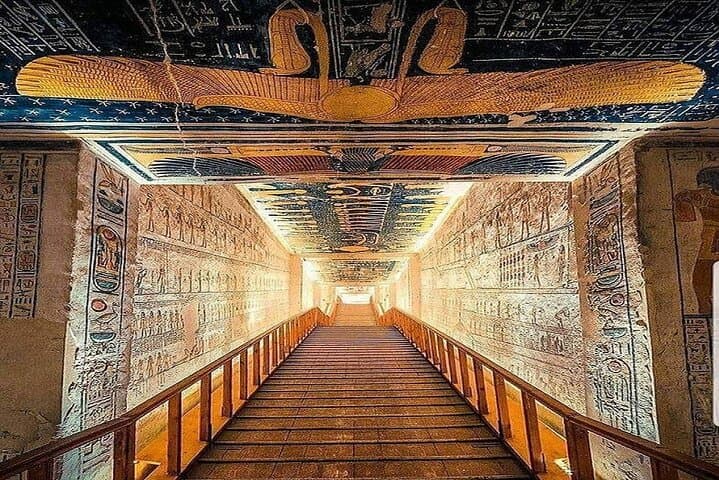
You step out of the air-conditioned car and the Nile seems to lean toward the temples, as if it’s urging you forward. A four-hour coastal drive from Hurghada eases into the broad sweep of the Nile Valley, and the first columns of Karnak rise like a history you can walk into — sun-warmed sandstone, carved hieroglyphs, and open courtyards that still hold an echo of ritual.
You step out of the air-conditioned car and the Nile seems to lean toward the temples, as if it’s urging you forward. A four-hour coastal drive from Hurghada eases into the broad sweep of the Nile Valley, and the first columns of Karnak rise like a history you can walk into — sun-warmed sandstone, carved hieroglyphs, and open courtyards that still hold an echo of ritual.
This private transfer and multi-day itinerary threads Hurghada, Luxor and Cairo together: east-bank giants like Karnak and Luxor Temple, a riverside house on the west bank, a dawn hot-air balloon over the valley, then the funerary complexes of the west bank — the Valley of the Kings, Hatshepsut’s mortuary temple and the Colossi of Memnon. Geologically, the contrast between the alluvial Nile floodplain and the surrounding limestone bedrock defines the sites; culturally, this is the heart of New Kingdom power where tomb artisanshipevolved into monumental ritual.
Expect practical rhythms: early mornings for fewer crowds, mid-day pauses for shade and a local meal, and a late afternoon felucca glide to reset after a day of temples. Guides typically include trained Egyptologists or experienced local guides; transfers by private air‑conditioned car and train tickets to Cairo are commonly arranged.
Plan for sun, dust and long days on your feet. Hydrate, dress in layers for chilly balloon mornings and hot afternoons, and carry photocopies of travel documents for museum and tomb entry. The experience is equal parts spectacle and study — a close look at how landscape and labor produced some of history’s most deliberate architecture.