THE ADVENTURE COLLECTIVE® · Independent discovery and booking for outdoor travel

A full‑day small‑group trip from Hurghada to Luxor that combines Karnak’s hypostyle halls, the Colossi of Memnon, Queen Hatshepsut’s temple and the Valley of the Kings. Expert Egyptology narration, hotel pickup, and timed visits make a long day efficient and rewarding.
A full‑day small‑group trip from Hurghada to Luxor that combines Karnak’s hypostyle halls, the Colossi of Memnon, Queen Hatshepsut’s temple and the Valley of the Kings. Expert Egyptology narration, hotel pickup, and timed visits make a long day efficient and rewarding.
You step out of the air‑conditioned van into a dry, sunlit valley where wind lifts dust from ancient stone and the Nile hums faintly in the distance.
Verified experiences and guided adventures in the surrounding area.
Operated by Red Sea Vibes · Luxor, Luxor Governorate
You step out of the air‑conditioned van into a dry, sunlit valley where wind lifts dust from ancient stone and the Nile hums faintly in the distance.
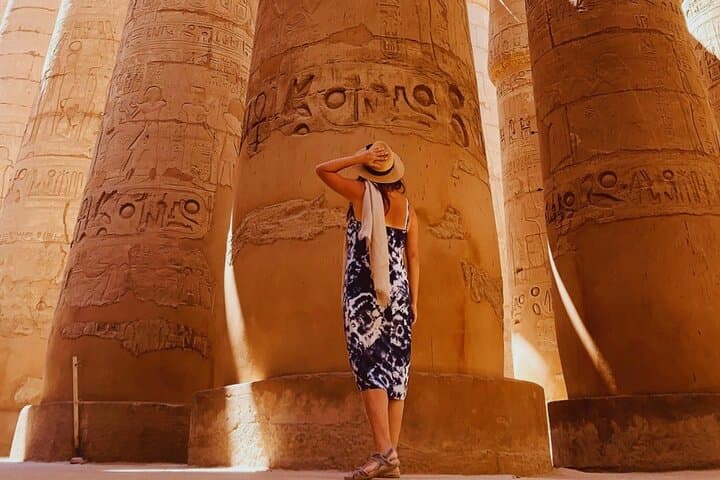
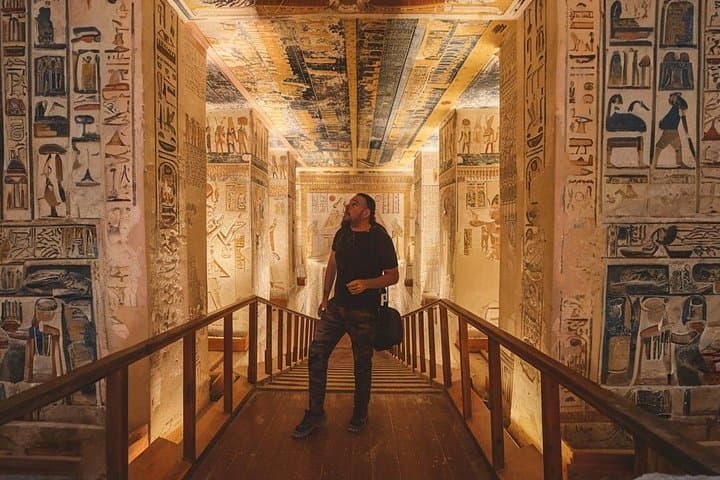
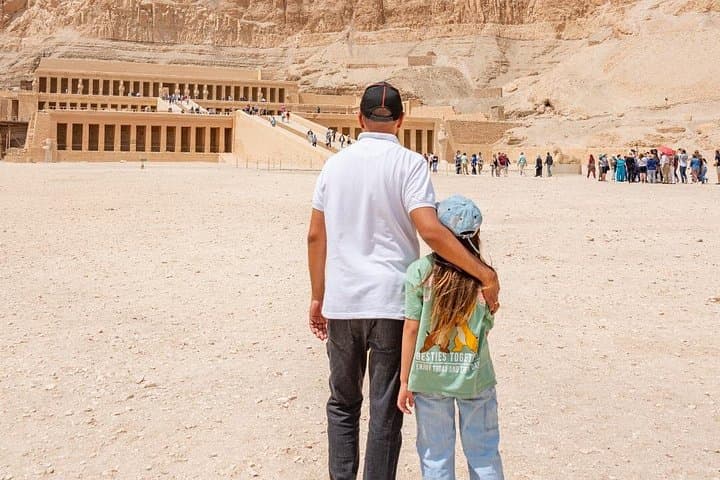
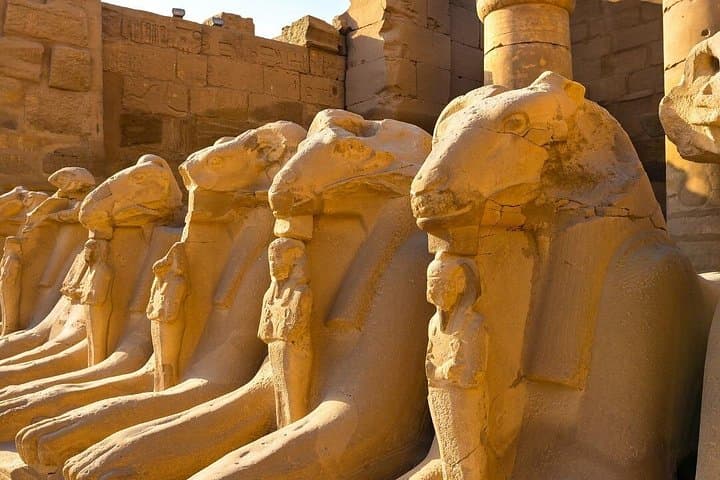
This full‑day journey from Hurghada delivers Luxor’s greatest monuments in concentrated succession: the columned mass of Karnak with its hypostyle hall, the twin Colossi of Memnon guarding the West Bank, the terraced façade of Hatshepsut’s mortuary temple, and the painted corridors of the Valley of the Kings where pharaohs were sealed in layered chambers.
Luxor sits on the site of ancient Thebes, a political and religious center of New Kingdom Egypt; the architecture you see is limestone and sandstone hewn and aligned to solar cycles and ritual processions. The river shaped the city’s economy, while desert winds and salt migrated onto stone—factors modern conservators constantly battle.
Expect guided storytelling from an Egyptologist, measured time at each stop, and hands‑on logistics: hotel pickup in Hurghada, borderless stretches of highway, short walks across uneven terrain, and cooled breaks for lunch.
Practical details: bring at least 2 liters of water, sun protection, and footwear with good grip for uneven tomb steps and stone thresholds. Photography rules vary inside tombs—follow your guide to protect pigments and respect site regulations. Timing matters: earlier parking in Luxor reduces heat and crowds; late departures return after dusk. The tour balances spectacle with necessary caution—ancient sites remain fragile and best seen slowly, with attention to both history and personal comfort.
moderate.
18 hours (full‑day, long road transfer).
Able to manage multiple short walks, stairs and uneven surfaces over several hours; comfortable in heat.
The round‑trip road transfer takes most of the day—expect roughly 3.5–4 hours each way depending on traffic and stops.
Some entry fees are included depending on the option you choose; confirm at booking and carry cash for any additional ticketed tombs or camera permits.
Access varies—only a limited number of tombs are open at a time and some require separate permits; your guide will indicate which are included.
The tour is family friendly, but tombs have narrow, stepped passages and uneven floors—those with mobility concerns should discuss accommodations before booking.
Luxor occupies the site of ancient Thebes, the New Kingdom capital where pharaohs and priests commissioned grand temples and tombs as part of funerary and solar cults.
Tomb paintings and stonework are sensitive to humidity, light and touch—guides enforce no‑flash rules and limited access to protect fragile surfaces.
Red Sea Vibes operates guided outdoor trips and adventures with an emphasis on safety, stewardship, and memorable experiences.
You step out of the air‑conditioned van into a dry, sunlit valley where wind lifts dust from ancient stone and the Nile hums faintly in the distance.
You step out of the air‑conditioned van into a dry, sunlit valley where wind lifts dust from ancient stone and the Nile hums faintly in the distance.
This full‑day journey from Hurghada delivers Luxor’s greatest monuments in concentrated succession: the columned mass of Karnak with its hypostyle hall, the twin Colossi of Memnon guarding the West Bank, the terraced façade of Hatshepsut’s mortuary temple, and the painted corridors of the Valley of the Kings where pharaohs were sealed in layered chambers.
Luxor sits on the site of ancient Thebes, a political and religious center of New Kingdom Egypt; the architecture you see is limestone and sandstone hewn and aligned to solar cycles and ritual processions. The river shaped the city’s economy, while desert winds and salt migrated onto stone—factors modern conservators constantly battle.
Expect guided storytelling from an Egyptologist, measured time at each stop, and hands‑on logistics: hotel pickup in Hurghada, borderless stretches of highway, short walks across uneven terrain, and cooled breaks for lunch.
Practical details: bring at least 2 liters of water, sun protection, and footwear with good grip for uneven tomb steps and stone thresholds. Photography rules vary inside tombs—follow your guide to protect pigments and respect site regulations. Timing matters: earlier parking in Luxor reduces heat and crowds; late departures return after dusk. The tour balances spectacle with necessary caution—ancient sites remain fragile and best seen slowly, with attention to both history and personal comfort.