THE ADVENTURE COLLECTIVE® · Independent discovery and booking for outdoor travel

Travel from Hurghada to Cairo in a single long day to see the Giza pyramids, Sphinx and the Egyptian Museum. This private car trip packs history and dramatic desert scenery into a door-to-door cultural marathon.
Travel from Hurghada to Cairo in a single long day to see the Giza pyramids, Sphinx and the Egyptian Museum. This private car trip packs history and dramatic desert scenery into a door-to-door cultural marathon.
The day begins before dawn in Hurghada, where the Red Sea's hush gives way to a long ribbon of highway toward the Nile valley. As the city recedes, the desert stretches like a pale ocean, dunes and limestone bluffs keeping time with the car's steady hum until Cairo's skyline and the ragged silhouette of the Giza Plateau appear on the horizon.
Verified experiences and guided adventures in the surrounding area.
Operated by Egypt Holiday · Giza, Giza
The day begins before dawn in Hurghada, where the Red Sea's hush gives way to a long ribbon of highway toward the Nile valley. As the city recedes, the desert stretches like a pale ocean, dunes and limestone bluffs keeping time with the car's steady hum until Cairo's skyline and the ragged silhouette of the Giza Plateau appear on the horizon.
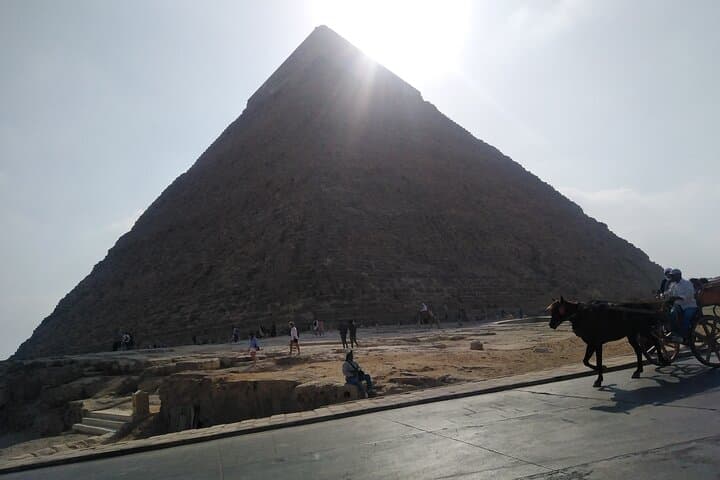
Visitors step from air-conditioned comfort into a landscape shaped by millennia — a limestone plateau hewn by the same ancient processes that raised the pyramids. The Egyptian Museum holds artifacts that trace social, artistic and funerary life across dynasties; outside, the Great Pyramid, Khafre and Menkaure stand on a foundation of geology and human ambition. Guides thread cultural context through the stones: ancient engineering, pharaonic religion and modern Cairo's relationship with its past.
Expect crowds, heat and sudden shifts from museum hush to open plateau wind. The Sphinx faces east, an immovable observer of the desert's pace; the Nile, a day's shadow away, continues to shape the region's agriculture and settlements.
Practical guidance: this is a very long day — plan for 12–16 hours door-to-door. Carry sun protection, a refillable water bottle and comfortable shoes for walking on uneven sand, stone and museum floors. Confirm entrance fees and passport requirements in advance. Schedule flexible pickup times and discuss priorities with your guide to avoid rushed visits. Timing visits for early morning or late afternoon reduces heat and light glare for photography. With planning, the day offers a concentrated, manageable immersion into Egypt's ancient core.
easy.
12–16 hours.
Should be able to tolerate long vehicle travel and short bursts of walking on uneven terrain; minimal fitness required.
Expect roughly five hours each way depending on traffic and stops; the full excursion is typically a 12–16 hour day.
This tour states entrance fees to the pyramids, Sphinx and Egyptian Museum are included — confirm with the operator before booking.
The tour is listed as stroller and wheelchair accessible for transport, but the plateau and museum involve uneven ground and steps; discuss accessibility needs with the operator beforehand.
Yes — original passport and any visa documents are required for museum and site entry; carry photocopies as backups.
The Giza Plateau dates to the Fourth Dynasty (c. 2600–2500 BCE); the constructions combine bedrock geology with astonishing ancient engineering and funerary culture.
Tour operations are increasingly regulated to limit vehicle access on sensitive areas of the plateau; visitors should stick to marked paths and avoid climbing on monuments.
Egypt Holiday operates guided outdoor trips and adventures with an emphasis on safety, stewardship, and memorable experiences.



The day begins before dawn in Hurghada, where the Red Sea's hush gives way to a long ribbon of highway toward the Nile valley. As the city recedes, the desert stretches like a pale ocean, dunes and limestone bluffs keeping time with the car's steady hum until Cairo's skyline and the ragged silhouette of the Giza Plateau appear on the horizon.
The day begins before dawn in Hurghada, where the Red Sea's hush gives way to a long ribbon of highway toward the Nile valley. As the city recedes, the desert stretches like a pale ocean, dunes and limestone bluffs keeping time with the car's steady hum until Cairo's skyline and the ragged silhouette of the Giza Plateau appear on the horizon.
Visitors step from air-conditioned comfort into a landscape shaped by millennia — a limestone plateau hewn by the same ancient processes that raised the pyramids. The Egyptian Museum holds artifacts that trace social, artistic and funerary life across dynasties; outside, the Great Pyramid, Khafre and Menkaure stand on a foundation of geology and human ambition. Guides thread cultural context through the stones: ancient engineering, pharaonic religion and modern Cairo's relationship with its past.
Expect crowds, heat and sudden shifts from museum hush to open plateau wind. The Sphinx faces east, an immovable observer of the desert's pace; the Nile, a day's shadow away, continues to shape the region's agriculture and settlements.
Practical guidance: this is a very long day — plan for 12–16 hours door-to-door. Carry sun protection, a refillable water bottle and comfortable shoes for walking on uneven sand, stone and museum floors. Confirm entrance fees and passport requirements in advance. Schedule flexible pickup times and discuss priorities with your guide to avoid rushed visits. Timing visits for early morning or late afternoon reduces heat and light glare for photography. With planning, the day offers a concentrated, manageable immersion into Egypt's ancient core.