THE ADVENTURE COLLECTIVE® · Independent discovery and booking for outdoor travel

Make a dawn departure from Hurghada and return after a long, history-packed day in Cairo and Giza. See the Pyramids, the Great Sphinx and the Egyptian Museum with a guided itinerary that covers major highlights in one intensive excursion.
Make a dawn departure from Hurghada and return after a long, history-packed day in Cairo and Giza. See the Pyramids, the Great Sphinx and the Egyptian Museum with a guided itinerary that covers major highlights in one intensive excursion.
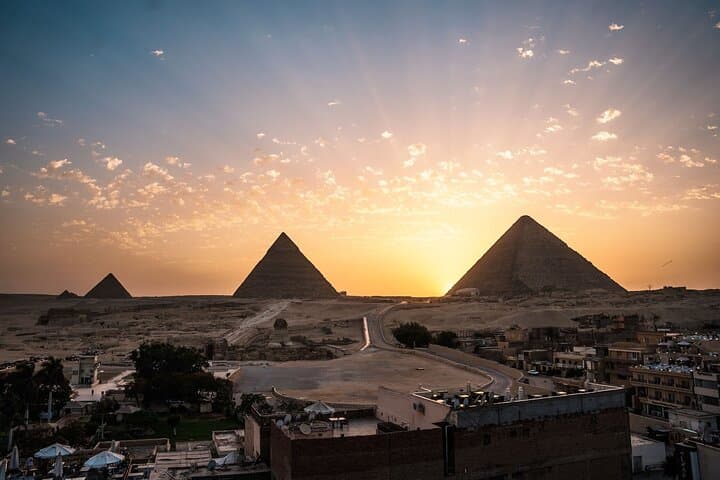
You step onto a modern coach before dawn, the Red Sea city of Hurghada shrinking in the rearview while the desert opens like a quiet, sun-baked map. By midmorning the Nile’s ribbon appears again in the distance and Cairo’s city pulse quickens; the plateau at Giza rises ahead, the Pyramids throwing long, geometric shadows that seem to dare you closer.
Verified experiences and guided adventures in the surrounding area.
Operated by Dream Voyage · Giza, Giza Governorate
You step onto a modern coach before dawn, the Red Sea city of Hurghada shrinking in the rearview while the desert opens like a quiet, sun-baked map. By midmorning the Nile’s ribbon appears again in the distance and Cairo’s city pulse quickens; the plateau at Giza rises ahead, the Pyramids throwing long, geometric shadows that seem to dare you closer.
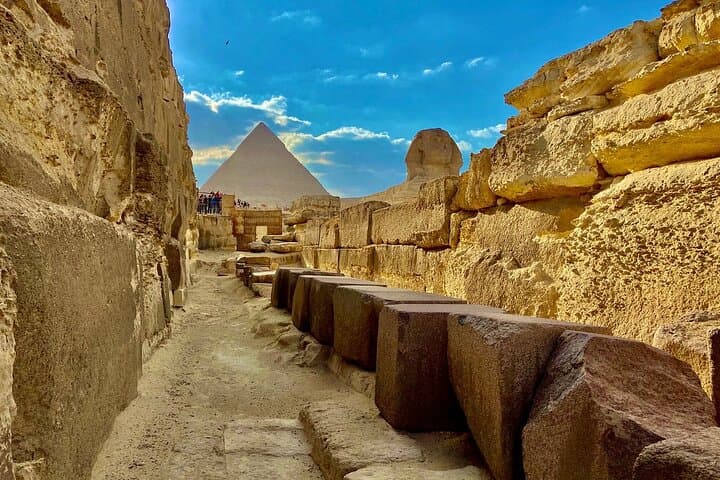
The day threads history and geology: the Pyramids of Giza—built from quarried limestone and granite in Egypt’s Old Kingdom—stand as engineered mountains, their blocks still bearing the scars of millennia. The Great Sphinx keeps a silent watch, its face eroded by wind and time. In Cairo, the Museum of Egyptian Antiquities catalogs pharaonic lives; Tutankhamun’s funerary mask remains magnetic, an object that draws together art, ritual and early metallurgy.
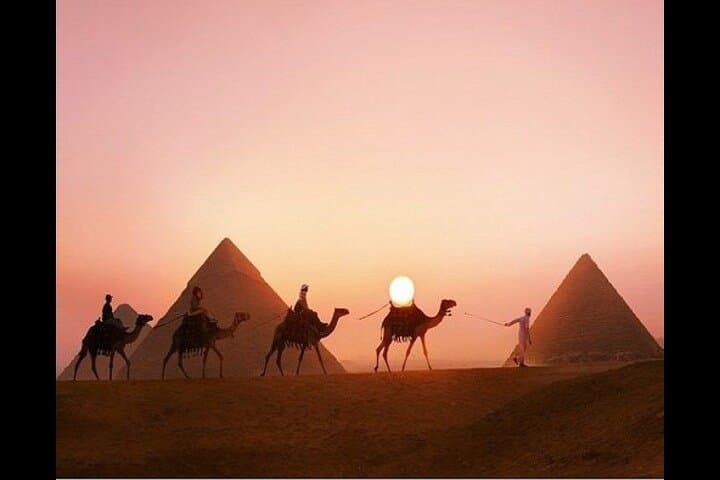
Culture here hums between sites: camel handlers negotiate with tourists, tea houses in Khan el-Khalili pour strong mint tea, and guide-led interpretations reveal funerary myths and royal politics.
Practical guidance: expect a very long day—roughly 20–22 hours round trip from Hurghada—so carry water, sun protection and light layers. Admissions for the museum and Giza sites are typically included on packaged tours; bring original ID for entry. Wear comfortable walking shoes for uneven limestone and loose sand, and plan to move at a steady but unhurried pace—this itinerary prioritizes seeing major monuments over lingering explorations. If you opt for the short felucca sail on the Nile, allow an extra window of time for a relaxed finish to a historically dense day.
easy.
20–22 hours.
Suitable for travelers in average fitness; the day is long and involves walking on uneven ground and extended time on a coach.
This tour typically includes entry to the Egyptian Museum and the Giza Plateau (Pyramids and Sphinx) as part of the itinerary—confirm on booking details.
Expect approximately 6–7 hours each way by road depending on traffic and stops, which makes the full excursion a long, often 20+ hour day.
The 30-minute felucca sail on the Nile is offered as an optional extra on some departures—ask your operator when booking to add it.
The tour is marketed as suitable for all fitness levels, but long transfers and uneven surfaces at sites may be uncomfortable for infants, those with mobility limitations, or severe motion sickness—check accessibility options before booking.
The Giza Pyramids were built as royal tombs during Egypt’s Old Kingdom; the Egyptian Museum in Cairo holds many artifacts recovered from tombs, including Tutankhamun’s funerary goods.
High visitor numbers stress fragile sites—stay on designated paths, avoid touching carved surfaces, and follow guide instructions to limit wear on ancient masonry.
Dream Voyage operates guided outdoor trips and adventures with an emphasis on safety, stewardship, and memorable experiences.

You step onto a modern coach before dawn, the Red Sea city of Hurghada shrinking in the rearview while the desert opens like a quiet, sun-baked map. By midmorning the Nile’s ribbon appears again in the distance and Cairo’s city pulse quickens; the plateau at Giza rises ahead, the Pyramids throwing long, geometric shadows that seem to dare you closer.
You step onto a modern coach before dawn, the Red Sea city of Hurghada shrinking in the rearview while the desert opens like a quiet, sun-baked map. By midmorning the Nile’s ribbon appears again in the distance and Cairo’s city pulse quickens; the plateau at Giza rises ahead, the Pyramids throwing long, geometric shadows that seem to dare you closer.
The day threads history and geology: the Pyramids of Giza—built from quarried limestone and granite in Egypt’s Old Kingdom—stand as engineered mountains, their blocks still bearing the scars of millennia. The Great Sphinx keeps a silent watch, its face eroded by wind and time. In Cairo, the Museum of Egyptian Antiquities catalogs pharaonic lives; Tutankhamun’s funerary mask remains magnetic, an object that draws together art, ritual and early metallurgy.
Culture here hums between sites: camel handlers negotiate with tourists, tea houses in Khan el-Khalili pour strong mint tea, and guide-led interpretations reveal funerary myths and royal politics.
Practical guidance: expect a very long day—roughly 20–22 hours round trip from Hurghada—so carry water, sun protection and light layers. Admissions for the museum and Giza sites are typically included on packaged tours; bring original ID for entry. Wear comfortable walking shoes for uneven limestone and loose sand, and plan to move at a steady but unhurried pace—this itinerary prioritizes seeing major monuments over lingering explorations. If you opt for the short felucca sail on the Nile, allow an extra window of time for a relaxed finish to a historically dense day.