THE ADVENTURE COLLECTIVE® · Independent discovery and booking for outdoor travel

Fly from Hurghada to Cairo in one day to tour the Egyptian Museum and the Giza Plateau with a private Egyptologist. Spend morning hours among Tutankhamun’s treasures, then walk the limestone paths that lead to the pyramids and the Sphinx.
Fly from Hurghada to Cairo in one day to tour the Egyptian Museum and the Giza Plateau with a private Egyptologist. Spend morning hours among Tutankhamun’s treasures, then walk the limestone paths that lead to the pyramids and the Sphinx.
A morning lift-off from Hurghada drops travelers into Cairo’s low-hanging haze; within an hour the Nile’s broad ribbon uncoils and the city’s layered skyline resolves into stones older than language. At Giza the desert opens like a page: the pyramids loom—geometric, wind-polished—and the Sphinx watches the approach with lion-strength and human calculation.
Verified experiences and guided adventures in the surrounding area.
Operated by Egyptian scribe tours and travels-EST · Cairo, Cairo Governorate
A morning lift-off from Hurghada drops travelers into Cairo’s low-hanging haze; within an hour the Nile’s broad ribbon uncoils and the city’s layered skyline resolves into stones older than language. At Giza the desert opens like a page: the pyramids loom—geometric, wind-polished—and the Sphinx watches the approach with lion-strength and human calculation.
This itinerary threads modern aviation with millennia: an Egyptologist leads a walk through the Egyptian Museum’s crowded galleries—Tutankhamun’s gold, funerary masks, and funerary equipment—before moving to the Giza Plateau, where the Cheops, Chephren and Mykerinos pyramids dominate the skyline. Geologically, the plateau is a limestone shelf carved by wind and time; archaeologically it records 4th-dynasty funerary engineering and the city-building ambitions of the Old Kingdom. Culturally, Cairo juxtaposes Ottoman alleys, Coptic enclaves and busy bazaars—reminders that ancient monuments sit inside a living, noisy metropolis.
Practical guidance: expect roughly nine hours door-to-door including flights, transfers, museum time and guided visits at each site. Wear sturdy closed shoes for uneven limestone surfaces and dusty paths, carry sun protection and a refillable water bottle; shaded rest stops are limited on the plateau. Photography is allowed in most open areas but restricted inside some museum rooms—follow your guide.
Timing matters: start early to avoid midday heat and larger crowds. Respect signage: climbing on monuments is illegal and damages fragile stone. The day balances brisk logistics with slow, up-close moments among some of history’s most deliberate constructions.
easy.
9–10 hours.
Suitable for most fitness levels; involves several hours of walking on uneven ground and short flights of stairs.
Yes — entrance tickets to the Egyptian Museum and Giza sites, plus the Hurghada–Cairo return flight, are included as stated in the listing.
Yes — the itinerary is private with an Egyptologist guide dedicated to your party for the day.
The listing specifies wheelchair-accessible transportation and many surfaces; however, uneven areas on the plateau and archaeological zones may be challenging—check specific accessibility needs with the operator before booking.
Yes — the tour includes lunch, typically at a local restaurant in Cairo between museum and pyramid visits.
The Giza complex dates to the 4th dynasty (around 2600–2500 BCE) and the Egyptian Museum in Tahrir preserves artifacts spanning millennia, including Tutankhamun’s burial assemblage.
High visitor numbers stress fragile stone and artifacts; follow barriers, avoid touching carved surfaces and support guides who promote responsible site management.
Egyptian scribe tours and travels-EST operates guided outdoor trips and adventures with an emphasis on safety, stewardship, and memorable experiences.
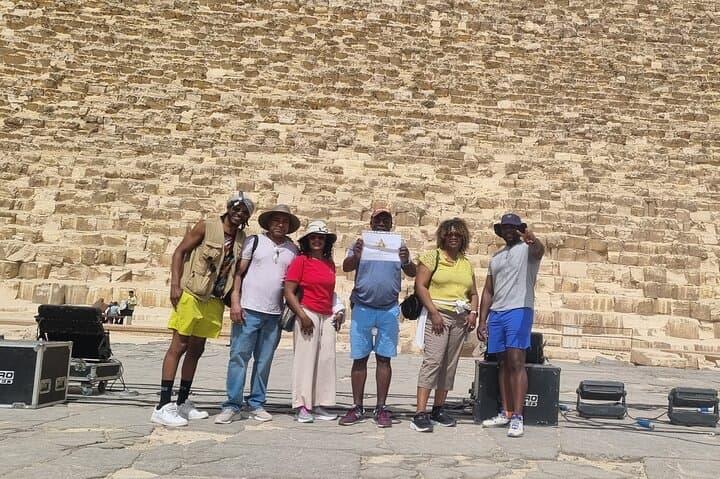
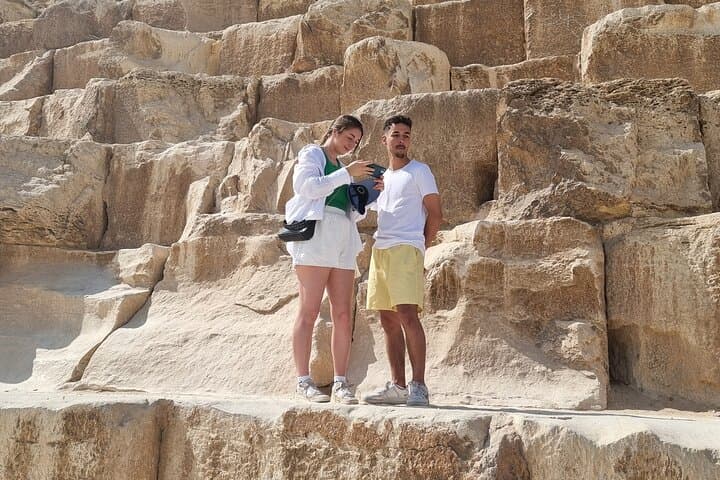
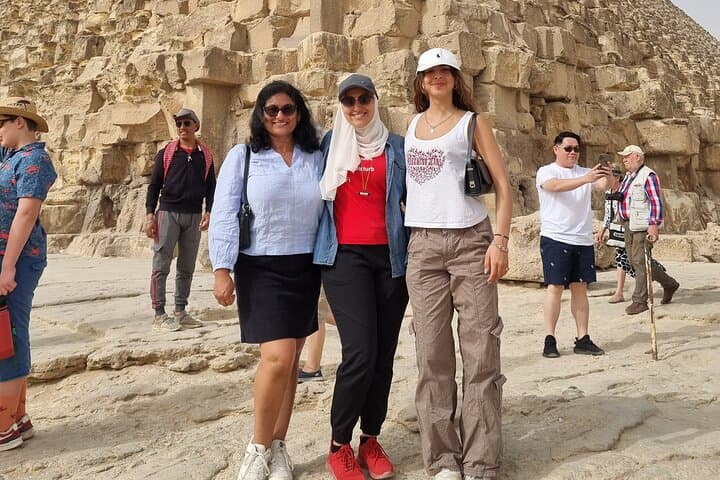
A morning lift-off from Hurghada drops travelers into Cairo’s low-hanging haze; within an hour the Nile’s broad ribbon uncoils and the city’s layered skyline resolves into stones older than language. At Giza the desert opens like a page: the pyramids loom—geometric, wind-polished—and the Sphinx watches the approach with lion-strength and human calculation.
A morning lift-off from Hurghada drops travelers into Cairo’s low-hanging haze; within an hour the Nile’s broad ribbon uncoils and the city’s layered skyline resolves into stones older than language. At Giza the desert opens like a page: the pyramids loom—geometric, wind-polished—and the Sphinx watches the approach with lion-strength and human calculation.
This itinerary threads modern aviation with millennia: an Egyptologist leads a walk through the Egyptian Museum’s crowded galleries—Tutankhamun’s gold, funerary masks, and funerary equipment—before moving to the Giza Plateau, where the Cheops, Chephren and Mykerinos pyramids dominate the skyline. Geologically, the plateau is a limestone shelf carved by wind and time; archaeologically it records 4th-dynasty funerary engineering and the city-building ambitions of the Old Kingdom. Culturally, Cairo juxtaposes Ottoman alleys, Coptic enclaves and busy bazaars—reminders that ancient monuments sit inside a living, noisy metropolis.
Practical guidance: expect roughly nine hours door-to-door including flights, transfers, museum time and guided visits at each site. Wear sturdy closed shoes for uneven limestone surfaces and dusty paths, carry sun protection and a refillable water bottle; shaded rest stops are limited on the plateau. Photography is allowed in most open areas but restricted inside some museum rooms—follow your guide.
Timing matters: start early to avoid midday heat and larger crowds. Respect signage: climbing on monuments is illegal and damages fragile stone. The day balances brisk logistics with slow, up-close moments among some of history’s most deliberate constructions.