THE ADVENTURE COLLECTIVE® · Independent discovery and booking for outdoor travel

A long, private daylight transfer from Hurghada to Cairo that pairs sunrise desert driving with close-up time at Giza’s Pyramids and a curated visit to the Egyptian Museum. Expect a 16–18 hour day, extensive driving, and opportunities for camel rides and private interpretation.
A long, private daylight transfer from Hurghada to Cairo that pairs sunrise desert driving with close-up time at Giza’s Pyramids and a curated visit to the Egyptian Museum. Expect a 16–18 hour day, extensive driving, and opportunities for camel rides and private interpretation.
You leave Hurghada before dawn, the Red Sea behind you and a long ribbon of desert highway ahead. The air is cool at first, then warms as the sun climbs; miles of ochre dunes and scrub pass by while your guide outlines the day. By midmorning the skyline changes — the Nile's green corridor and the Giza plateau appear — and the Pyramids of Giza rise out of sand and history.
Verified experiences and guided adventures in the surrounding area.
Operated by Oasis Adventures Egypt · Cairo, Cairo Governorate
You leave Hurghada before dawn, the Red Sea behind you and a long ribbon of desert highway ahead. The air is cool at first, then warms as the sun climbs; miles of ochre dunes and scrub pass by while your guide outlines the day. By midmorning the skyline changes — the Nile's green corridor and the Giza plateau appear — and the Pyramids of Giza rise out of sand and history.
The plateau at Giza holds three royal tombs built in the late 26th–25th centuries BCE, with the Great Pyramid of Khufu still dominating the horizon. The stones themselves are limestone and granite quarried and moved with techniques that remain partly debated by archaeologists. Nearby, the Egyptian Museum in central Cairo houses more than 120,000 artifacts, from Tutankhamun’s gold mask to daily-use objects that sketch life along the Nile across millennia.
Culturally, the day is a collision of scales: small-scale interactions with vendors, camel handlers and café owners, and the vast sweep of pharaonic achievement. Geologically the route crosses the Eastern Desert’s arid plain into the Nile floodplain — expect dust, broad sky, and sudden urban density.
Practically: the round trip is roughly 450 km each way and involves about five hours of driving each direction, so plan for a 16–18 hour day. Bring water, sun protection, comfortable walking shoes and a modest outfit for museum and mosque-adjacent areas. Carry small local currency for tips and quick purchases; bathrooms and shade are limited at the plateau. If you want a focused visit, request timed entries in advance and confirm pyramid access options (some internal chambers require separate tickets). The private format means you can customize pacing — use it to avoid midday heat or to linger over museum highlights.
moderate.
16–18 hours.
Suitable for travelers in average fitness; you should be able to handle several hours of walking and a long day of travel.
Each leg is approximately five hours by private air-conditioned vehicle (roughly 450 km), depending on traffic and stops.
This tour includes entrance fees for the Pyramids of Giza and the Egyptian Museum as listed, but certain internal chamber tickets may be extra—confirm ahead of time.
Yes—camel and horse rides are typically offered on the plateau; these are included per the tour listing but are operated by local handlers—negotiate safety and duration beforehand.
Infants can ride in strollers on the vehicle, but the plateau has uneven terrain; the tour is labeled physically easy overall but not ideal for those with major mobility limitations.
The Giza pyramids date to the Fourth Dynasty (c. 2600–2500 BCE); the Egyptian Museum in Cairo collects artifacts spanning prehistoric Egypt through the Roman period.
The Giza plateau faces wear from foot traffic, pollution and unregulated vendor activity; choose licensed operators and avoid climbing protected structures to reduce impact.
Oasis Adventures Egypt operates guided outdoor trips and adventures with an emphasis on safety, stewardship, and memorable experiences.

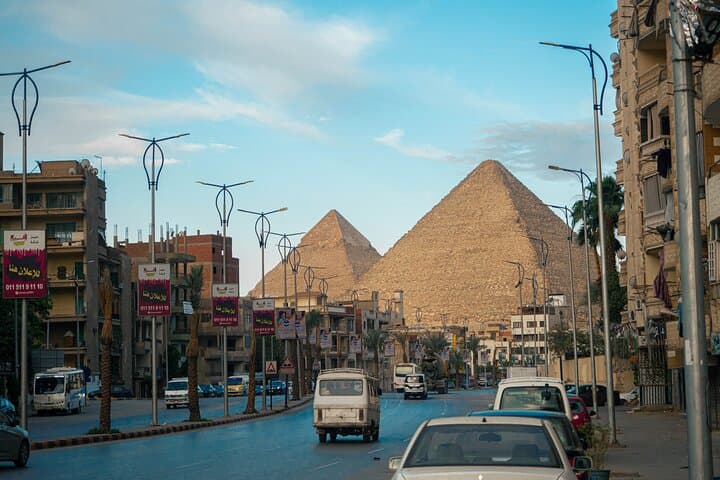

You leave Hurghada before dawn, the Red Sea behind you and a long ribbon of desert highway ahead. The air is cool at first, then warms as the sun climbs; miles of ochre dunes and scrub pass by while your guide outlines the day. By midmorning the skyline changes — the Nile's green corridor and the Giza plateau appear — and the Pyramids of Giza rise out of sand and history.
You leave Hurghada before dawn, the Red Sea behind you and a long ribbon of desert highway ahead. The air is cool at first, then warms as the sun climbs; miles of ochre dunes and scrub pass by while your guide outlines the day. By midmorning the skyline changes — the Nile's green corridor and the Giza plateau appear — and the Pyramids of Giza rise out of sand and history.
The plateau at Giza holds three royal tombs built in the late 26th–25th centuries BCE, with the Great Pyramid of Khufu still dominating the horizon. The stones themselves are limestone and granite quarried and moved with techniques that remain partly debated by archaeologists. Nearby, the Egyptian Museum in central Cairo houses more than 120,000 artifacts, from Tutankhamun’s gold mask to daily-use objects that sketch life along the Nile across millennia.
Culturally, the day is a collision of scales: small-scale interactions with vendors, camel handlers and café owners, and the vast sweep of pharaonic achievement. Geologically the route crosses the Eastern Desert’s arid plain into the Nile floodplain — expect dust, broad sky, and sudden urban density.
Practically: the round trip is roughly 450 km each way and involves about five hours of driving each direction, so plan for a 16–18 hour day. Bring water, sun protection, comfortable walking shoes and a modest outfit for museum and mosque-adjacent areas. Carry small local currency for tips and quick purchases; bathrooms and shade are limited at the plateau. If you want a focused visit, request timed entries in advance and confirm pyramid access options (some internal chambers require separate tickets). The private format means you can customize pacing — use it to avoid midday heat or to linger over museum highlights.