THE ADVENTURE COLLECTIVE® · Independent discovery and booking for outdoor travel

A full-day coach journey from Hurghada that pairs the Pyramids of Giza and the Egyptian Museum—ancient monuments and royal treasures in one long, guide-led day. Expect early departure, security checks, and sun-exposed stonework with included lunch and entrance fees.
A full-day coach journey from Hurghada that pairs the Pyramids of Giza and the Egyptian Museum—ancient monuments and royal treasures in one long, guide-led day. Expect early departure, security checks, and sun-exposed stonework with included lunch and entrance fees.
Before first light the coach shoves off from Hurghada, tires crunching on the desert highway as the Red Sea recedes in the rearview. By midmorning the landscape opens into the ochre sweep of the Eastern Desert and, eventually, the broad stone shoulder of the Giza Plateau—three ancient pyramids rising like calibrated steps against the sky. The day stitches high-speed transit with slow, tactile encounters: a walk around the Great Pyramid's base, a measured approach to the Sphinx, and a careful inspection of gilded artifacts inside the Egyptian Museum.
Verified experiences and guided adventures in the surrounding area.
Operated by Egyway Tours · Cairo, Cairo Governorate
Before first light the coach shoves off from Hurghada, tires crunching on the desert highway as the Red Sea recedes in the rearview. By midmorning the landscape opens into the ochre sweep of the Eastern Desert and, eventually, the broad stone shoulder of the Giza Plateau—three ancient pyramids rising like calibrated steps against the sky. The day stitches high-speed transit with slow, tactile encounters: a walk around the Great Pyramid's base, a measured approach to the Sphinx, and a careful inspection of gilded artifacts inside the Egyptian Museum.
The pyramids date to Egypt’s Old Kingdom (circa 2600 BCE), built from local limestone and bedrock quarried on-site; the museum houses New Kingdom treasures including Tutankhamun’s funerary collection. The route crosses desert geology shaped by episodic Nile shifts, and the culture shifts with it—Bedouin communities once traversed this corridor, and modern Cairo hums with bazaar trade and mosque calls.
Practical guidance matters: expect a very long day (early departure, late return), security lines, and heat on sun-exposed stone. The tour includes lunch, entrance fees, and an Egyptologist guide; bring cash for tips, photocopies of travel documents, and a sense of patience for crowds. Wear sturdy shoes for uneven stone and a hat for the glare. Hydrate frequently—water is the simplest protection against a draining day. Respect restricted areas, and plan for minimal walking between sites if mobility is a concern. For travelers who want concentrated history, this one-day run delivers the essentials—raw monuments, curated artifacts, and the long road that ties Red Sea resorts to civilization’s oldest silhouettes.
easy.
18–20 hours.
Suitable for travelers of average fitness; requires ability to walk short distances on uneven ground and tolerate long coach transfers.
Expect roughly 5–6 hours each way depending on traffic and stops; total door-to-door time for the tour is typically 18–20 hours.
This tour lists entrance fees to the Pyramids of Giza and the Egyptian Museum as included—confirm for any optional extras like the solar boat or mummy room fees.
Yes—the itinerary includes a lunch stop and coach rest stops; public restrooms are available at major sites but may charge a small fee or lack amenities.
The tour involves walking on uneven surfaces and climbing small rises; travelers with limited mobility should check pickup logistics and request accommodations in advance.
The Giza complex dates to Egypt’s Fourth Dynasty (circa 2600–2500 BCE); the Egyptian Museum preserves artifacts spanning Pharaonic eras, including Tutankhamun’s burial goods.
High visitor numbers stress the Giza plateau—follow marked paths, avoid touching carvings, and use local guides who support site management and community-based tourism.
Egyway Tours operates guided outdoor trips and adventures with an emphasis on safety, stewardship, and memorable experiences.
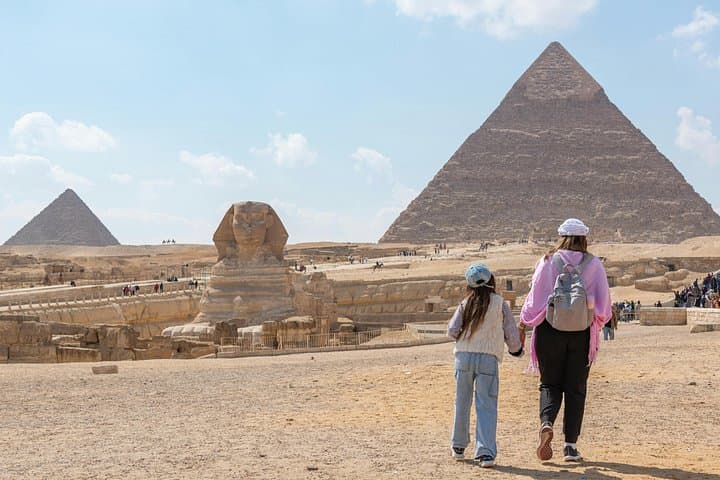
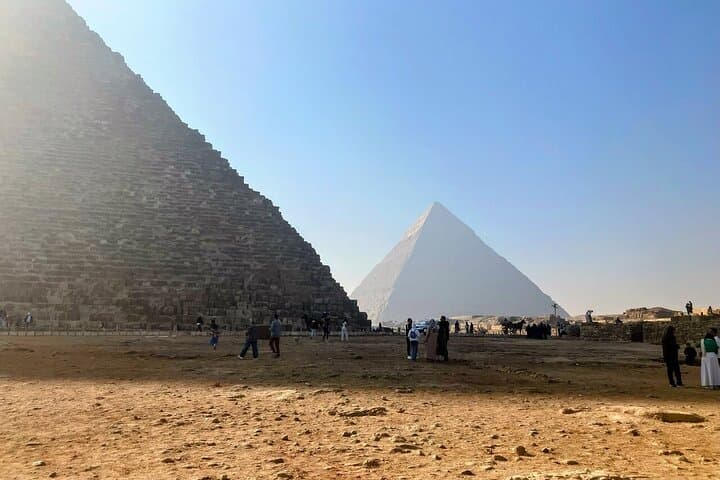
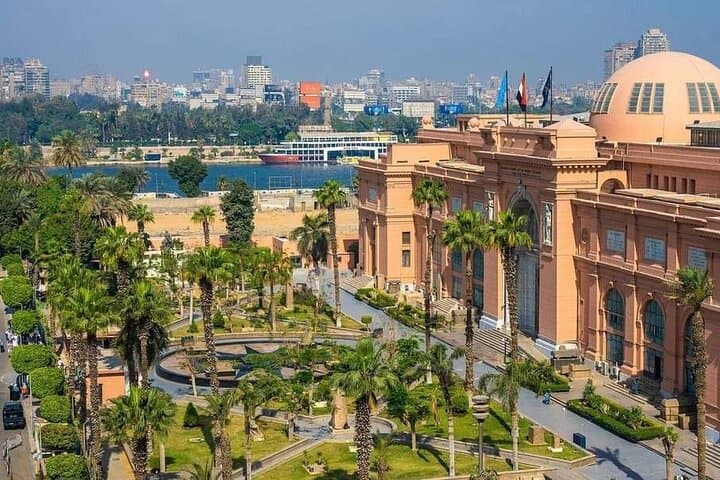
Before first light the coach shoves off from Hurghada, tires crunching on the desert highway as the Red Sea recedes in the rearview. By midmorning the landscape opens into the ochre sweep of the Eastern Desert and, eventually, the broad stone shoulder of the Giza Plateau—three ancient pyramids rising like calibrated steps against the sky. The day stitches high-speed transit with slow, tactile encounters: a walk around the Great Pyramid's base, a measured approach to the Sphinx, and a careful inspection of gilded artifacts inside the Egyptian Museum.
Before first light the coach shoves off from Hurghada, tires crunching on the desert highway as the Red Sea recedes in the rearview. By midmorning the landscape opens into the ochre sweep of the Eastern Desert and, eventually, the broad stone shoulder of the Giza Plateau—three ancient pyramids rising like calibrated steps against the sky. The day stitches high-speed transit with slow, tactile encounters: a walk around the Great Pyramid's base, a measured approach to the Sphinx, and a careful inspection of gilded artifacts inside the Egyptian Museum.
The pyramids date to Egypt’s Old Kingdom (circa 2600 BCE), built from local limestone and bedrock quarried on-site; the museum houses New Kingdom treasures including Tutankhamun’s funerary collection. The route crosses desert geology shaped by episodic Nile shifts, and the culture shifts with it—Bedouin communities once traversed this corridor, and modern Cairo hums with bazaar trade and mosque calls.
Practical guidance matters: expect a very long day (early departure, late return), security lines, and heat on sun-exposed stone. The tour includes lunch, entrance fees, and an Egyptologist guide; bring cash for tips, photocopies of travel documents, and a sense of patience for crowds. Wear sturdy shoes for uneven stone and a hat for the glare. Hydrate frequently—water is the simplest protection against a draining day. Respect restricted areas, and plan for minimal walking between sites if mobility is a concern. For travelers who want concentrated history, this one-day run delivers the essentials—raw monuments, curated artifacts, and the long road that ties Red Sea resorts to civilization’s oldest silhouettes.