THE ADVENTURE COLLECTIVE® · Independent discovery and booking for outdoor travel

Swap the Red Sea for ancient stone on a long but rewarding day trip from Hurghada to Cairo. Visit the Giza Plateau and the Egyptian Museum with a certified Egyptologist guiding the highlights.
Swap the Red Sea for ancient stone on a long but rewarding day trip from Hurghada to Cairo. Visit the Giza Plateau and the Egyptian Museum with a certified Egyptologist guiding the highlights.
The day begins before dawn on Hurghada's shoreline, when a small convoy slips away from the Red Sea heat and pushes northwest across the open Eastern Desert. Long stretches of sun-baked plain roll past the windows; the city’s coral reefs are a memory as the road narrows toward the bustle of Greater Cairo. By mid-morning the limestone rise of the Giza Plateau appears on the horizon, a hulking line of stone that alters the sky.
Verified experiences and guided adventures in the surrounding area.
Operated by Travex Tour · Cairo, Cairo Governorate
The day begins before dawn on Hurghada's shoreline, when a small convoy slips away from the Red Sea heat and pushes northwest across the open Eastern Desert. Long stretches of sun-baked plain roll past the windows; the city’s coral reefs are a memory as the road narrows toward the bustle of Greater Cairo. By mid-morning the limestone rise of the Giza Plateau appears on the horizon, a hulking line of stone that alters the sky.
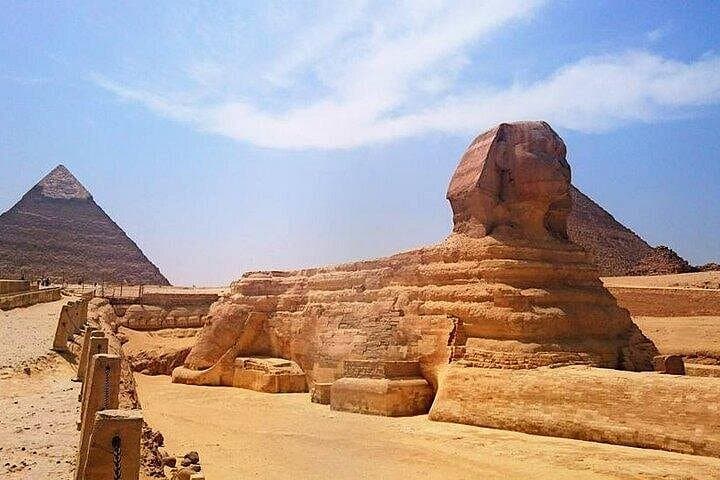
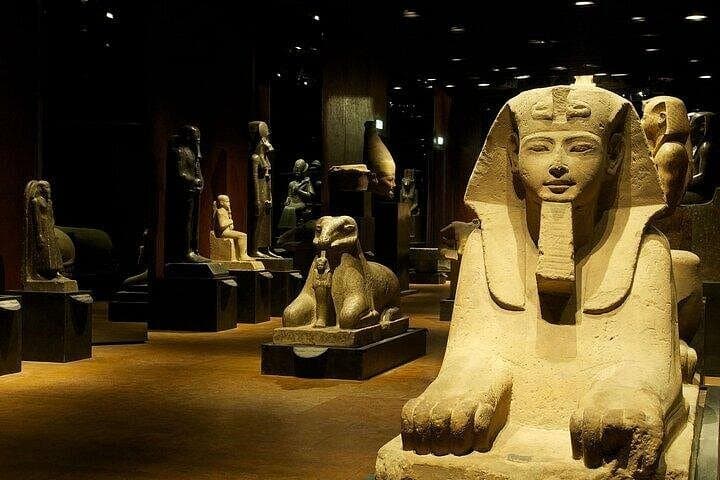
At Giza the scale of human ambition is immediate: stepped passages, dressed limestone faces, and the silent Great Sphinx carved from a single ridge. The Egyptian Museum in downtown Cairo contrasts that exterior monumentality with intimate detail—golden funerary objects, painted coffins and artifacts that map five millennia of social life and craft. Geologically the plateau is a patchwork of Cenozoic limestones and wind-polished sandstone; culturally it’s a meeting point of ancient ritual and modern tourism.
Practical planning matters on a day like this. Expect a long travel day—round-trip transfers from Hurghada commonly take several hours each way—so pack layers, sun protection and a refillable water bottle. The program usually includes a guided Egyptologist, entrance fees and a traditional lunch, but confirm pickup times and passport requirements before departure. Stay mindful of shaded breaks, moderate walking on uneven surfaces, and respectful dress in religious or museum settings. With preparation, the trip compresses Cairo’s vast history into a single, clarifying day: up-close stonework, museum stories, and the desert that still seems to push at the edges of the city.
moderate.
15 hours (approx.).
Suitable for travelers with average fitness who can handle multiple hours of walking and a long transfer day.
Road transfers typically take about 4–6 hours each way depending on traffic and route; the full itinerary is planned as a long day (roughly 15 hours total).
This tour generally includes entrance/admission to the mentioned sites and a traditional Egyptian lunch—confirm details with the operator when booking.
Photography is allowed outdoors at Giza; some museum exhibits may restrict flash or professional equipment—follow posted rules and guide instructions.
The tour is marketed as suitable for all fitness levels, but it involves walking on uneven ground; arrange for special assistance or check mobility needs with the operator in advance.
The Giza complex dates to the Fourth Dynasty (c. 2600–2500 BCE) and sits alongside museum collections that span over 5,000 years of Egyptian civilization.
High visitor numbers strain fragile stone surfaces and museum environments; follow marked paths, avoid touching monuments and support sites that fund conservation efforts.
Travex Tour operates guided outdoor trips and adventures with an emphasis on safety, stewardship, and memorable experiences.

The day begins before dawn on Hurghada's shoreline, when a small convoy slips away from the Red Sea heat and pushes northwest across the open Eastern Desert. Long stretches of sun-baked plain roll past the windows; the city’s coral reefs are a memory as the road narrows toward the bustle of Greater Cairo. By mid-morning the limestone rise of the Giza Plateau appears on the horizon, a hulking line of stone that alters the sky.
The day begins before dawn on Hurghada's shoreline, when a small convoy slips away from the Red Sea heat and pushes northwest across the open Eastern Desert. Long stretches of sun-baked plain roll past the windows; the city’s coral reefs are a memory as the road narrows toward the bustle of Greater Cairo. By mid-morning the limestone rise of the Giza Plateau appears on the horizon, a hulking line of stone that alters the sky.
At Giza the scale of human ambition is immediate: stepped passages, dressed limestone faces, and the silent Great Sphinx carved from a single ridge. The Egyptian Museum in downtown Cairo contrasts that exterior monumentality with intimate detail—golden funerary objects, painted coffins and artifacts that map five millennia of social life and craft. Geologically the plateau is a patchwork of Cenozoic limestones and wind-polished sandstone; culturally it’s a meeting point of ancient ritual and modern tourism.
Practical planning matters on a day like this. Expect a long travel day—round-trip transfers from Hurghada commonly take several hours each way—so pack layers, sun protection and a refillable water bottle. The program usually includes a guided Egyptologist, entrance fees and a traditional lunch, but confirm pickup times and passport requirements before departure. Stay mindful of shaded breaks, moderate walking on uneven surfaces, and respectful dress in religious or museum settings. With preparation, the trip compresses Cairo’s vast history into a single, clarifying day: up-close stonework, museum stories, and the desert that still seems to push at the edges of the city.