THE ADVENTURE COLLECTIVE® · Independent discovery and booking for outdoor travel

A single long day takes you from Hurghada to the Giza Plateau by flight — see the Great Pyramid, the Sphinx and choose between the Grand Egyptian Museum or the old Egyptian Museum. Expect an early start, uneven terrain, and a full immersion in ancient and modern Cairo.
A single long day takes you from Hurghada to the Giza Plateau by flight — see the Great Pyramid, the Sphinx and choose between the Grand Egyptian Museum or the old Egyptian Museum. Expect an early start, uneven terrain, and a full immersion in ancient and modern Cairo.
Before first light you leave Hurghada behind and cross the desert by a short flight; the air hums with the promise of history as the Giza Plateau appears through the airplane window. On the ground the limestone rises like an outcrop of time — the Great Pyramid towering, the Sphinx holding its mute watch — and the market noise of Cairo waits a short drive away.
Verified experiences and guided adventures in the surrounding area.
Operated by Book Tour Egypt · Giza, Giza Governorate
Before first light you leave Hurghada behind and cross the desert by a short flight; the air hums with the promise of history as the Giza Plateau appears through the airplane window. On the ground the limestone rises like an outcrop of time — the Great Pyramid towering, the Sphinx holding its mute watch — and the market noise of Cairo waits a short drive away.
These stones are not scenery alone: the Great Pyramid (Khufu) dates to around 2580–2560 BCE, carved from bedrock and quarry material that produced the very blocks visitors tread on. The Sphinx is a single limestone mass shaped into a human-headed lion; nearby, the Grand Egyptian Museum (GEM) stages artifacts that span pharaonic Egypt, from colossal statuary to Tutankhamun’s treasures. Culturally, Cairo layers ancient ritual, Ottoman-era souks and contemporary city life — Khan el-Khalili’s alleys and the Papyrus workshops are a living counterpoint to the monuments.
Practicalities shape the day: expect a very early pickup from Hurghada, one to two domestic flights, and 15–18 hours away from your hotel. Walking is on uneven stone and sand; shade is limited and temperatures swing, so hydrate, carry sun protection and wear closed-toe shoes. If you selected entrance fees, tickets will be delivered; otherwise plan cash for tips, vendor purchases and optional felucca rides on the Nile. Respect conservation rules: don’t climb on structures, follow your guide and use marked routes. Timing your photo stops for softer light around sunrise or late afternoon makes the long day feel worth it.
moderate.
15–18 hours.
You should be comfortable with a long travel day, standing and walking over uneven ground for several hours; basic mobility required.
Some booking options include entrance fees to the Pyramids, Sphinx and chosen museum; check your selected option — otherwise you’ll pay on arrival.
Pickup is typically around 4:00 AM to catch the Cairo flight; confirm exact time with your operator when booking.
Yes — photography is allowed at most outdoor areas; avoid using drones without permits and don’t photograph restricted restoration zones or staff when asked not to.
The tour lists wheelchair-accessible transport and some accessible areas, but many outdoor archaeological surfaces are uneven — check with the operator for specific accessibility arrangements.
The Great Pyramid was built as a royal tomb for Khufu around 4,500 years ago; the Sphinx was carved from an exposed limestone outcrop and reworked across centuries.
High visitor flow stresses the fragile limestone and surrounding desert — stick to marked routes, don’t touch carved surfaces and use licensed guides to support local conservation efforts.
Book Tour Egypt operates guided outdoor trips and adventures with an emphasis on safety, stewardship, and memorable experiences.
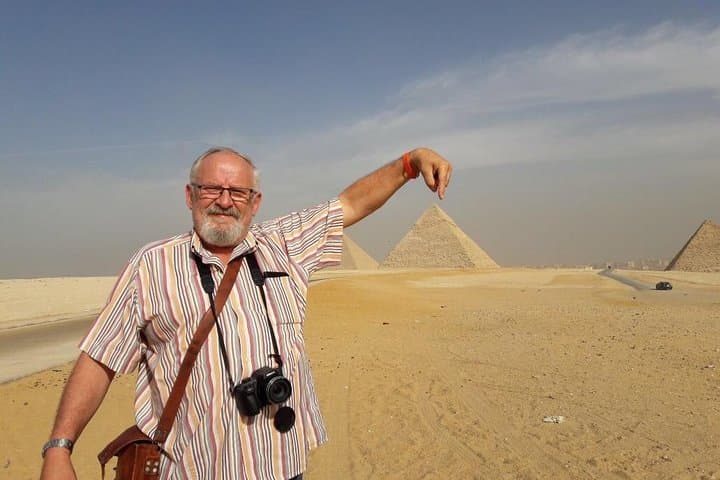
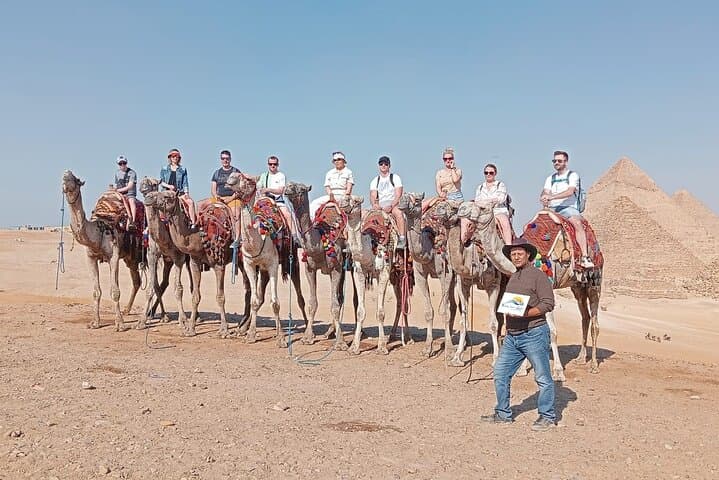
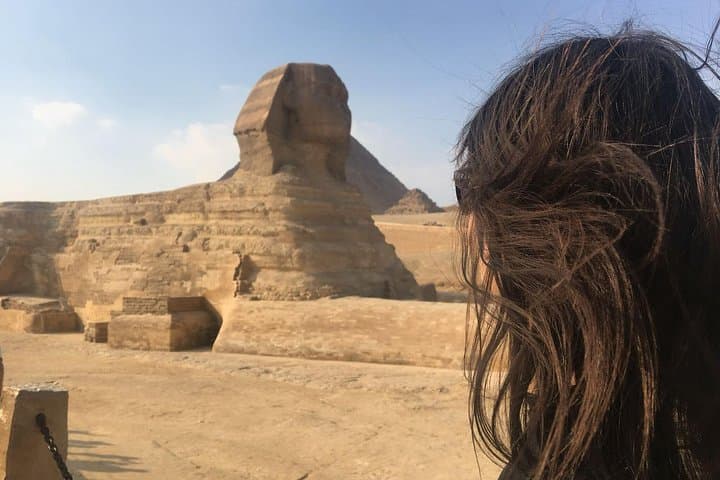
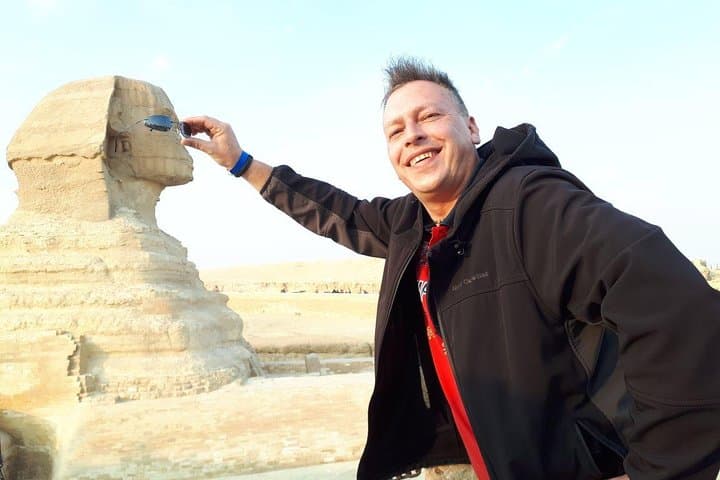
Before first light you leave Hurghada behind and cross the desert by a short flight; the air hums with the promise of history as the Giza Plateau appears through the airplane window. On the ground the limestone rises like an outcrop of time — the Great Pyramid towering, the Sphinx holding its mute watch — and the market noise of Cairo waits a short drive away.
Before first light you leave Hurghada behind and cross the desert by a short flight; the air hums with the promise of history as the Giza Plateau appears through the airplane window. On the ground the limestone rises like an outcrop of time — the Great Pyramid towering, the Sphinx holding its mute watch — and the market noise of Cairo waits a short drive away.
These stones are not scenery alone: the Great Pyramid (Khufu) dates to around 2580–2560 BCE, carved from bedrock and quarry material that produced the very blocks visitors tread on. The Sphinx is a single limestone mass shaped into a human-headed lion; nearby, the Grand Egyptian Museum (GEM) stages artifacts that span pharaonic Egypt, from colossal statuary to Tutankhamun’s treasures. Culturally, Cairo layers ancient ritual, Ottoman-era souks and contemporary city life — Khan el-Khalili’s alleys and the Papyrus workshops are a living counterpoint to the monuments.
Practicalities shape the day: expect a very early pickup from Hurghada, one to two domestic flights, and 15–18 hours away from your hotel. Walking is on uneven stone and sand; shade is limited and temperatures swing, so hydrate, carry sun protection and wear closed-toe shoes. If you selected entrance fees, tickets will be delivered; otherwise plan cash for tips, vendor purchases and optional felucca rides on the Nile. Respect conservation rules: don’t climb on structures, follow your guide and use marked routes. Timing your photo stops for softer light around sunrise or late afternoon makes the long day feel worth it.